Author: Autogos Editor

  • New Mahindra Bolero Neo 2021 First Drive Review – The Modern Version!

    New Mahindra Bolero Neo 2021 First Drive Review – The Modern Version!

    The Mahindra XUV700 was a good choice of Indians as it is a compact SUV with the performance equal to that of Mahindra’s ladder-frame SUVs. The Bolero and the Scorpio are doing great in the market. Mahindra TUV300 was a modern alternative to Mahindra Bolero and it was not out in the market for more than 1 year but now it is back, rebranded as Mahindra Bolero Neo. What is special in the new rebranded version? Read further to know about the original features and the new modifications!

    New Mahindra Bolero Neo 2021: The Exterior Changes
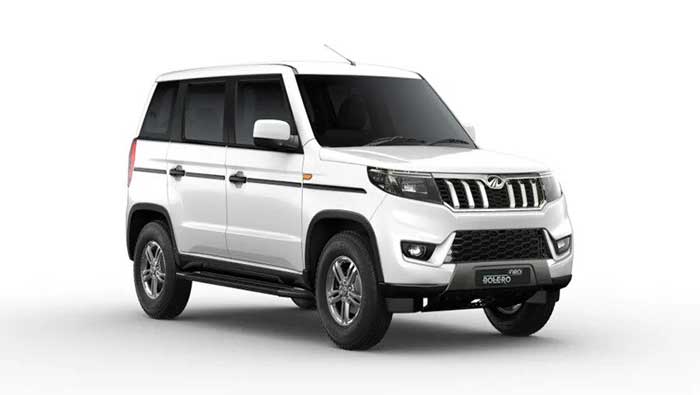
    New Mahindra Bolero Neo 2021 First Drive Review

    Mahindra Bolero Neo is becoming the favorite vehicle of the Indians. It is the modern version of Bolero and the changes made are very appealing to its customers. The newcomer has the boxy style of TUV300’s but, in fact, there are many changes. The body shell has been lowered to lower the ride height by 20mm and the bonnet is also placed 40mm lower. You can also notice smaller gap in the wheel arches when compared with TUV300’s. No changes to ground clearance.

    The plain look of TUV300’s fascia has been changed by Mahindra mesh grille and vertical chrome strakes. The headlamps are simple and square shaped with LED DRLs glittering. The front bumper holds a larger air dam which is an arrangement similar to Bolero.

    The Bolero Neo has a proportionate posture than the heavy look of the pre-facelift version. There is a grey cladding on the lower section and all along the length of the SUV but there are some misalignments of some sections of the narrow band. The X-shaped spare wheel cover with a Bolero Badge and the new alloy wheel design is very attractive.

    2021 Mahindra Bolero Neo: The Interiors Changes

    There are no major changes. The readily felt change is that the entry in to the cabin is easier than the pre-lift Bolero because of the lowered height. The cabin design and layout are same as that of the TUV300. The design is more utilitarian and no design traits on the interiors that hails from Bolero.

    The dual-tone grey and beige dashboard is from the Bolero and the instrument cluster is from Thar. There is a 3.5-inch MID with clean dials. Most of the buttons are easily reachable. It would take some time to reach the centre mounted window switches.

    The seats are covered with a new fabric material. No reversing camera is available. The Neo still has chair-like front seats and individual armrests. You would really like the comfortable sitting position in the bright and ventilated cabin. The rear bench could easily accommodate 3 people. The seat cushioning is firmer but the recline angle is same. A centre armrest is given that is sturdier than the Boleros’s. Kneeroom and legroom are a bit lesser but the headroom is very adequate in order to accommodate the side facing jump seats at the back.

    Mahindra Bolero Neo Special Features

    N10 variant which is the top-spec has a kit like ABS with EBD. The corner braking control, 7-inch touchscreen, dual airbags, remote-key entry, parking sensors, electric mirror adjustment, rear wiper, washer and cruise control are the prominent features. The N10 (O) variant gets a mechanical locking differential which would be an added advantage when driving over uneven terrain.

    Some of the most important features that are missing are reverse camera, projector headlamps, automatic climate control, auto dimming inside mirror, electric folding mirrors, Android Auto and Apple CarPlay. The loyal audience of Bolero never mind these and love the Bolero Neo for all the good features!

    Bolero Neo Performance and Driving Experience

    Sitting beneath its bonnet is a 1.5-litre 3-cylinder diesel engine with electronically controlled variable geometry turbocharger which gives a max torque of 260Nm which is 20Nm more than TUV300. The max torque band ranges from 1,750 to 2,250rpm which never affects the drivability. This engine is a three-cylinder diesel unit which is smooth, vibe-free and refined. Power delivery is linear and it can pull from RPMs you can move around at higher gears at lower revs when you are not in a hurry. You would never rev beyond 3,500rpm as there is no power.
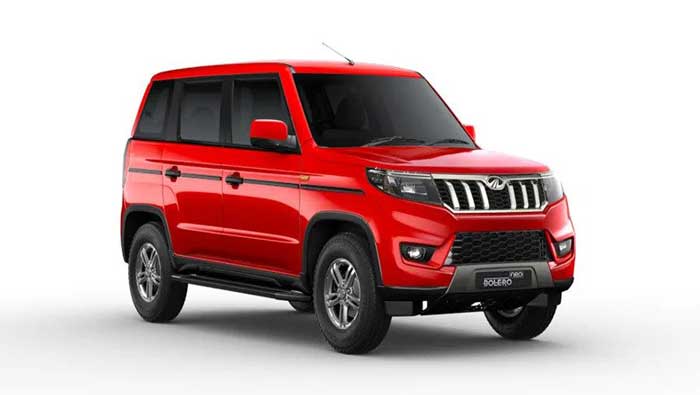
    Bolero Neo Performance and Driving Experience

    Even at max about 4,500rpm, no coarse or crude sounds are heard. The 1.5-litre is fine up to 100kph above which it gets exhausted. It is not suitable for full load of passengers or travel on hills as it will need more pulling power. The 5-speed manual gearbox is smooth but the throws are long. The light clutch is easy. It would be better if an automatic option could be added. The 3rd generation body-on-frame construction of Mahindra and tough suspension components are positive aspects. The Neo easily tackles hostile road conditions as it has the new MLD.

    Bolero Neo Verdict

    The Mahindra Bolero Neo has a body-on-frame construction, seven-seating capacity and rear-wheel drive layout. This would better suit the average urban buyer than people who would prefer a sophisticated vehicle. It does not have ruggedness but the mechanical locking differential (MLD) enables it to go-anywhere with more confidence to drive on treacherous terrains. With overall refinement and many other modern features, the Bolero Neo rocks!.

    Mahindra Bolero Neo Key Specifications

    Fuel Type: Diesel Dimensions (L x W x H) 3995 x 1795 x 1817
    Engine displacement: 1493cc
    Transmission: Manual
    Maximum Power (ps): 100
    Chassis type: Hydroformed
    Mileage: NA
    Seating capacity: 7
    Prices
    8.48 Lakhs – 10.69 Lakhs (Ex-Showroom)

    Are you seeking a tough-as-nails, go-anywhere vehicle with a modern touch? Then, 2021 Mahindra Bolero Neo is the best for you!.
  • Mahindra XUV700 First Drive Review

    Mahindra XUV700 First Drive Review

    Mahindra XUV700 Platform

    Mahindra has launched its new SUV as XUV700. The new platform has the new monocoque which is 80% stiffer than that of XUV500’ with spot welds and adhesive bonding. Mahindra has reduced weight with a monocoque frame, lightweight high-tensile steel and lighter engines weighing around 70kg less than the previous one. Kerb weight is heavy (1,960kg-2,040kg) but with many additional equipments and safety features, that cannot be considered as s drawback.
    Mahindra XUV700
    The rear tailgate is made up of composite plastic for weight reduction which may have to be replaced if rear-ended in an accident. The platform is configured for front-wheel-drive and all-wheel-drive options. It is designed to accommodate a 48V mild-hybrid system in future. The engine line-up has two brand-new engines namely the latest-gen 2.2-litre mHawk diesel and mStallion 2.0 turbo-petrol. The base diesel variants get a 155hp rated motor and higher variants get 185hp. The 2.0 turbo-petrol, variable valve timing, turbo power and direct-injection produces a 200hp. The new platform has the latest-gen (E/E) architecture with an advanced infotainment system (Visteon) and advanced driver assistance systems (ADAS). Mahindra is clearly made it a point to become the winner in the tech competition!

    Mahindra XUV700 Style – A Balanced Look

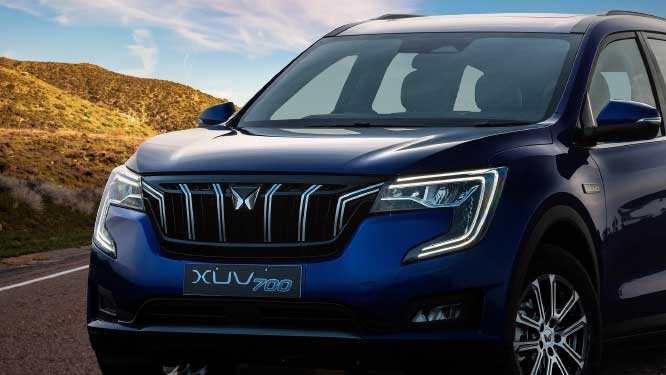
    The XUV700’s styling is the evolution of XUV500, with specific lines and a extra balanced look. It is a little shorter than its predecessor by 30mm and has a muscular bonnet. The strong new grille with twin vertical bar gives it more road presence. The way the outside vertical bars bend and flow into the headlight cluster is just adorable. Mahindra’s new Twin Peaks’ logo has been introduced on the XUV700 at the centre of the grille which is exclusively for the SUV range of the manufacturer. The new profile is the most refined one and no more numerous rear wheel arch lines and odd cheetah paw handles. They are replaced by flush door handles which pop automatically when you near the car. These are handy and easy to use. The mid versions had a handle that you need to push and the base variant had a cumbersome click to unlock, push and pull to close and open the door. At the rear, there are arrow-shape tail-lights but the design feels same as some other car. The long DRLs and the excessive sculpting of the wheel arches are other drawbacks in the design and style area.

    Mahindra XUV700 Style – Interior

    The plain interior design gives more eminence to the display panel that stretches for about half the dashboard. This Mercedes-like tablet lodges the central touchscreen and an all-digital instrument panel, measuring 10.25 inches. This premium look will be surely admired by consumers of all the higher versions. The base has a small 8.0-inch infotainment unit and a 7.0-inch instrument cluster.

    The dashboard is made up of plastics and leather strip which ends with wood finish which gives an artificial look. The gaudy piano black finish also is not so appealing. The fit, finish and material quality are pretty good but not completely awesome.

    Buttons and dials for HVAC controls, the rotary controller on the centre console and the toggle-like switches for key functions are really welcoming. The two shelves in the central consoles for phones of which one is a wireless charger is admirable. Nowadays, storage for two phones is important than cupholders which are also available on the console at the back of the gear lever.

    Mahindra XUV700 Features

    The steering wheel is nice to hold and the buttons have access to many functions. The instrument panel, though with sober graphics and fonts, is still incredible because of its rich information. There are many customisable options for both the screens.

    The XUV700 debuts Mahindra’s new advanced AdrenoX infomatics system. It is packed with features and options along with other built-in local apps. However, the segregation and layering of the menu needs to be modified because it is not an easy job to find out where things are.

    Stand out Features

    *Lane keep assist
    *Sony sound system
    *2 x 10.25 inch infotainment screens
    *Panoramic sunroof
    *Dual-zone climate control

    Mahindra XUV700: Seating And Comfort

    The seats are large but cushioning cannot be graded as excellent. But still, it keeps you comfortable even after long hours of travel. The XUV700 has 5- and 7-seat configurations. In the three-row version, even though the legroom in the middle row is not spacious as Hector or Safari, there is enough space to even accommodate tall passengers. The third-row does not have enough room with a very limited headroom. The AC vents and the glass area occupy more space.

    The gear lever, rotary controller, and the power window switches are set too much at the rear. The third-row reclining mechanism should be at the top of the seat instead of being behind. Boot space is limited when the third row is up. There is enough luggage room when the third row is folded down. If you are shifting the spare wheel’s location from beneath the boot floor to beneath the chassis, more free space can be availed.

    Mahindra XUV700: Engines

    Both the petrol and diesel engines have 6-speed manual and automatic gearbox options. Base version has XUV500’s 155hp diesel still. Higher variants have 2.2-litre mHawk unit with 185hp. This makes it more powerful than Hyundai Alcazar, Hector Plus and the Safari. The new ‘mStallion’ 2.0-litre turbo-petrol gives 200hp which makes the XUV700 more powerful than Hyundai Alcazar, Hector Plus and the Safari. Hence, driving the XUV700 is an absolute pride!

    Performance and Driving Experience

    The XUV700 leaps very fast or can be driven at as low as 1,400rpm. The engine revs to a high 5,800rpm. Acceleration is brisk, 0-100kph time of 9.32sec in the automatic and maybe the manual would be quicker. Performance of diesel XUV700 is marvelous. There is a bit of a turbo lag at the 1,400rpm mark which stays steady till 4,000rpm.

    Drivability is good with its ample torque. The biggest area of improvement is the dynamics. The jittery ride, the torque steer and the sloppy handling are replaced by easy, steady and predictable handling due to best suspension system. Road grip and cornering are good. The electric power steering gives the right feel. It is light at low speeds and at the same time, safe at higher speeds. On the high-speed track, the XUV700 would be a good performer at triple-digit speeds. It is heavy and the ride is also not quite settled when compared to its rivals’ performances.

    Mahindra XUV700: Safety

    Mahindra has put a lot of effort for more safety and hence XUV700 is also expected to be a safe vehicle. XUV700 has a very advanced ADAS package. The system uses camera and radar with Forward Collision Warning (FCW) and Autonomous Emergency Brakes (AEB) that do a good job. Also, Adaptive Cruise Control (ACC), Smart Pilot Assist or traffic assist (AT only) are added benefits. Fine-tuning is needed for Lane Keep Assist which works well in corners but fails to keep the car centred on straights. But the ADAS package is very commendable and revolutionary. Driver drowsiness detection, personalised safety alert, auto high beam assist, illumination above 80 kph and booster headlights are other safety advantages.

    Verdict

    Mahindra is planning to fight back with Tata Motors, Hyundai and new entrants like Kia by introducing the XUV700. Keeping the variants and prices aside, the XUV700 has a very compelling package. In spite of some missing features like not-so-comfortable seats and not-so-updated infotainment system, it cannot be ignored that it is a best and safe vehicle for long travels. The brilliant engines just beat the competition away. It is easy to drive with its many incredible features. The Mahindra XUV700 would be the winner!

    Key Specifications and Features Of Mahindra XUV700

    *1 Diesel Engine and 1 Petrol Engine.
    * Diesel engine 2198 cc and Petrol engine 1999 cc
    *Manual transmission is available.
    * 4 cylinder car, 5 seater, length of 4695, width of 1890 with wheelbase of 2750.
    *Fuel Type: Petrol
    *Max Power (bhp@rpm)197.13bhp@5000rpm
    *Seating Capacity: 5
    *Fuel Tank Capacity: 60.0
    *Engine Displacement (cc)1999
    *Max Torque (nm@rpm)380nm@1750-3000rpm
    *Transmission Type: Manual
    *Body Type: SUV

    Price (Ex-showroom) Rs. 11.99 Lakh- 14.99 Lakh

  • Ford Figo at Review – 2021

    Ford Figo at Review – 2021

    Ford has now come up with the Figo with an automatic transmission. The rest of the features remain the same as before. Does only transmission make it a desirable option to buy the New 2021 Ford Figo? Have a glance at our review to know more!

    Ford Figo – Small Size with More Capacity

    Ford Figo at Review

    Even though Ford Figo is small in size, it offers enough space on the interior and also offers a good driving experience. It is fun to ride a hatchback on the road than an SUV. Most buyers travel in them daily. Ford Figo is designed with an automatic transmission. Most of the competitors offer AMT transmissions. Figo has a torque converter unit which is a technologically superior option than AMTs. This changes the driving experience of the Ford Figo.

    2021 Ford Figo AT Design And Style

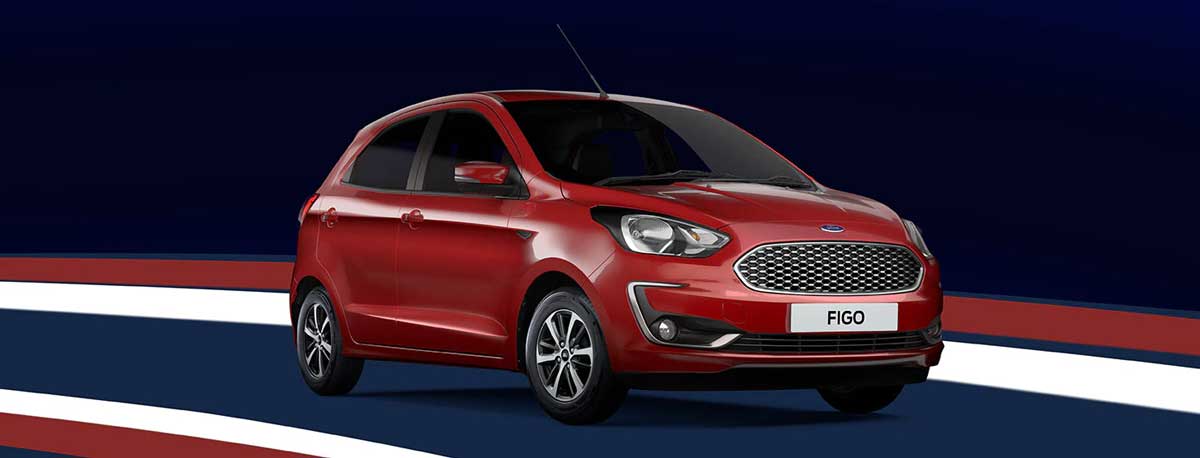
    Figo looks the same as how it looked earlier. There are no drastic changes in the design and it is very simple. The front part has the familiar Ford grille, halogen headlamps and turn indicators. The bumper has black inserts and there are some chrome garnishing around the fog lamps. When compared to its competitors who now have offered LED units, the Figo has an outdated look with its yellow-tinted eyes.

    When you view the sides, you can see the same 15-inch dual-tone alloy wheels as the previous model. No roof rails are present. The door handles and ORVMs are colored same as the body. The windows have a thin black border which gives some contrast look. At the back, the top-end trim has a rear defogger and a rear windscreen wiper. Overall, the design is unchanged and so no one is going to make a second glance at it when riding it on the road. But it is a very good car for daily travel to your office with a decent look.

    2021 Ford Figo at Interior

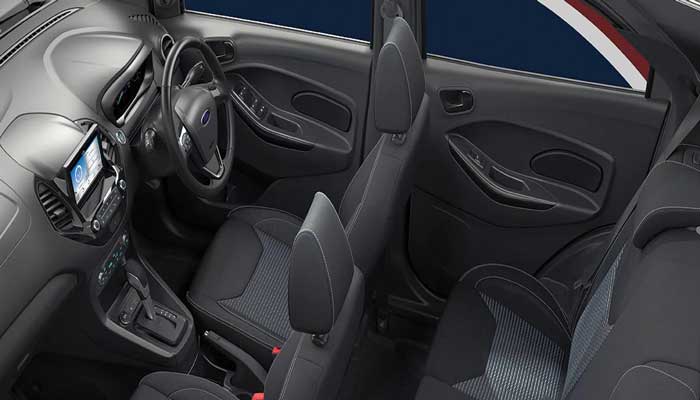
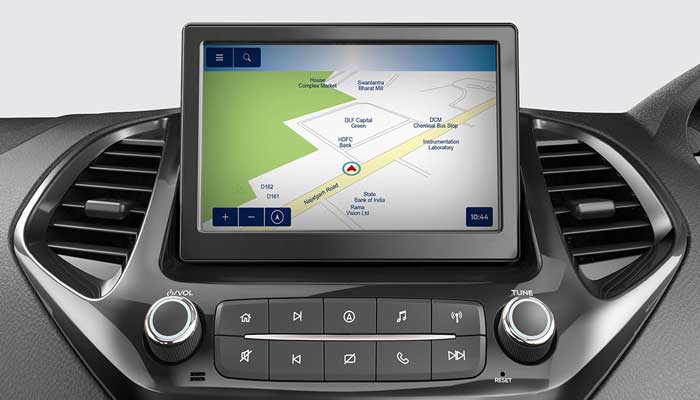
    The Figo is available in two variants – Titanium and Titanium+. There are only minimum number of differences in their features. This is appreciable because you can get most of the features even if you opt to buy the “base” model. The cabin has the same look as before and is black in colour. Piano black accents are found on the steering wheel, around the 7.0-inch touchscreen display and also around the gear selector. Quality is excellent and no complaining can be done about many things. Even though a fancy and attractive light is missing, the buttons give you a pleasant blue glow.

    2021 Ford Figo at Interior

    The Figo is spacious enough to accommodate tall people also. There is enough space in both the rows of the car with adjustable head restraints for the rear passengers. Charging ports and AC vents are missing in this model. Ford could have added a charging, at least, at the back as people need them very badly these days with usage of a many gadgets. Accommodating three people at the back is really very tough and there is no head restraint in the centre. The back seats are well cushioned. The front seats also have good amount of bolstering on the sides. Slim people may shift a little when the car is around corners but, on the whole, the seats are really good.

    2019 Ford Figo Engine And Transmission

    Figo has a 1.2-litre, three-cylinder, naturally-aspirated petrol engine affording 94.6hp and 119Nm of torque with 6-speed torque converter automatic transmission. The petrol engine in Figo is refined with automatic transmission to give you a better driving experience. You can drive comfortably all over the city and not even notice the gear changes most of the time. If you prefer to have a relaxed drive, then the Figo automatic would surely give you that. There is a sport mode that you can use to have fun. It holds onto the gears for a longer time and manually change gears with the help of the buttons on the gear lever. In manual mode, you will find the gear shifts to be fairly quick. There is not much of lag but you may take some time to learn to use these buttons.

    There is good punch in the mid-range. When you go higher, you will struggle if you overtake some other vehicle. It can carry 4 people and can easily be driven at triple-digit speeds without any stress to the engine.

    2021 Ford Figo AT Driving Experience

    The Figo does not have exciting engine options but copes up well around corners and is not floaty when you test its limits. The suspension is stiff but does not cause any discomfort. The steering wheel is light and performs well while parking the vehicle and driving in a city traffic. But still I feel it could have been a bit heavier.

    Figo Safety Features

    A standard front disc along with sharp and reliable brakes are offered. The ABS and EBD add safety to the car. It is one of the safest cars. It has side and curtain airbags. Other important features are rear parking sensors, camera, ESP, TCS and HLA.

    Figo Safety Features

    Ford Figo AT Mileage

    This car has a fuel efficiency of 16kmpl, which is lower than the manual model of the car.

    2021 Ford Figo AT Verdict

    The new automatic transmission in the Figo is surely a good upgraded version of the unit. This is not an AMT and the gear shifts are smoother comparatively. People who drive their cars only in the city will like the gearbox. The Figo is really a very good car but it has many competitors with added features. The prices are just close to some higher-spec models of the competitors. If you like a car that has a smooth driving character and has high safety features and you do not care very much for fancy look, then, Figo automatic could be a great option for you to consider!

    Ford Figo Specifications:

    Fuel Type: Petrol
    Dimensions: [LxWxH] 3941 x 1704 x 1525
    Engine displacement: 1194cc
    Transmission: Manual / Automatic
    Maximum Power: (ps) 96
    Mileage: 16 kmpl
    Seating capacity: 5

    Price(Ex-Showroom)
    7.75 Lakhs [Titanium model] – 8.2 Lakhs [Titamium+model]

    If you like all the features of 2021 Ford Figo and if the cost is within your budget, go ahead and drive it home!

  • TVS Apache RR310 Review -Very Close To Be A Race Bike

    TVS Apache RR310 Review -Very Close To Be A Race Bike

    Young racers always have been admiring the RTR but now, TVS has something that would perfectly shine on a track. It is the new 2021 TVS Apache RR 310 Review.

    TVS Apache RR310 Review

    TVS started with a little moped which crossed 100 km/h in the 80s and now in 2021, TVS has launched the most challenging motorsport today, the 2021 TVS Apache RR310. Back in 2017, RR310 was launched to attract the RTR fans’, the sporty commuters, by presenting a sports motorcycle that could be rode on a track!

    With every model of RR310, TVS introduced an upgrade that transformed in to improved performance. The first model had many vibrations and so was added with a slip and assist clutch. The BS6 version gave better refinement and a longer feature list. Now, there is an option for suspension tuning that makes if fit for a track ride.

    RR310s are best for championships. They have custom exhaust and the suspension set-up is tweaked. TVS now offers this ease of adjusting the suspension with the 2021 model. A 20-step adjustment is available for compression and rebound damping on KYB forks with 15mm of preload adjustment and 20-step adjustment for rear shock.

    There is a tremendous difference in how the motorcycle responds on the track. With an experience of riding a bike with standard suspension setup, when riding a bike that is tweaked for track back-to-back, I could easily feel the difference. Do you know the reason why a race bike has a stiff suspension? That is because the suspension not only compresses while braking or cornering or just absorbs undulations while riding the bike on the street but it also pushes the wheel back to the tarmac instantly in order to maintain traction and speed. This is the point you realize that the rebound adjustment is helpful. A soft suspension would give you a very late response.

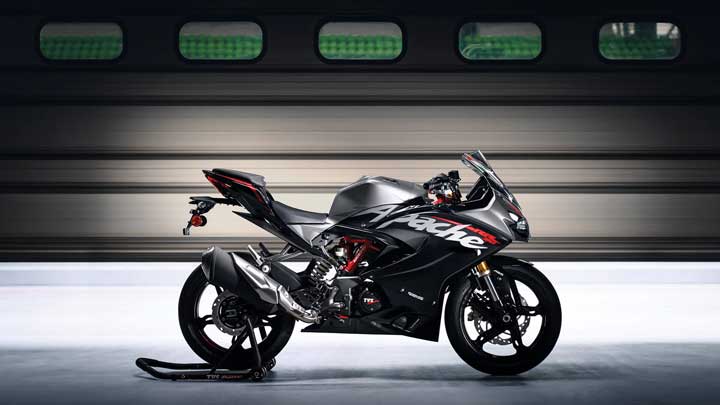
    TVS Apache RR 310

    The RR310, now has a race-fit suspension and so definitely is agile. So it assures a sharper response at corners and has minimal or no dive while braking. Even with no tweaks to the powertrain, it would be able to clock quicker lap times. This is offered in the Dynamic kit and the Race kit which offers race ergonomics along with handlebars and footpegs to create more committed riding stance. The RR310 is now just very close to become the race machine and would surely qualify to be so. We can surely expect such upgrades from TVS for the RR in the near future.

    2021 TVS Apache RR310 specifications:

    • TVS Apache RR310 Engine – 312.2cc single-cylinder, liquid-cooled
    • *Power :
      25.8 PS at 7,600 rpm (Urban and Rain mode)
      34 PS at 9,700 rpm (Sport and Track mode)
      *Torque:
      25 Nm at 6,700 rpm (Urban and Rain mode)
      27.3 Nm at 7,700 rpm (Sport and Track mode)
      *Six-speed transmission
      Throttle by wire
      Slip & assist clutch
      *Brakes:
      Front: 300 mm
      Rear: 240 mm
      Dual-channel ABS
      *Suspension – Front: Inverted telescopic forks
      *Rear: Two arm aluminium die-cast swingarm, monoshock
      *Tyres – Front: 17″ 110/70 Tubeless Michelin ROAD 5
      *Rear: 17″ 150/60 Tubeless Michelin ROAD 5
      *Ground clearance – 180 mm
      *Seat height – 810 mm
      *Kerb weight – 174 kg
      *Fuel tank – 11 litres
      *5″ TFT instrument cluster with Bluetooth connectivity
      – turn-by-turn navigation
      – phone notifications, etc.

    New Features of 2021 TVS Apache RR310 model

    The Dynamic manages the adjustable suspension. The Race kit give you a sportier riding position. The TFT instrument cluster has a Digi Doc to store vehicle documents and Dynamic Rev Limiter. You can choose accessories for your race colours as you like and also you can add a racing number of your choice on the front.

    TVS has offered a ‘Build To Order’ platform with which you can customise your motorcycle on a web configurator or an app called TVS Arrive. If you do not like. you can also buy a standard bike which is same as before. The engine gives you a punch in the middle of the rev band with 34 hp and 27 Nm. The brakes are spot on. The 2021 model really just has a lot of choices for a bike lover. The on-track performance is really impressive but I really wonder if a normal street rider requires an option to firm up the suspension.

    Price of 2021 TVS Apache RR310
    The kits really increase the prices.

    The base price is now Rs 2,59,990 (ex-showroom). If you want to prepare it for the track, you should spend Rs 17,000 more. The Dynamic kit costs Rs 12,000 and Race kit costs Rs 5,000. To add racing colours, you should spend Rs 4,500 for Race Replica graphics and Rs 1,500 for red alloy wheels. These kits are available even for the older models – 2017 and later, if the customer would like it.

    If you have a passion to become a motorcycle racer, then 2021 TVS Apache RR310 is the perfect choice for you. Go ahead and make it yours!

  • Honda Amaze Review 2021 First Drive Experience

    Honda Amaze Review 2021 First Drive Experience

    The new 2021 Honda Amaze is just a face-life model of Honda’s second gen model which was launched in 2018. Styling is unchanged and the new changes are minute modifications. Read our review further to get a complete idea!

    Honda Amaze Important Features

    1. The new Honda Amaze is a 2-row, 5 seater.
    2. Engine options include 90hp, 1.2-litre four-cylinder i-VTEC petrol engine; 100hp, 1.5-litre four-cylinder diesel engine(80hp with automatic gearbox). Both are offered with 5-speed manual and CVT automatic gearbox.
    3. The Price(ex-showroom) of Honda Amaze ranges from 6.32 to 11.15 Lakhs.

    Honda Amaze Review 2021

    Honda Amaze – What Is New?

    The sheetmetal of the Amaze is the same. The fascia has a more modern Honda look. It looks more elegant because of the revised headlights, LED projectors, LED daytime running lights and a narrower chrome bar grille with thin chrome strips beneath them. A slightly re-defined front bumper with more detailed fog lamp cutouts gives a complete look at the front. The 15-inch alloy wheels with machined faces and the chrome door handles contribute a larger look to the Amaze Honda. The changes at the rear include a re-modeled tail light cluster, C-shaped LED lighting elements, and a chrome strip along the length of the lower bumper with the tail pipe projecting outwards. Honda offers additional NVH damping inside the boot lid.

    Honda Amaze 2021: Interiors

    A few changes from the pre-facelift Amaze include a matte silver trim on the dashboard, door pads, and around the AC vents. In the manual variants, an addition of a faux leather gearshift lever surround can be seen. The top variants are offered a slight tweaked beige upholstery with contrast stitching. The top range also has the benefit of-mounted map.

    A perfectly-styled cabin is designed such that it gives great driving position, good visibility, comfortable access to controls and a lot of space to store small things but no space to store a large phone. The front seats provide good cushioning and support and could easily accommodate even large-sized drivers. The seating position is good with height adjustable driver’s seat. There is no front centre armrest but it could be bought as an optional accessory.

    The rear seats are well cushioned with good levels of knee room and under thigh support for the passengers. But the headroom is less for tall passengers. The rear seat could accommodate 3 persons but it best fits 2 persons if they are wide. The positioning of the centre armrest is too low to comfortably use. The rear air-con vent and most importantly, the adjustable rear headrests are missing. The fixed rear headrests are not big enough and will be able to provide only minimal support on the event of a collision.

    Honda Amaze Engine – Function

    The 1.2-litre naturally aspirated engine is refined when idle – with noise and vibrations being well controlled. The Amaze petrol copes well with the flow of traffic. It should be noted that mid-range is flat and needs downshift to make a quick overtake. The tall fourth gear makes this a bit tough at the highway speeds. With a VTEC badge, the engine has an exciting top-end, and it revives to its 6,600rpm redline on an empty road!

    Honda Amaze Driving Experience

    A ride in Amaze gives you an excellent feeling and this has increased for its facelifted model. Honda has set-up the Amaze’s suspension in such a way that it helps drive easily on bad roads and never compromises on a smooth drive, even with large potholes and bumps. Suspension noise is well controlled but noise insulation cannot be remarked as great. At high speeds, you could feel even the creeping of road noise. The Amaze would give you a fairly stable ride and would do good even in triple-digit speeds on highways.

    Honda Amaze – Other Upgraded Features

    The amaze has a fully-loaded VX trim, automatic climate control, digital MID and steering mounted controls. It has a 7.0-inch touchscreen infotainment with Android Auto and Apple CarPlay.

    Honda Amaze Verdict

    Visually, there might seem to be a fresh new look to the front of the new Honda Amaze varying from previous version but you could also feel that it is not enough. Some more features also could have been added. The infotainment and storage management has a very few changes.

    Honda Amaze – Specifications

    Petrol and Diesel engines are available.

    *The 1199 cc Petrol engine with power generation of 88.76bhp@6000prm and a torque of 110nm@4800rpm.

    * The 1498 cc Diesel engine with power generation of 97.89bhp@3600rpm and a torque of 200nm@1750rpm.

    *Available in Manual and Automatic transmissions.
    *Amaze has a kerb weight of 1012-1051 Kg.

    *Configuration: Dimensions of 3995 mm in length, 1695 mm in width and 1498 mm^3 mm in height.

    Engine 1199: 1498 CC
    Fuel Tank Capacity: 35 Liters
    Mileage: 18.6 Kmpl – 24.7 Kmpl
    Dimensions(L*W*H): 3995*1695*1498 mm^3

    Honda Amaze Price:

    The price(ex-show room) ranges between Rs 6.34 lakhs to Rs 11.15 lakhs.

  • Review Of Royal Enfield Classic 350 – 2021 – It Is For You!

    Review Of Royal Enfield Classic 350 – 2021 – It Is For You!

    Read This Detailed Review Of Royal Enfield Classic 350 To Know Why It Is For You!

    There are some bikes which consume fuel and some bikes which are inexpensive that people prefer, but when choosing a bike, it is all about what features you want in your motorcycle! The Royal Enfield Classic 350 dominates all other products of the Royal Enfield portfolio! – It has become the most sold motorcycles at the moment. The“Classic 350” retains the iconic British style which is permanently engraved in the hearts of Indians.

    Review Of Royal Enfield Classic 350

    Royal Enfield Classic 350 Technical Variations

    2021 Royal Enfield Classic 350 has many changes which have made it the most modern bike today! Everything has been changed but seems as if nothing is changed. At first glance, you might not even be able to notice any difference at all. But on looking closely, you will notice the brand-new twin down tube frame which hails from the Royal Enfield Meteor. With respect to dimensions, the wheelbase is similar at 1,390mm, but the length has increased by a few millimeters. Ground clearance is better which now is at 170mm. The front suspension now has 41mm forks and the rear shock absorbers give a little more travel at 90mm. The new Classic 350 has larger disc brakes. The front disc is a 300mm unit and the rear disc is a 270mm unit. Dual channel ABS is offered as a part of the package. The tyres at both up front and back are larger. The front tyre is 100/90 19in and the rear tyre is a 110/90 18in unit. Tubeless tyres are offered for alloy wheel variants.

    Royal Enfield Classic 350 Engine

    2021 Royal Enfield Classic 350 has a new engine. The old UCE 346cc lump has been changed to the 349cc single which is on the Meteor 350. The motor offers 20.2bhp and 27Nm of torque. The torque has gone down by 1Nm and power has gone up by 1.1bhp. The gearbox remains to be a 5-speed unit.

    Royal Enfield Classic 350 Design- Classic But Modern

    You will surely wonder if it was an easy job to design such an elegant vehicle. From whatever angle or how much ever distance you look at it, it looks classic but at the same time, looks upgraded with a modern look! That is because of the rounded off grips, the retro-styled switchgear, updated instrumentation, better fit and finish that we saw in Meteor-350. A closer look would reveal new headlamp nacelle. There is still the twin pilot lamps and the round headlamp like the outgoing model, but a bit different.

    To not have LED lighting or even a DRL can be considered as a lower side factor. The indicators come from the Meteor and are feature bulbs. Upon the nacelle, the brand-new instrument panel is placed. It features the analogue speedo with tell tale lights below. Below that, is a digital readout which displays fuel level, twin trips and a clock! The Classic 350 also has a fuel gauge. There is another digital pod on the right side which has the Tripper Navigation system. The gauge blends into the design and adds to the elegance of the Classic 350 to make it a bike of the modern age. Another major change is the ignition lock. The old fork mounted lock is replaced by the ignition key operated lock. The handle bar has a switchgear which comes from the Meteor. The fragile chrome mirrors may get loose over time. The fuel tank has been redesigned to the chrome version. You can also note the new retro style logo and the knee pads. The quality of the chrome and the paint job is first class. The fuel tank capacity has come down by half a litre to 13 litres. The seats have been redone and there are no springs. Two side boxes on both sides are present. One of them has a little storage space for your documents! The rear end has a new tail light cluster on which all lights are feature bulbs and not LEDs.

    Royal Enfield Classic 350 Performance And Mileage

    Mount on the Classic 350, it is a very friendly and comfortable bike for you! The riding position has changed and so you feel more comfortable now. The handle bar easily falls to hands and the seat height has also not changed. So, most of the Indians can easily sit on the Classic 350. On start up, the bike and the motor feels smooth and silent. No roughness and the vibrations have been reduced to nearly zero. When you rev up the engine, it still remains smooth. The gearbox shifts crisply and the bike takes off with spirit! When you shift up to fourth and fifth cog, the new Classic 350 rides at speed as low as 40 or 50kmph. There is no knock or jerk felt from the engine, and it goes smooth. If you would like to ride on a high speed, then there is enough torque to pull through to 80kmph without need for a gear change. This is brilliant like the old Bullets which we loved! The optimal place of action of the new Classic is between 80 and 100kmph. It easily gets to these speeds and has no vibes that bother you. Beyond 100kmph, the clutch feels a bit heavy and you can notice it at times of high traffic. The Royal Enfield claims a fuel efficiency of 37kmpl for 2021 Royal Enfield Classic 350.

    Royal Enfield Classic 350 Ride And Handling

    The new Classic 350 impresses you when you ride on it. It absorbs bumps well and gives you the confidence to handle the rough roads. It gives you an easy feel when you drive in traffic. You can ride around corners on this bike with confidence. There is ample clearance with no fear of scraping anything! The brakes give you good bite and you can haul the bike easily!

    Final Verdict

    Royal Enfield has succeeded to change everything and yet nothing! The new Classic 350 does all things that its old version did and also the good thing is that it does it even better! So, the legend Classic 350 is ready to carry its new generation riders! It is for the people who want all the best new things and yet prefer the goodness of the retro. If you are one of those, the new Royal Enfield Classic 350 is sure to impress you!

    Royal Enfield Classic 350 Prices and Variants

    The ex-showroom prices of five variants of the 2021 Royal Enfield Classic 350 are as follows:
    1. Royal Enfield Classic 350 Redditch: Rs 1.84 lakh
    2. Royal Enfield Classic 350 Halcyon: Rs 1.93 lakh
    3. Royal Enfield Classic 350 Signals: Rs 2.04 lakh
    4. Royal Enfield Classic 350 Dark: Rs 2.11 lakh
    5. Royal Enfield Classic 350 Chrome: Rs 2.15 lakh

    HAVE A GREAT RIDE GUYS!

  • Kawasaki ZX10R

    Kawasaki ZX10R

    2021 Kawasaki ZX10R Road Test Review – Ninja Sport Bike!

    Kawasaki has launched the ZX12R, the ZX14R and the H2. These have overshadowed Kawasaki’s ZX10R. But it is not any less capable. The new 2021 Euro 5 compliant Kawasaki ZX-10R has been launched after a lot of updates in terms of design and styling. It is not having a better look than the previous-generation but it is more aerodynamic. The 998cc four-cylinder engine presents with new oil-cooler, new exhaust for Euro 5 compliance with a revised gearing and tweaked riding modes.


    Kawasaki ZX10R Design

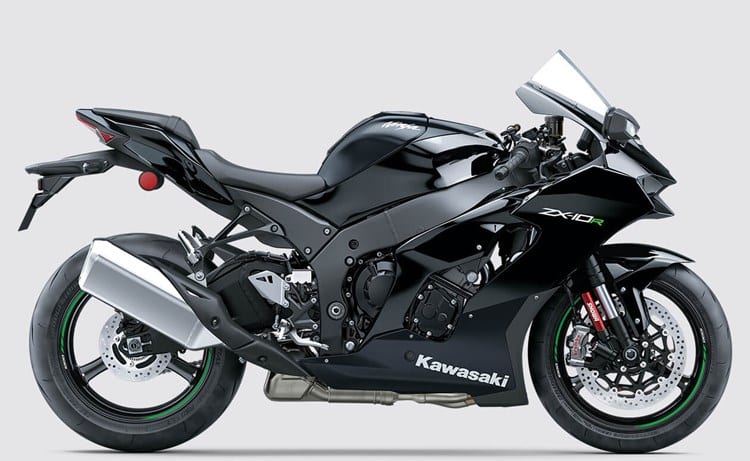
    The new ZX-10R has new and compact headlamps with revised ram-air intake. The stance is aggressive and track-oriented with new peg and bar placement. The revised seat which is higher at the rear reduces the drag. The twin-spar chassis remains the same.

    There is a large air intake duct in the centre with recessed LED headlights. You can find prominent chin spoilers below the headlights and also some integrated ducts near them. These ducts facilitate air entry in to them which moves out via the vents on the top part of the side fairing. This helps in improving high-speed downforce17%.

    The side fairing has been redesigned with a wide slit which gives a sneak peek at the Titanium alloy exhaust headers which are bright blue in colour. The fairing guides the hot air from the radiator fan away from the rider’s legs. There is a slightly reprofiled cowl and the triangular LED tail-light, same as the previous model at the rear. The new ZX-10R has a very splendid look! The 2021 ZX-10R is presented with 4 colour options – Lime Green, Ebony, Pearl Blizzard White, and Flat Ebony.

    The New Features

    The cockpit has a new TFT screen and Bluetooth connectivity. Four rides mode can be chosen using the buttons on the bar. Road features like cruise control and optional heated grips are offered. Riding modes offered are Sport, Road and Rain. The inertial measurement unit (IMU) and the five-level traction control are the other important features. Launch control, cornering ABS, engine brake control and cruise control which is new are the important other features of ZX-10R. Another new thing is the throttle position sensor in the throttle. Also, you can find a Bluetooth chip in the new instrument panel which uses Kawasaki’s Rideology app.

    2021 Kawasaki ZX10R Road Test Review

    Kawasaki ZX10R Riding Experience

    When you mount on the motorcycle, you can instantly realise that the riding position is such that it would be a tough job to spend even 1 hour on the saddle. This feeling is caused because the handlebar is at a pushed forward position by 10mm even though the clip-ons are a little more spread out to provide better leverage. The foot pegs are placed at a raised position by 5mm for more cornering clearance. It may be good for a racetrack but on the road, this bent position will leave its impact on your lower back, wrists and neck muscles which would be make you very tired. However, the performance of the Ninja ZX-10R is best to tackle Indian roads easily!

    The new air-cooled oil-cooler helps consistent engine performance. The revised exhaust and ride-by-wire system helps throttle inputs. The first, second and third gears are shortened. A bigger rear sprocket, by two teeth, is introduced. The new ZX-10R is more tractable at city speeds. It manages the third gear at 30kph without any objection. The heat management in the congested traffic is perfect. The sheer performance that this engine packs can be felt and at 200hp+, the motorcycle seems to be a missile on wheels!

    Kawasaki ZX10R Engine, Chassis And Performance

    There are only minimal changes in the engine and chassis. The bike gets a better aerodynamic efficiency from H2 and the mechanicals have its origin from the WSBK winning race bike. There are plenty of things to be proud about the new Ninja.

    The engine is very smooth like a typical Kawasaki but with new emissions norms. It makes less noise than before. The New 2021 ZX-10R is more friendly to starters when compared to most of its rivals. The engine has gotten geared to ensure acceleration. It is not overwhelming but safe to the tyres.

    Verdict

    The Kawasaki could be controlled with three levels of adjustments. It facilitates by simply pressing the mode and then simultaneously select switches. It is one of the most affordable litre-class machines and also has all the electronics like launch control, lean-sensitive ABS, traction control, an electronic steering damper and customisable engine braking control. Quick-shifter is one of the best aspects. At slow engine speeds, clutchless shifts are not clunky. It is the most preferred bike by daily users.

    Kawasaki ZX10R Specifications

    Engine: 998 CC
    Power of 203 PS @ 13200 rpm
    torque of 114.9 Nm @ 11400 rpm.
    Kerb weight: 207 kg
    Fuel Tank Capacity: 17 L
    Seat Height: 1185 mm

    Price: Starts from 15.1 Lakh (Ex-showroom)

    Are you impressed by the New 2021 Kawasaki ZX10R. Go ahead and make it yours!

  • Ducati Multistrada V4 Review

    Ducati Multistrada V4 Review

    The Multistrada is the first bike which offers adaptive cruise control with blind-spot warning. The 2021 Ducati Multistrada V4 S is the most advanced motorcycle with the latest technology in the market today. It is a fast 170-horsepower canyon carver and suitable for adventurous rides with many world-class safety features.

    Ducati Multistrada V4 Technical Variations

    The two important variations in the new version from the old Multistrada 1260 are the transition to the bike’s first V4 and being the first Ducati without desmodromic valves since the brand was introduced. The Ducati V4 is technologically the most updated one which offers more power and smooth drive. The counter-rotating crankshaft counteracts the gyroscopic effect of the bike’s spinning wheels and hence promotes an effortless ride. The Multistrada V4 S produces 170 hp at 10,500 rpm and 92 pound-feet of torque at 8,750 rpm. That power is transmitted through a six-speed sequential transmission via a built-in quickshifter which allows clutchless shifting. The clutch is a hydraulically actuated wet multiplate unit. Like all other Ducatis except Diavel, Multistrada uses a chain final drive. The bike has an optional titanium and carbon fiber Akrapovic sports exhaust.

    Ducati Multistrada V4 Engine

    Like BSVI or Euro 5 engines, V4 is thirstier, also with the extra cylinders. Gentle highway riding at 120kmph turns out to be a fairly decent expenditure. If you ride the Multistrada like you would drive a Ducati, you may get 200km range as it has a larger 22-litre tank.

    Ducati Multistrada V4 Dashboard

    The big TFT dash reveals a lot of information. It can be adjusted for two viewing angles, namely seated and standing. It is a product of Bosch and is the same basic hardware, 6.5-inch screen, as on newer BMWs. Additionally, this also supports apps but the interface is not so intuitive.

    Ducati Multistrada V4 Important Features

    The drivetrain is good and the chassis is very functional. The most obvious feature is the electronically adjustable semi-active suspension. The system is configurable for all types of driving styles and types of load on the bike. The suspension adjusts itself quickly to handle bad roads and offers you a comfortable ride. The adaptive suspension, commanding riding position and high ground clearance are the advantages. ABS is standard and the sophisticated electronics package is sensitive. The rear ABS is defeatable for off-road use and the braking system is top class. The feel at the lever is excellent which is because of the radial master cylinder and the radially mounted calipers. The ABS is not overly intrusive, even in sensitive modes, which gives more confidence. There is an inertial measurement unit which gives lean-sensitivity to traction control.


    The important technologies include adaptive cruise control system which also powers a blind-spot warning system which is completely transformative while riding in the town at time s of heavy traffic. The blind-spot monitoring system is integrated into the bike’s rearview mirrors which works brilliantly. Even though head-checking is the best safety measure, the added security is also incredible. The electronics suite is highly configurable and navigable. The color TFT dash is legible in various lighting conditions and the controls on the left-hand grip are easy to identity.

    Verdict –The Leader!

    The Ducatia Multistrada V4 S is the leader with regards to electronics and their user interfaces. As it is a high-end adventure bike, you would expect a number of features and standards. Heated grips, heated seat for both rider and passenger and a good windscreen are the major outstanding features. Being an adventure motorcycle, Ducati has a lot of accessories for the Multistrada. The most useful one is the factory luggage. Ducati offers plastic side cases instead of metal bags for this purpose. The lower side factor is that they would be susceptible to damage if the bike goes down.

    Ducati Multistrada V4 Prices And Variants

    Ducati Multistrada V4 is priced and offered in 3 variants:
    1. Multistrada V4 STD at Rs.18,99,000
    2. Multistrada V4 S at Rs.23,10,000
    3. The top variant Multistrada V4 S Grey which comes at a price tag of Rs. 23,30,000.

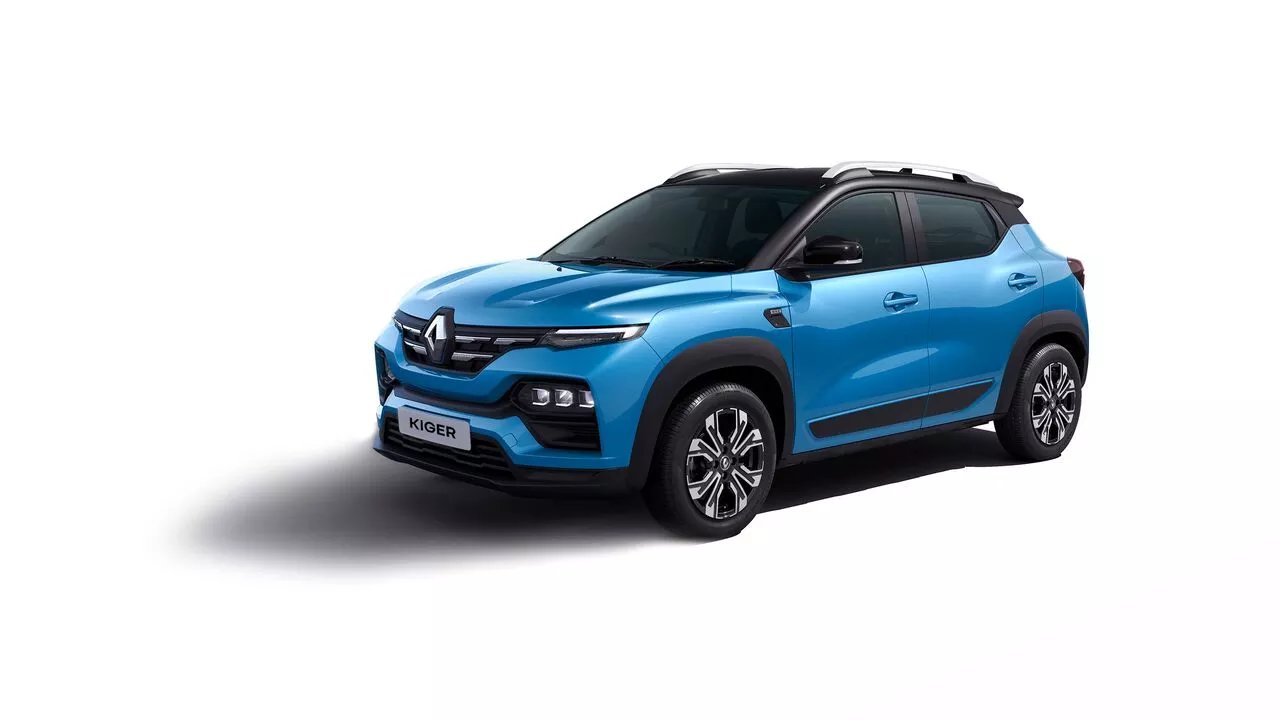
  • Renault Kiger Review

    Renault Kiger Review

    Renault Kiger – Comparison with Magnite

    The top version of Renault Kiger is priced from Rs 5.4 lakh to Rs 9.5 lakh which means that it is the most affordable sub compact SUV at a price equal to that of Magnite.
    Renault Kiger Review

    Renault Kiger:

    Renault is well known for its Duster and Kwid. It is well-known for presenting cars at reasonable prices which are, at the same time, spacious and practical. Renault came back with Triber and launched it 2 years ago which was built to fit to an aggressive priced compact MPV. Again, Renault is challenging the same with the Kiger. It has the same CMFA platform like the Triber and offers the buyers a sub compact SUV at affordable price. But should you consider Kiger just because the price is affordable? Go through our review to know more!

    Renault Kiger Exteriors

    The Kiger is compact at 3991mm and is the shortest sub compact SUV. However it has a very aggressive look. The front end has the DRL/headlamp structure like the Kwid but it has a bigger grille with slimmer DRLs. The grille gets chrome elements to have a premium look. It resembles the Kwid but the Kiger looks more attractive with the best front angle.

    The roof-rails and cladding on the side and front with flared wheel-arches adds to its attractive look. There is also an aluminium finish skid plate. The top-model Kiger is furnished with 16-inch diamond cut alloys. The roof design is less boxy than other sub-compact SUVs. It is very attractive because of the youthful colours mixed with black to get a dual-tone effect. There are 5 colour options namely Ice Cool White, Moonlight Grey, Planet Grey, Mahogany Brown, Radiant Red, Caspian Blue, with Mystery Black Roof.

    Renault Kiger Interiors

    The Renault Kiger cabin has a premium look when compared to Duster and Triber. It has more gloss black elements. The steering wheel has a better finish and quality The lower half of the dashboard might have been better. Otherwise, it has the best cabin and a more premium look than the Brezza. The steering wheel is a 3-spoke unit which has buttons and there is a fully digital 7-inch TFT cluster. With a basic lay-out, the cluster has very nice icons/graphics.

    The other main screen is the 8-inch touch screen situated on the centre console which has the same look as the Triber with a push button start button below. But the Kiger touch screen has a better look even though with less menus and a simple screen. There is a round knob for drive modes and a storage space. The door pockets are big and the glove box is big with a 10.25 litres capacity.

    Kiger has is very spacious and is worth the value for money. The front seats are thinner but quite comfortable. The USP is the rear seating which has a near flat floor with a width to accommodate three people without much discomfort. The legroom is better than other subcompact SUVs and the headroom also is nice. The cushioning of the seats could have been better though. The boot has 405litre capacity.

    Renault Kiger Features

    There is an 8-inch touch screen with wireless Apple CarPlay and Android Auto with wireless charging and multi connect Bluetooth with 5 devices. A reverse camera with parking sensors is also available. Other features are Auditorium 3D Sound system, a hands-free access card-like key, climate control, back lit steering controls, perfect ambient lighting, rear ac vents, powered mirrors, a clean air filter, four airbags and many other advanced features. No sunroof or cruise control is present.

    Driving Experience
    The Kiger is offered with standard 1.0 petrol with a manual and AMT gearbox, but in the higher range, you get a 1.0 turbo petrol with a 6-speed manual and CVT automatic. The engine gives 100PS and 160Nm with a 5-speed manual gearbox. The Kiger is fairly silent when started and the clutch/gearbox is light. It is also easy to ride and the light steering also helps.

    The turbo petrol is good because of the decent amount of torque which gives you a relaxed feeling when you drive. Use the 3rd gear on the narrow Goan roads and it does not require many shifts to run the engine smoothly. Some vibrations are felt and the engine gets a bit noisy. The Sport mode gives the car a good throttle response that is the most loved aspect of Kiger. The normal mode is good. The eco mode can be used to save fuel.

    Renault Kiger Mileage

    By using Eco mode, nearly 20kmpl official figure could be possible. Otherwise, it is 10-13kmpl. The Kiger is lovable at corners as it is light plus agile and also has a slight firm suspension. It does not float in the corners and has good high speed stability. It has 205mm ground clearance.

    Rivals of Kiger

    Nissan Magnite is the obviously the rival! Magnite is bigger but Kiger has is good in terms of design cabin and also the inclusion of an AMT. The Magnite is a traditional SUV. The Sonet and Venue are very costly and Brezza is also very expensive, starting at Rs 7.4 lakh to Rs 11.2 lakh but do not have the advanced features that Kiger offers. Kiger is the best option for both styling and price.

    Renault Kiger Verdict

    *The Kiger is priced from Rs 5.4 lakh to Rs 9.5 lakh for the top-end version.
    *It is the most affordable sub compact SUV
    *The Kiger is very attractive and also spacious with excellent features.
    *The turbo petrol very suitable for an SUV buyer.

    If you want a subcompact SUV without spending too much, then Renault Kiger should be your choice. Ride it home today!

  • Hyundai Alcazar Review – First Drive Experience

    Hyundai Alcazar Review – First Drive Experience

    The new Hyundai Alcazar is based on the megahit Hyundai Creta but differs from it in many ways including size, space, features and seating capacity. Read our Hyundai Alcazar review to know about all those details.

    Hyundai Alcazar review
    Hyundai Alcazar Important Features

    1. Hyundai Alcazar is a 3-row 6/7 seat imitative of the Hyundai Creta.
    2. Engine options include 2.0-litre petrol and 1.5-litre diesel with both transmission options namely, manual and automatic.
    3. The price(ex-showroom) of Hyundai Alcazar ranges from Rs 16.30 lakh to Rs 20 lakh.

    SUV Market Trend

    Over the last few years, the growth in the SUV market has gone high and hence, the competition between the companies is also high. All companies have added new features to their mid-sized SUV portfolios. One thing that they all have done is that they have converted their SUVs from 2-row seating to 3-row seating vehicles with increased seating capacities from 5 to 6 and/or 7.

    Hyundai Alcazar 7-seater

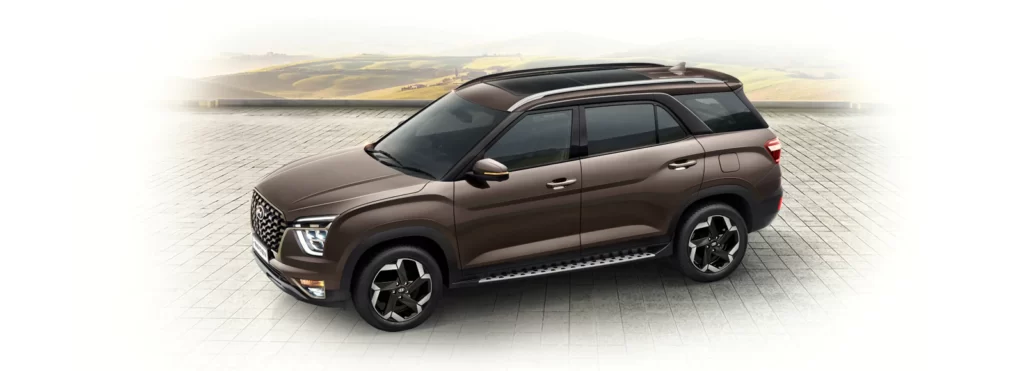
    If Hyuandai Alcazar had wheelbase similar to Hyundai Creta, it would have been difficult to accommodate the third row and there would be no adequate space for knee room for the people occupying the middle row of seats. Therefore Hyundai extended the wheelbase on the Alcazar giving it the longest wheelbase. The length of Hyundai Alcazar at 4,500mm is 200mm longer than Hyundai Creta. The Creta has a sloping roofline while the Alcazar does not have. So, there is adequate headroom for passengers in the third row of Alcazar as well.

    Hyundai Alcazar: Design and Style

    Even though the Alcazar is based on Creta, the similarities are just at the front end. The grille, the front bumper and the fog lamp surrounds differ although they look the same in shape and size. Skid plates are available in the front and the rear. The side profile demonstrates that Alcazar is just another SUV with three rows of seats but more spacious and completely different from the previous generation SUVs.

    Many vehicles keep the sides same as before when converting them from 2-row to 3-row seating but in Alcazar, the height of the front door has been increased and design of the rear door has also been changed. An additional window for the third row of seats is also provided. The Creta is sleek and sporty but Alcazar is big and can carry more people!

    At the rear, fenders are provided. The rear is totally different. There are LED tail lamps which give a stunningly good look. The wheels of Alcazar are of 18in as opposed to 17in wheels of Creta. The larger wheels suit the increased size of the vehicle.

    Hyundai Alcazar: Interiors

    Hyundai has given a Cognac brown interior trim which offers a premium look. Especially it looks very good at night with one of the 64 ambient light colours. The layout is similar to Creta but with some changes and a lot of additions in terms of new features and systems. The infotainment system screen is same. The instrument panel is updated to 10.25in screen which is customizable with two digital dials allowing displays for the blind view camera monitors for use of the indicator. The rearview mirrors have a camera on either side which help generate the surround-view which could be seen on the central infotainment screen and also the front and rear views.

    The front seats are comfortable but the real unique selling proposition of the Alcazar is from the second row of seats which are available as either 2 captain seats or as 3-seater bench. The backs of the front seats have a fold-out table with a cup holder as well as a slot for tablets for the rear seat passengers to use. Wireless phone chargers are available at the front and the rear centre arm-rests.

    It is easy to get in to the third row of Hyundai Alcazar. The second row is one touch tip and tumble which can be tumbled with one motion itself. Getting in is easy with the help of side step and there is additional space behind the floor console between the two captain’s seats. The second row is not so comfortable for adults but is good for children or short people.

    Hyundai Alcazar Engine Options

    The Alcazar has two engine options. The first option is 2-litre Nu engine, the 3rd generation version of petrol engine used on Tucson and Elantra with 159bhp of max power and 191Nm of peak torque. Hyundai assures certified fuel efficiency of over 14kmpl for both the automatic and manual 6-speed transmissions. The diesel engine is the same 1.5-litre CRDipowerplant used on Creta and many other cars in the Hyundai range. The max power and peak torque are the same as on Creta at 115bhp and 250Nm, but the gearboxes provide good acceleration, driveability and fuel efficiency. It has a certified fuel economy of 20.4kmpl for manual and 18.1kmpl for automatic transmissions.

    Hyundai Alcazar Driving Experience

    The driving gives you a smooth experience. The engine gets a little rough at the top end but as it comparatively has a large displacement, torque is enough with no need to rev the engine too hard. Without a full load of passengers with just one person on board, we can drive the petro engine Alcazar well, although you cannot compare the ride with a ride in Creta which is more sport. But for slow and steady driving, Alcazar is just fine. As it has large wheels with low profile tyres, the suspension has to work a bit hard on bad roads as there is minimal bump absorption from the tyres.

    Hyundai Alcazar: Connected Car upgraded
    Hyundai Alcazar has the most advanced Blue Link system and additional voice commands and functions. It can perform things like opening and closing the sun-roof and rolling down the side glasses. With air map update, it will greet you on each of your new journeys.

    Hyundai Alcazar: Verdict
    The Alcazar fits in between the Creta and the Tucson with respect to pricing. Although it has 3 rows of seats, it is not a full-sized SUV. Alcazar has advanced features and assistance systems and good interiors. It is not a 6/7 seater but a 4/5+2 seater. If it fits your bill, then the Alcazar would be the best vehicle for you to drive home!

    Hyundai Alcazar review: Specifications
    Variant: Hyundai Alcazar 2.0-litre petrol AT
    Engine: 1,999cc four-cyl NA petrol
    Power: 159bhp@6,500rpm
    Max torque: 191Nm@4,500rpm
    Gearbox: 6-speed torque converter
    LxWxH: 4,500×1,790×1,675mm
    Wheelbase: 2,760mm
    Boot space: 180 litres (all rows up)

    Hyundai Alcazar Price
    Hyundai Alcazar is priced between Rs 16.3 and 20 Lakh (ex-showroom in India).