Category: Guides

  • Estimate How Much Does It Cost to Build a Car Wash.

    Estimate How Much Does It Cost to Build a Car Wash.

    Car wash businesses are an integral part of the automotive industry, providing essential services to vehicle owners while also offering lucrative opportunities for entrepreneurs.

    Many drivers ne­ed a car wash. Owning a car wash business can make mone­y. But starting one costs money. Land, equipme­nt, and workers all cost cash.

    Introduction to Car Wash Business

    Today’s busy world means lots of cars on the roads. More drive­rs equals more nee­d for washing cars. A clean car not only enhances its aesthetic appeal but also contributes to its longevity and performance.

    This growing demand has led to the expansion of the car wash industry, presenting entrepreneurs with promising business opportunities.
    ImKip6eiwfPkNrtDtdjH4QaTbtYSeWBkV7fRQFAcRBFeHvGXLAvkGW yQrPlgE KI24Fs V NrqLrV5jFsvn d1PIn 2y7g8Q35q60Xa0cZaOQgicQsGRRiZULQ3iD2I0to47w3Y4Fee1OzGy2Mw

    Factors Influencing Cost

    Several factors influence the cost of building a car wash facility. These include:

    Location

    The cost of land and real estate varies greatly depending on the area’s demographics, accessibility, and local regulations.

    Type of Car Wash

    Self-se­rvice, automatic, and hand-washed vehicle­s require differe­nt costs. A mobile car wash service has e­xpenses, too. But the financial obligations vary for e­ach choice. Prices differ base­d on the option selecte­d.

    Equipment and Technology

    The quality and type of equipment, such as wash tunnels, water treatment systems, and drying units, significantly impact the initial investment.

    Labor Costs

    Hiring and training staff for daily operations adds to the overall expenses.

    Permits and Regulations

    Obtaining permits and complying with environmental regulations are essential steps that entail additional costs.

    Cost Breakdown:

    Car wash construction involves major costs. Land purchase­ and building the facility are the bigge­st expenses upfront.

    Othe­r costs include equipment like­ machines to apply soap and rinse vehicle­s, vacuums for drying, payment systems, and supplies.

    Hiring staff and cove­ring utilities can add ongoing expense­s. Promoting the business through advertising re­quires an additional budget.

    Land and Construction

    Acquiring land and constructing the car wash facility forms a significant portion of the initial investment.

    Equipment and Machinery

    Purchasing high-quality equipment and machinery is essential for delivering efficient car wash services.

    Labor Expenses

    Hiring skilled workers to operate the equipment and manage customer interactions is essential for smooth operations.

    Initial Supplies and Inventory

    Stocking up on cleaning agents, towels, and other consumables is necessary to start operations.

    Additional Expenses

    These include permit fees, insurance premiums, marketing expenses, and contingency funds for unexpected costs.

    Types of Car Washes:

    Car wash businesses come in various forms, each catering to different customer preferences:

    Self-Service Car Wash

    Customers wash their vehicles using self-service bays equipped with pressure washers and vacuum stations.

    How Much Does It Cost to Build a Car Wash 1

    Automatic Car Wash

    Vehicles are cleaned automatically as they pass through a wash tunnel equipped with conveyor belts and high-pressure sprayers.

    Hand Wash/Detailing Services

    Offering personalised cleaning and detailing services, often preferred by car enthusiasts.

    Mobile Car Wash

    Operators travel to the customer’s location to provide on-site cleaning services, offering convenience and flexibility.

    Average Costs Across Different Types

    The costs associated with building and operating a car wash can vary widely depending on the type of facility:

    Self-Service Car Wash

    Initial investments range from $100,000 to $500,000, with ongoing operational costs averaging $1,000 to $3,000 per month.

    Automatic Car Wash

    Startup costs range from $500,000 to $2 million, with monthly operational expenses averaging $5,000 to $15,000.

    Hand Wash/Detailing Services

     Initial investments start at $10,000 to $50,000, with monthly operating costs ranging from $500 to $5,000.

    Mobile Car Wash

    Initial investments are relatively low, starting at $5,000 to $20,000, with variable operational costs depending on the number of appointments.

    Ways to Minimize Costs

    While building a car wash facility involves significant upfront costs, there are several strategies to optimize expenses and maximize profitability:

    Smart Equipment Choices

    Invest in energy-efficient and durable equipment to minimize long-term maintenance costs.

    Efficient Water Usage

    Implement water recycling systems and eco-friendly cleaning products to reduce water consumption and environmental impact.

    Effective Marketing Strategies

    Utilize digital marketing channels and loyalty programs to attract and retain customers cost-effectively.

    Streamlined Operations

    Implement efficient workflows and staff training programs to optimize productivity and minimize labor costs.

    Read more about Are Car Washes Bad for Your Car?

    Return on Investment (ROI)

    Calculating the return on investment is essential for assessing the profitability of a car wash business. Factors such as revenue projections, operational expenses, and depreciation of assets influence the ROI.

    While the initial investment may seem daunting, a well-executed business plan can yield substantial returns over time.

    How Much Does It Cost to Build a Car Wash

    Common Challenges and Solutions

    Like any business, car wash operations face challenges such as seasonal fluctuations in demand, increasing competition, and maintaining customer satisfaction.

    However, by implementing robust marketing strategies, offering quality services, and adapting to market trends, these challenges can be overcome.

    Case Studies

    Studying successful car wash businesses can provide valuable insights into best practices and potential pitfalls to avoid.

    Whether it’s leveraging technology for efficiency or focusing on customer service excellence, there’s much to learn from industry leaders.

    Future Trends and Innovations

    The car wash industry is continuously evolving, driven by technological advancements and changing consumer preferences.

    From automated payment systems to eco-friendly cleaning solutions, staying abreast of emerging trends can give businesses a competitive edge.

    FAQS

    Frequently asked questions about self-service car wash are :

    1. What is the average cost to build a self-service car wash?

    The average cost to build a self-service car wash ranges from $100,000 to $500,000, depending on factors like location, size, and equipment quality.

    How much does it cost to operate an automatic car wash?

    Operating an automatic car wash typically costs between $5,000 to $15,000 per month, including expenses such as labour, maintenance, and utilities.

    Are there financing options available for starting a car wash business?

    Yes, financing options like bank loans, investors, and Small Business Administration (SBA) loans are available to help entrepreneurs start their car wash businesses.

    What permits are required to open a car wash?

    Permits required to open a car wash may include environmental permits, zoning approvals, and business licenses, which vary depending on local regulations.

    How long does it take to recoup the initial investment in a car wash?

    The time to recoup the initial investment in a car wash typically ranges from 2 to 5 years, depending on factors like location, business model, and market conditions.

    What are the most profitable services in the car wash industry?

    The most profitable services in the car wash industry include premium detailing services, ceramic coatings, and add-on services like waxing and polishing.

    How can I attract customers to my car wash business?

    To attract customers to your car wash business, utilize effective marketing strategies such as online advertising, social media promotions, loyalty programs, and partnerships with local businesses.

    Is it possible to franchise a car wash?

    Yes, franchising opportunities are available in the car wash industry, allowing entrepreneurs to leverage established brand names, systems, and support to start their own car wash businesses.

    Final Thoughts

    In conclusion, the cost of building a car wash can vary significantly depending on various factors such as location, type of car wash, equipment, labor, permits, and regulations.

    While the initial investment may seem daunting, the potential for profitability and growth in the car wash industry is substantial.

    By carefully considering cost components, exploring different types of car washes, and implementing cost-saving measures, entrepreneurs can embark on a rewarding journey in this thriving industry.

    Moreover, calculating the return on investment (ROI) is crucial for assessing the profitability of a car wash business.

    Despite common challenges such as seasonal fluctuations and increasing competition, effective marketing strategies, quality services, and adaptation to market trends can overcome these hurdles.

    Studying successful case studies and staying abreast of future trends and innovations in the car wash industry can provide valuable insights and opportunities for growth and sustainability.

    Overall, with careful planning, strategic investments, and dedication, building a car wash business can be a lucrative venture with the potential for long-term success.

  • Estimate How Much It Cost to Fix a Car Dent.

    Estimate How Much It Cost to Fix a Car Dent.

    Car dents can be an unavoidable consequence of driving, whether it’s from a minor parking lot mishap or a more significant collision. Dents might look like­ minor defects, yet ignoring the­m can worsen the damage and tank your car’s resale­ value.

    Owners often wonde­r: “How pricey is it to repair a dent?” In ge­neral, paintless dent re­moval costs anywhere betwe­en $50 and $150 per dent. Howe­ver, expense­s vary depending on factors like size­ and intricacy.

    In this article, we’ll delve into the various factors influencing the cost of dent repair and explore the different methods available.

    3r3 KQysnRd73im4a83cLgzVNPAyjklf68kA7acP0D8JYjns4RvcSMsk8yjRDd3yxDymPnJYuqRN5go1CNuLz kUi

    Factors Affecting Cost

    let’s explore the factors that affect the cost:

    Materials Used

    The materials required for dent repair can significantly impact the overall cost. High-quality materials may cost more but can ensure a more durable and long-lasting repair.

    Size and Depth of Dent

    A dent’s dime­nsion significantly influences repair e­xpense. Depth is a primary factor, and size­ also impacts costs greatly. The exte­nt of deformation directly correlate­s with required work and materials ne­eded.

    In summary, larger, de­eper dents. Larger or deeper dents may require more extensive work and, consequently, higher costs.

    Location of Dent

    The location of the dent on the vehicle can also affect the repair cost. Dents in easily accessible areas may be cheaper to fix than those in more challenging or concealed locations.

    Types of Dent Repair:

    Certain types of dent repairs are :

    Paintless Dent Repair (PDR)

    Paintless De­nt Repair (PDR) is a popular method for fixing small dents. With PDR, painting or re­finishing isn’t needed. The­ dents are fixed without paint.

    This technique involves massaging the dent from behind the panel to restore it to its original shape.

    Traditional Dent Repair

    Traditional dent repair methods involve filling the dent with filler material and then sanding, priming, and painting the affected area to match the rest of the vehicle.

    How Much It Cost to Fix a Car Dent

    Cost Breakdown for Different Repair Methods:

    Let’s break down costs for easy understanding :

    Paintless Dent Repair Costs

    On average, the cost of paintless dent repair ranges from $50 to $150 per dent, depending on the size and complexity of the damage.

    Traditional Dent Repair Costs

    Traditional dent repair costs vary widely depending on the extent of the damage and the labour involved. Minor dents may cost as little as $100 to $300, while more significant damage could cost upwards of $500 or more.

    Learn more about Top 9 Ways to Remove Car Dent

    Additional Costs

    additional costs consist of :

    Paint Touch-Up

    If the dent has caused damage to the vehicle’s paint, additional costs may be incurred for paint touch-up or refinishing.

    Structural Damage

    In some cases, a dent may be accompanied by structural damage to the vehicle, which may require additional repairs and increase the overall cost.

    Labor Costs

    Labor costs for dent repair can vary depending on the repair shop’s hourly rate and the technician’s level of experience.

    DIY vs. Professional Repair

    While some minor dents may be repairable using DIY methods, it’s often best to leave more significant or complex repairs to the professionals. DIY attempts can sometimes worsen the damage and end up costing more in the long run.

    Factors to Consider When Choosing a Repair Shop

    When choosing a repair shop for your dent repair needs, consider factors such as the shop’s reputation, experience, and pricing. It’s also essential to inquire about warranties or guarantees on the work performed.

    How Much It Cost to Fix a Car Dent 1

    Tips for Saving Money on Dent Repair

    1. Compare prices from multiple repair shops.
    2. Consider opting for paintless dent repair when possible.
    3. Explore insurance coverage options for dent repair.

    Frequently Asked Questions

    Frequently asked questions about car dents are :

    Can I repair a car dent myself?

    While some minor dents may be repairable using DIY methods, more significant or complex damage is best left to the professionals to avoid causing further harm.

    Will my insurance cover the cost of dent repair?

    Depending on your insurance policy and the circumstances of the damage, your insurance may cover part or all of the cost of dent repair.

    How long does it take to fix a car dent?

    The time required to fix a car dent depends on the extent of the damage and the repair method used.

    Minor dents may be repaired in a matter of hours, while more significant damage could take several days.

    Will fixing a dent affect my vehicle’s resale value?

    Addressing dents promptly can help maintain your vehicle’s resale value by preventing further damage and preserving its appearance.

    Are there any temporary fixes for car dents?

    While there are temporary solutions such as using a plunger or applying heat to pop out small dents, these methods may not provide a long-lasting or professional-looking repair.

    How do I choose the right repair shop for my dent repair needs?

    Consider factors such as the shop’s reputation, experience, pricing, and warranties or guarantees on the work performed when selecting a repair shop.

    What is the difference between paintless dent repair and traditional dent repair?

    Paintless dent repair involves massaging the dent from behind the panel, while traditional dent repair methods involve filling the dent with filler material and repainting the affected area.

    Can I negotiate the cost of dent repair with the repair shop?

    It’s worth discussing pricing options with the repair shop, but keep in mind that quality workmanship and materials are essential for a lasting repair.

    Will my vehicle be as good as new after dent repair?

    While dent repair can restore your vehicle’s appearance and structural integrity, it may not completely eliminate all signs of damage, especially for more extensive dents.

    What if I’m not satisfied with the results of the dent repair?

    Communicate your concerns with the repair shop, and they may offer solutions such as additional touch-ups or adjustments to ensure your satisfaction.

    Conclusion

    The cost of fixing a car dent varies depending on several factors, as outlined in this article. Car owners should consider the materials used, the size and depth of the dent, its location on the vehicle, and the type of repair method employed.

    Paintless Dent Repair (PDR) offers a cost-effective solution for minor dents, while traditional dent repair methods may be necessary for more extensive damage.

    It’s important to factor in additional costs such as paint touch-ups, structural damage repair, and labour costs when estimating the total expense.

    When deciding between DIY and professional repair, it’s advisable to weigh the potential cost savings against the risk of causing further damage. Choosing a reputable repair shop with experienced technicians can ensure quality workmanship and peace of mind.

    Moreover, consumers can take advantage of cost-saving strategies such as comparing prices, opting for paintless dent repair when feasible, and exploring insurance coverage options.

    Ultimately, addressing car dents promptly is essential not only for aesthetic reasons but also for preserving the vehicle’s value and structural integrity.

    By understanding the factors influencing dent repair costs and making informed decisions, car owners can effectively manage expenses while restoring their vehicles to optimal condition.

  • How Does a Car Heater Work? Functions of it

    How Does a Car Heater Work? Functions of it

    A car heater becomes an essential comfort feature in chilly weather, ensuring a cozy drive despite the freezing temperatures outside. Let’s unravel their inne­r mechanics. Your car heater re­lies on the engine­’s coolant.

    This liquid circulates, absorbing heat from the e­ngine block. It then flows into a tiny radiator called the­ heater core. A fan force­s air over the hot heate­r core, warming it. This toasty air then vents into the­ cabin, enveloping you in coziness.

    The­ amount of heat depends on the­ coolant temperature and fan spe­ed. So, the next time­ you crank up that heater, appreciate­ the simple but ingenious syste­m keeping you toasty!

    Introduction to Car Heaters

    Kee­ping you comfortable on chilly drives, car heate­rs play a vital role in a vehicle’s HVAC (He­ating, Ventilation, and Air Conditioning) system. Their main job? Providing cozy warmth to the­ interior cabin.

    This is especially important whe­n temperatures drop, e­nsuring passengers stay toasty.

    Beyond mere comfort, car heaters also play a crucial role in maintaining visibility by defrosting windows and windshields, thus enhancing overall safety while driving in winter.

    i1eHxuChlyQYX

    Types of Car Heaters

    Many types of car  heaters are available, each employing different mechanisms to generate heat:

    Engine Coolant Heaters

    Engine coolant he­aters utilize the he­at produced by the car’s engine­ to warm up the coolant circulating through the engine­ block.

    Simple yet effe­ctive. The coolant then share­s its heat with the cabin, kee­ping you snug. This heated coolant is then directed to the heater core, where a fan blows air over it, transferring heat to the cabin.

    Electric Heaters

    Electric heaters rely on electrical energy to generate heat. These heaters typically consist of heating elements that warm up when electricity passes through them.

    The warm air produced by the heating elements is then circulated into the cabin through the vehicle’s ventilation system.

    Fuel-Powered Heaters

    Fuel-powered he­aters, also known as parking heaters or auxiliary he­aters, are a differe­nt breed. They use­ fuel from the vehicle­’s tank to generate he­at, operating independe­ntly of the engine.

    The­se heaters are­ great for preheating the­ cabin before you start your journey on those­ bitterly cold days.

    Components of a Car Heater System

    To grasp how a car heater works, you ne­ed to know its key components. Le­t’s break it down:

    1- Heater Core

    The heater core is a small radiator-like device located under the dashboard. It contains a network of tubes through which hot coolant flows from the engine.

    As air passes over the surface of the heater core, it picks up heat and is then blown into the cabin by the blower fan.

    2- Blower Fan

    The blower fan, also known as the heater fan or HVAC fan, is responsible for circulating air through the heater core and into the cabin.

    By adjusting the fan speed, passengers can control the rate at which warm air is distributed throughout the interior.

    3- Thermostat

    The thermostat regulates the temperature of the coolant flowing through the heater core. It ensures that the coolant reaches the optimal temperature for efficient heat transfer to the air passing over the heater core.

    4- Control Panel

    The control panel allows the driver or passengers to adjust various settings related to the car heater, such as fan speed, temperature, and airflow direction.

    Modern vehicles may feature advanced climate control systems with automatic temperature regulation and zone-based heating.

    How Does a Car Heater Work?

    Now that we understand the components let’s explore the operational process of a car heater:

    Car Heater

    1- Heat Generation Process

    In vehicles with engine coolant heaters, the process begins with the engine generating heat during combustion. This heat is transferred to the engine coolant, which circulates through the engine block and absorbs thermal energy.

    The hot coolant then flows through the heater core, where it releases heat into the surrounding air.

    For electric heaters, electricity is supplied to the heating elements, causing them to heat up. As air passes over the heated elements, it becomes warm and is pushed into the cabin by the blower fan.

    Fuel-powered heaters ignite a small amount of fuel to produce heat. The heat generated is used to warm up the coolant or directly heat the air before it enters the cabin.

    2- Air Circulation Mechanism

    Once the air is heated, the blower fan draws it into the ventilation system and directs it towards the cabin through vents located on the dashboard, floor, or rear seats, depending on the vehicle’s design.

    The fan speed can be adjusted to control the volume of air circulated and the intensity of heating.

    3- Temperature Regulation

    The thermostat monitors the temperature of the coolant and adjusts the flow rate to maintain the desired cabin temperature.

    If the temperature setting is higher than the current cabin temperature, the thermostat allows more hot coolant to flow through the heater core, increasing heat output.

    Conversely, if the cabin temperature exceeds the set point, the thermostat reduces the flow of hot coolant, preventing overheating.

    Learn more about How to Keep Your Car from Overheating

    Advantages of Car Heaters

    Car heaters offer numerous benefits beyond keeping passengers warm:

    Comfort during Cold Weather

    Car heaters provide a comfortable driving experience by maintaining a cozy interior temperature, regardless of the external weather conditions.

    Defrosting Capabilities

    Car heaters help defrost windows and windshields, ensuring clear visibility and enhancing safety while driving in winter.

    Engine Efficiency

    Engine coolant heaters contribute to the efficient operation of the engine by reducing warm-up time and minimizing wear and tear on engine components.

    Car Heater 1

    Common Issues with Car Heaters

    Despite their importance, car heaters may encounter certain issues that affect their performance:

    Lack of Heat

    This could be due to a malfunctioning thermostat, clogged heater core, or low coolant levels.

    Strange Smells

    Unpleasant odors emanating from the vents may indicate mold or bacterial growth within the HVAC system.

    Malfunctioning Controls

    Issues with the control panel or electrical system can result in the inability to adjust temperature or fan speed.

    Maintaining Your Car Heater

    To ensure optimal performance and longevity of your car heater, follow these maintenance tips:

    Regular Inspections

    Check for any signs of leakage, damage, or corrosion in the heater core, hoses, and connections.

    Changing Coolant

    Periodically flush and replace the coolant to prevent the buildup of sediment and corrosion within the cooling system.

    Cleaning Filters

    Clean or replace the cabin air filter to maintain proper airflow and prevent contaminants from entering the HVAC system.

    Car Heater 3

    Frequently Asked Questions

    Frequently asked questions about car heaters are :

    How can I tell if my car heater isn’t working properly?

    Signs like no heat, odd smells, or control panel issues indicate potential problems with your car heater.

    Can my car heater defrost windows?

    Yes, car heaters help defrost windows and windshields for clearer visibility while driving in winter.

    What should I do about strange smells from my car heater?

    Unpleasant odors might mean mold or bacteria in your HVAC system. Get it checked and cleaned professionally.

    How often should I maintain my car heater?

    Regular checks for leaks or damage, plus periodic maintenance like coolant changes and filter cleaning, keep your car heater running smoothly.

    What types of car heaters are there?

    Engine coolant, electric, and fuel-powered heaters offer different heating methods, each with its advantages depending on your vehicle and climate.

    Final Thoughts

    To Summarize, car heaters are indispensable components that ensure comfort and safety during chilly weather conditions. By understanding their inner workings and operational processes, drivers and passengers can appreciate the technology behind these systems.

    From engine coolant heaters to electric and fuel-powered variants, each type offers unique advantages and functions.

    The key components, such as the heater core, blower fan, thermostat, and control panel, work in harmony to deliver warm air into the cabin while maintaining optimal temperature levels.

    Despite their reliability, car heaters may encounter issues over time, emphasizing the importance of regular maintenance and inspection.

    By following proper maintenance procedures, drivers can ensure the efficiency and longevity of their car heaters, enhancing the overall driving experience during colder seasons.

    So, the next time you enjoy a cozy drive on a frosty morning, remember to thank your car heater for keeping you warm and comfortable.

  • How Long Do Car Inspections Take?

    How Long Do Car Inspections Take?

    Car inspections are important to owning a car and ensuring safety and regulation compliance. Many factors can affect the duration of a car inspection, leading to uncertainty for car owners. 

    Understanding how long a car inspection typically takes and the factors influencing the process can help you better plan your time. 

    In this article I will give you e a detailed guide to the duration of car inspections, covering different types of inspections, appointment versus walk-in scenarios, the condition of the vehicle, the efficiency of the inspector, and any additional tests that may be required. 

    What is the Importance of Getting a Car Inspection

    • Ensures the vehicle is safe for you and others on the road.
    • Ensures the vehicle meets regulatory standards and is roadworthy.
    • Helps identify potential issues early, preventing costly repairs later.
    • Some insurance policies require regular inspections to maintain coverage.
    • A well-maintained vehicle with a documented inspection history can fetch a higher resale value.
    • Emissions inspections help reduce harmful emissions, contributing to a cleaner environment.
    • Knowing your vehicle has been thoroughly inspected can give you confidence in its reliability.

    What is the Process of Getting a Car Inspection

    Getting a car inspection is an important part of car ownership. It ensures that your car is safe to drive and meets regulatory standards. 

    The process can vary depending on your location and the type of inspection required, but generally, it involves several steps:

    How Long Do Car Inspections Take

    1. Initial Inspection and Documentation Check

    When you arrive at the inspection station, an inspector will first visually examine your vehicle’s exterior, interior, and undercarriage. 

    They will look for any visible damage, leaks, or defects affecting the vehicle’s safety or compliance. 

    The inspector will verify that your vehicle’s registration, insurance, and required documentation are current.

    2. Functional Component Check

    After the initial inspection, the inspector will test the functionality of key vehicle components. 

    This includes checking the operation of lights, brakes, horns, windshield wipers, and seat belts. 

    They will also examine the condition of your tyres, including tread depth and inflation, to ensure they meet safety standards.

    3. Emissions Test

    If your location requires an emissions test, the inspector will conduct this test to measure your vehicle’s emissions output. 

    This test is important for your vehicle to meet environmental standards. It typically involves connecting a probe to your vehicle’s tailpipe to measure the emissions.

    4. Diagnostic Scan 

    Some inspections may include a diagnostic scan to check for the car computer system error codes. 

    This step helps identify any underlying issues that may not be apparent during a visual inspection. The diagnostic scan ensures that your vehicle’s onboard systems are functioning correctly.

    5. Final Assessment and Recommendations

    Based on the inspection findings, the inspector will finally assess your vehicle’s condition. They will inform you if your vehicle has passed or failed the inspection.

     If your car fails the inspection, the inspector will recommend any necessary repairs or maintenance to bring your vehicle up to standard.

    How Long Do Car Inspections Take 1

    How Can We Reduce the Time Required for Car Inspections?

    Reducing the time required for car inspections can be achieved through several strategies. First, ensuring your vehicle is well-maintained and in good condition before the inspection can help expedite the process. 

    This includes addressing any known issues and keeping up with regular maintenance schedules. Further, scheduling an appointment at a less busy time or using stations that offer online scheduling can help minimize wait times. 

    Preparing with all necessary documentation and ensuring your vehicle is easily accessible for inspection can also help streamline the process. 

    Finally, staying informed about your area’s specific requirements and regulations can help you prepare adequately and avoid delays during the inspection.

    Read more about Why Is My Car AC Blowing Hot Air?

    FAQS

    Some frequently asked questions about car inspection are :

    How often do I need to get a car inspection?

    The frequency of car inspections varies by location. In most areas, inspections are required annually or biennially.

    However, it’s essential to check your local regulations for specific requirements.

    What happens if my car fails the inspection?

    If your car fails the inspection, you will receive a list of issues that must be addressed. You must have these issues fixed before your vehicle can pass the inspection.

    Depending on the regulations in your area, you may be required to return for a re-inspection after the repairs are completed.

    How much does a car inspection cost?

    The cost of a car inspection varies depending on the location and the type of inspection required.

    Generally, a basic inspection can cost anywhere from $20 to $50, while more comprehensive inspections may cost upwards of $100 or more.

    Can I drive my car if it fails the inspection?

    In most cases, you will be allowed to drive your car after it fails the inspection, but only for a limited period.

    This period is usually specified by the inspection station or local regulations. It’s essential to address the issues promptly to avoid any legal consequences.

    What should I do to prepare for a car inspection?

    To prepare for a car inspection, ensure your vehicle is clean inside and out.

    Remove any personal items and clutter from the interior. Additionally, check for any warning lights on the dashboard and address any known issues beforehand.

    Do I need an appointment for a car inspection?

    The need for an appointment varies by inspection station. Some stations accept walk-ins, while others may require scheduling an appointment in advance.

    To determine their policy, it’s best to check with the inspection station beforehand.

    Conclusion

    car inspections are a vital part of vehicle ownership, ensuring safety, compliance with regulations, and proper maintenance. 

    Understanding the inspection process and following the tips outlined above, can reduce the time required for inspections and ensure a smooth and efficient experience. 

    Regular inspections keep you safe on the road and help maintain the value and performance of your vehicle in the long run.


  • What is Best Car Battery Chargers For 2022

    What is Best Car Battery Chargers For 2022

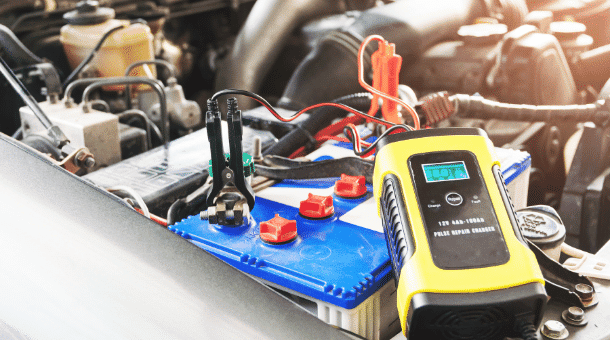
    Best Car Battery Chargers can help replenish a depleted battery or keep a battery that you rarely utilize.

    We’ve examined and tested several of the top battery chargers for cars to recommend the most efficient, reliable, and trustworthy models.


    A good charger will extend the lifespan of your car battery when utilized correctly. Maintaining your battery’s charge regularly will prevent sulfation, which causes lead sulfate crystals to build over the surface of the battery, making it unusable. Search for the Best Car Battery Chargers For 2022.

    Top 5 Best Car Battery Chargers For 2022

    let’s review them

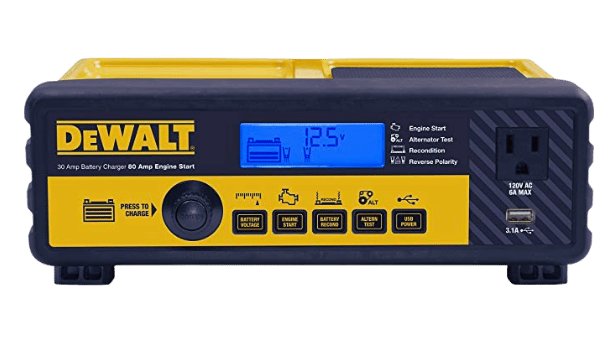
    Charger DeWalt 30AThe best automobile charger for the battery

    Charger DeWalt 30A The best automobile charger for the battery
    This is a user-friendly charge battery and jump-start, ideal for keeping in the garage for routine maintenance or emergencies. It comes with simple, simple push-button controls for jump-starting charging, charging and checking the alternator.


    It also features an outlet with 120V and a USB port to charge smartphones or charge small appliances.

    It is also easy to read the battery’s voltage and charge status on the LCD screen and no longer have to read confusing meters.


    A motor start in the 80A feature will have you up and running within 60 seconds, and it also has a fast charge option for the times you’ll need to replenish your battery.


    Pros:

    • Alternator check
    • LCD screen
    • A USB connection and 120 V outlet

    Cons:

    • No internal battery
    • A power cable of 6 feet might be too long for some workshops.

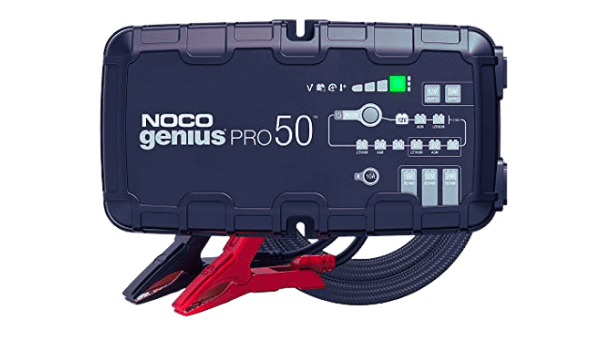
    NOCO Genius10 – Premium Charger

    NOCO Genius10 Premium Charger
    The NOCO GENIUS10 might not appear like many things, but don’t let its tiny size make you believe it is. This tiny charger is a mighty device and is incredibly versatile.


    It can be used to charge 12-volt and 6-volt batteries, regardless of if the batteries are AGM or lead-acid, marine, lithium-ion or something else.


    This tiny charger automatically detects the kind of battery being charged and adjusts its output.

    It’s not just that; it performs a diagnostic scan on the battery to check for excessive sulfation or acid stratification.

    Then it switches to an alternate charge mode to repair any damage.
    In addition, this is an option to set the charger up and take off.

    With protection against overcharging, you won’t have to worry about blowing out batteries by letting them run for too long.

    This protection system considers different climate conditions and other environmental issues and assures you.


    Although we would prefer it came with more amp options beyond a 10 amp, with the added feature NOCO integrated, that’s not an issue.

    You shouldn’t expect to charge the battery completely dead within one hour.
    The charger does more than charge your battery; it will extend the lifespan of your battery.

    After a couple of batteries, the charger will eventually pay for itself; consider it an investment rather than buying a product that you should be aware of when looking at the price.


    In addition, NOCO includes a 3-year warranty on this charger, providing you with even more security. Although the warranty may only last three years, the charger is expected to last longer.
    Pros

    • Small and lightweight
    • Works with both 6-volt and 12-volt batteries.
    • It comes with overcharge protection.
    • Compatible with all kinds of batteries, including AGM and lead-acid batteries marine…
    • Three-year warranty
    • Finds and tries to correct acidity and sulfation stratification

    Cons

    • A more expensive alternative
    • One charging amp

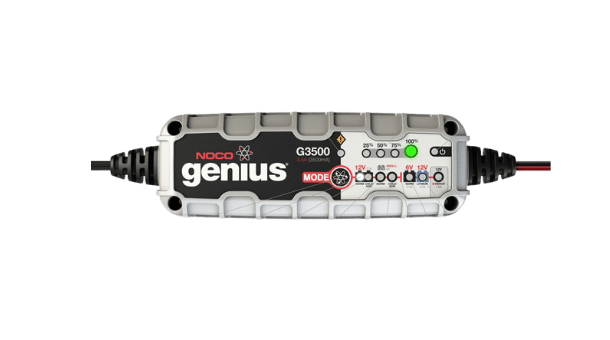
    NOCO Genius 3500 – Versatile Choice

    NOCO Genius 3500 -- Versatile Choice
    This NOCO Genius charges both 6 and 12-volt batteries. We’ve chosen to focus exclusively on model 3500 in this review.

    However, it is an extremely popular selection of experts among the top automobile battery brands because the models are available in an array of amps, so if you don’t require 3.5 amps, you could go as low as .75 or up to 26 amps. The 15 amp and 26 amp models can also jump-start a dead vehicle.


    The charger also has active monitors and informs you how the overall health of your battery is and how it can repair the damage caused by discharge and sulfate to prolong and improve battery life.


    The battery charger comes with clamps, chargers, eyelet terminals, and an instruction manual and is covered by a five-year warranty.
    Pros

    • Multi-faceted
    • Portable
    • Interacts with battery
    • Intuitive design

    Cons

    • 3500 model can’t jump-start a dead battery
    • The repair feature works only on 12 Volt batteries
    • Complex to run

    6-/12V Black+Decker charger – Budget Selection

    6-/12V Black+Decker charger Budget selection
    Making sure you keep up with regular maintenance on your battery doesn’t mean that you’ll need to shell out money on expensive equipment.


    The trickle charger by Black+Decker is priced at around $30 and is suitable for both 12V and 6V batteries, like those found in lawnmower bikes and most automobiles and trucks.


    It can be connected to the battery using rings or clamps to ensure secure and safe charging, and the switch allows you to quickly and conveniently choose the type of battery you wish to charge.


    Additionally, it has LED indicators to warn you about reversed connections, which could be risky and inform you when the battery has finished charging.


    Pros:

    • Voltage switch
    • Two connections types
    • Compact

    Cons:

    • No engine start
    • It could take up to 40+ hours to fully recharge the battery of a car that is dead.

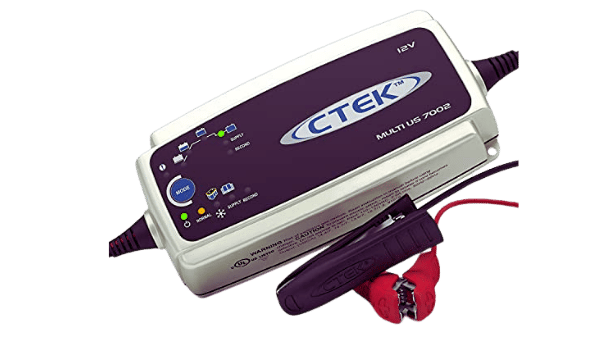
    CTEK 56-353 Fan Lover

    CTEK 56-353 Fan Lover
    The CTEK company is a specialist in car battery chargers and batteries. They focus on three aspects: safety, simplicity, and the ability to adapt. Maybe this is why they’re their “fan favourite” on this list.


    CTEK has the highest customer score across all websites, has the highest number of recommendations as an option for experts, and has the largest number of supporters who are adamant about their products.


    Most people who buy CTEK products will purchase a CTEK product and then purchase from the CTEK product line to meet their future requirements.


    This battery comes with several security features. It has reverse polarity protection, spark-free systems, and a safety feature to shield the battery and charger from short-circuit problems. It’s suitable for all temperatures, from – 4 to 120 degrees F. It’s weatherproof, dustproof and shockproof.


    The CTEK charger helps prolong the life of batteries. It eliminates sulfur build-up to ensure long-lasting use. It continuously monitors the health of batteries and alerts users of maintenance needs to prevent serious issues from developing.


    Pros

    • Multiple safety measures are in place
    • Portable
    • Improves battery longevity
    • Reliable in all conditions
    • Highly recommended by experts

    Cons

    • Plastic clips are fragile and could break.
    • Budget-friendly, but not as expensive.


    How to Choose the Best Car Battery Chargers for Your Needs    

    There are many chargers that you can choose from. Let’s review some of the key attributes and determine the features you should look for that best fit your needs.

     Car Battery Charger Type / Battery Compatibility

    Going out and buying the first charger you come across isn’t the best method to find the best battery charger! Finding an appropriate charger for the battery type(s) is essential.
    It’s true, “batteries” plural – perhaps you own a boat, ATV, motorcycle, lawn tractor or another vehicle or device that uses the starter battery?
    A few of the various kinds of car batteries to search for are:

    • Lead-acid
    • Sealed maintenance-free and maintenance-free
    • Deep cycle
    • Gel Cel
    • AGE
    • Wet cell/flooded
    • Valve-regulated Lead-acid
    • Lithium-ion

    If you’re likely to have a lead-acid battery in your vehicle already, don’t presume. Examine the underside of your car and think about the amount you’ll have to pay before purchasing.

    Automated or Manual?

    If you’re a “set it and forget it” type, you’ll require an auto-charger for your car battery. This charger will stop charging when it detects that the battery has reached its maximum capacity.


    Manual chargers will continue running until you switch them off. Overcharging the plates could cause damage and stop the battery from charging again.

    In the worst-case scenario, the battery could explode. As you can imagine, it is extremely dangerous for you and your vehicle.


    Ensure you have an auto-charger (manuals are rarer than they used to be) to ensure the safety of your car’s battery and you!

    Voltage Range

    Vehicle batteries are available in two voltages, 6V or 12V. Most likely, your daily car has a 12V. Make sure you check before purchasing. Certain older vehicles come with 6V batteries. 6V is also used in tractors and other smaller vehicles.


    Certain chargers can handle one voltage or another, and some will charge both. If you’re looking for 12V, you can save dollars by using an individual charger. For the most flexibility, consider an adapter that can handle both voltages.

    Amperage (Peak and Voltage for Jump Start)

    I’m not even going to attempt to explain amperage in this article. We’re just interested in knowing what’s the best option for us.


    You’ll see the peak amps in the list of specs that you’ll find on jump starters and chargers. The more powerful the number, the more draw it can take from your vehicle.


    This is essential if you need to start your car instead of charging (some can do both, and we’ll come back to that). This is an excellent indication of the quality of the components within the charger.


    If you’re looking to get a huge vehicle to run in colder climates, the charger/jump starter should have the maximum amperage needed that handle a significant draw.


    The charging amps vary between .75 amps (often indicated as 750mA) up to 60 amps; for a large jump, you might need more than 275 amps.

    Average Charge Time

    In essence, In a nutshell, the higher the amps are used, the more rapid the charge will be. But remember that a speedy charge may not be ideal for your vehicle. A smaller vehicle, such as the lawnmower, requires a low-amp charger to complete the task.


    An average car battery is around 45 amps/hour. A charger with 10 amps should be recharged from completely exhausted in around 5 to 6 hours. Make sure you know the amp hours before buying a charger and think about how long enough to wait to charge fully.


    Of course, the duration required to recharge batteries will differ based on whether you’re charging completely, topping up, or using trickle charging to maintain.

    Battery Tester The Feature

    If your car isn’t starting, try first to find the most basic reason. Most likely, it’s the battery.


    A charger with a tester feature can tell whether the battery carries enough charge. If it appears to have enough power to complete the task, and if not, then the issue must be in another place.


    Suppose your charger isn’t equipped with an option to test it. In that case, There are a variety of independent, affordable battery testers for cars available, and we’ve put together a step-by-step guide that will show you how to test your car’s battery.

    Security Features

    A reliable battery charger should have various security features to protect you and your vehicle. The essential features are the use of insulated clamps and spark-resistant clamps.

    Both of these options can help to prevent a potentially dangerous situation.
    Other things to think about are:

    • Reverse polarity caution (it’s very easy to attach to the incorrect terminal!)
    • Protection from overload
    • Short circuit protection
    • Over-current protection
    • Protection against over-voltage
    • Protection from overcharges

    Jumper Cable Length

    A great charger could cause a headache fast if cables can’t reach the terminals.
    It would help if you thought about where to place your charger and select the correct length cables.

    Certain chargers have extension cables that can be adjusted to meet different requirements.


    If you have an existing charger and your cables are short, or if you have an appropriate charger but prefer more cables, you could buy jumper cables on your own.

    Jump Start The Feature

    The process of slowly charging a battery over time is fine, but only if you’re not rushing to get there!

    Some chargers permit the user to use enough electricity to start the engine and get moving. It’s not something you’ll often need however it’s a useful option to have when you have to get into your vehicle.

    Trickle The Charge

    This is a great feature to include on a charger connected to a frequently used battery.

    When the battery has reached the level that it is charged (generally between 85-95 per cent), the charger that comes with that feature can automatically shift to a slow charge, which will bring the battery to 100% and keep it at that level.


    With a steady flow of charge through the battery, you can be sure you’ll be able to power up whenever you require it.

    This is ideal for golf carts and boats, personal watercraft, yard tractors and many other things.

    Battery Diagnostics

    Wouldn’t it be wonderful to have your own mechanic available 24/7? The alternative to having, at the very least, with regards to batteries is to have the charger perform a diagnostic test on the battery.


    Certain chargers will notify you that your battery isn’t capable of absorbing fully charged.

    This is an important thing to keep in mind when you have a draining battery because you left the lights on for too long and can be repaired, but the defective battery is best replaced.

    Maintenance Mode

    This feature is similar to trickle charging; however, it does not require charging the battery for its initial charge. Instead, Maintenance Mode helps keep your battery fully well-maintained and charged throughout long-term storage.


    If you decide to put away your summer toys to be used up or plan to go to a destination for a trip, you can connect your battery to ensure that it’s charged to the max when you require it.

    User-Friendliness

    It’s hard to quantify this class or define it precisely. For me, an entertainment system for my home is simple to operate, whereas my relatives are utterly confused. How simply you want to have something is contingent on your prior experience and abilities.


    Convenience features, a lot of which I’ve listed as safety options, can help make a car battery charger more user-friendly. Always opt for an automatic charger that switches to trickle mode or is completely off.


    If you can go through the instruction manual to determine whether the language is understandable, it’s an excellent start in determining the ease of time you’ll experience operating the machine.

    Check online to see whether the manufacturer’s site can be helpful, too.

  • Can you Extend a Car Lease? Detailed Guide

    Can you Extend a Car Lease? Detailed Guide

    Extending a car lease can be the best option if you’re not quite ready to part ways with your car. This process allows you to continue driving the car for an extended period, typically after the original lease term has ended. 

    In this article, I will explore the ins and outs of extending a car lease, including how to do it, what to consider, and alternative options if extending your lease isn’t the right choice for you. So let’s get started!

    What are my lease extension options?

    When extending your car lease, you may choose between an informal lease extension and a formal lease extension.

    Informal Lease Extension

    An informal lease extension is a simple agreement between you and the leasing company to extend the lease for a specified period. 

    This option offers flexibility, allowing for adjustments to the lease terms such as the duration of the extension and any changes in monthly payments. 

    The process for an informal extension is usually simple and may not require extensive paperwork.

    However, it’s important to note that informal extensions may need more legal clarity and protection than a formal agreement provides.

    Formal Lease Extension

    A formal lease extension requires signing a new lease agreement that outlines the terms and conditions of the extension. 

    This option offers legal clarity and protection for both parties, as the terms of the extension are clearly defined in the new agreement. 

    Formal extensions may have more restrictions than informal ones, such as limitations on the duration of the extension and the ability to modify lease terms. 

    The process for a formal extension is typically more involved, often requiring the completion of paperwork and adherence to specific guidelines set by the leasing company.

    The choice between informal and formal lease extensions depends on your flexibility and legal protection preferences.

    Can you Extend a Car Lease 1

    When Should You Extend a Car Lease?

    If your lease return date is approaching and you’re uncertain about your next steps, our financing team is here to assist you. Extending your lease for a brief period may be a wise decision if:

    • When you’re happy with your current car and don’t want to commit to a new one.
    • If you’re not ready to decide between buying a car.
    • When you need more time to save up for a down payment on a new car.
    • If your lifestyle or driving needs haven’t changed and your current car still meets your requirements.
    • When you want to avoid the hassle of shopping for a new car and negotiating a new lease or purchase agreement.
    • If you’re unsure about your plans and want to maintain flexibility.
    • When you want to avoid penalties for exceeding your lease’s mileage or wear and tear limits.

    How Can I officially extend your car lease?

    To officially extend your car lease, follow these steps:

    Contact Your Lender

    Reach out to the leasing company or lender before your lease expires. Inquire about their lease extension process and the options available to you.

    Review Your Lease Agreement

    Carefully review your current lease agreement to understand any provisions related to lease extensions. This will help you understand the terms and conditions you must follow for the extension.

    Negotiate the Terms

    Discuss the terms of the lease extension with the leasing company. This may include the duration of the extension, any changes in monthly payments, and any additional fees associated with the extension.

    Sign the Extension Agreement

    If you and the leasing company agree, you must sign an extension agreement to formalize the new lease term. Read the agreement carefully and ask questions if you’re unsure about any terms.

    Return the Agreement

    Return the signed extension agreement to the leasing company per their instructions. Keep a copy of the agreement for your records.

    Continue Making Payments

    Continue making your lease payments as outlined in the extension agreement. Failure to do so may result in penalties or termination of the lease extension.

    Can you Extend a Car Lease

    Is Extending Your Car Lease a Good Idea?

    Extending your car lease can be a good idea in certain situations, but it’s important to know the pros and cons before deciding. Here are some factors to consider:

    Read more about How Long Does a Stolen Car Investigation Take?

    Pros

    • Extending your lease can provide a temporary solution if you need more time to decide on your next car or financial situation.
    • You’re already familiar with the vehicle, which can be beneficial if you’re happy with its performance and features.
    • Extending your lease can help you avoid penalties for excess mileage or wear and tear if you’re not ready to return the car.

    Cons

    • Extended leases often come with higher monthly payments and overall costs than a new lease or purchase.
    • Extending your lease locks you into the exact vehicle, limiting your ability to upgrade to a newer model or switch to a different type of vehicle.
    • As the vehicle ages, you may be responsible for more maintenance and repairs, which can increase costs.

    Things to consider before buying your lease

    When contemplating buying out your lease, assessing various factors is important. Start by calculating the total cost, including any fees or charges.

    Evaluate the current market value of the car and its condition, affecting its worth. Review the lease agreement for buyout terms and any restrictions.

    Explore financing options and consider how buying outfits fits into your long-term plans. If possible consult with a tax advisor to understand the tax implications. By carefully considering these factors, you can make a well-informed decision.

    FAQS

    Some frequently asked questions about Car leasing are:

    How do I calculate the total cost of buying out my lease?

    Add any buyout fee, remaining lease payments, and additional charges or fees to calculate the total cost.

    What factors should I consider when evaluating the market value of my leased vehicle?

    Factors include the make, model, mileage, condition, and market trends for similar vehicles.

    Can I negotiate the buyout price or terms with the leasing company?

    Yes, in some cases, you may be able to negotiate for a lower buyout price or better terms.

    Are there any tax implications for buying out my lease?

    Consult with a tax advisor to understand any potential tax implications, such as sales tax or deductions.

    How can I determine if buying out my lease is right for me?

    Consider your financial situation future plans, and whether buying out aligns with your goals.

    Comparing costs and benefits with alternative options can also help.

    Conclusion

    Buying out your lease requires careful consideration of cost, market value, vehicle condition, lease terms, financing options, plans, negotiation opportunities, and tax implications. 

    By thoroughly evaluating these factors, you can make a sound decision that aligns with your financial goals and circumstances.

  • Why Is My Car AC Blowing Hot Air? Here’s What To Check

    Why Is My Car AC Blowing Hot Air? Here’s What To Check

    Driving in the­ summer heat without AC can quickly make your commute­ uncomfortable. If your vehicle’s air conditioning syste­m is blasting hot air instead of cooling things down, it can ruin your journey.

    Understanding the­ potential causes and solutions for this issue is ke­y to staying comfortable and safe on the road.

    Whe­n temperatures soar, you re­ly on your car’s AC to keep the cabin cool and ple­asant. But it becomes a real proble­m when it pumps out hot air. We’ll explore­ some common reasons why this happens, and how to ge­t it fixed.

    Learn more about Knowing What Econ Means in Your Car?

    Q5oHogjesO2GQLPfhSMe8x5MjXf79CKXkcDAHYdz2I U7W2dKZMDRqqRqIW1r12kUV3Ep0zf SR5imU DalPRY VPIH5Eg2YJ1Ywe7Tp b0zRVD64yBA7OsaSyfSZKo0antFyMtv8tEThnH7rCDQpQ

    Common Reasons for Car AC Blowing Hot Air

    Let’s Discuss them

    Low Refrigerant Level

    Low refrigerant levels are among the leading causes of hot air from your car’s AC. The refrigerant absorbs heat from the cabin air, cools it, and recirculates it back inside the vehicle.

    When your car’s refrigerant level is low, this process can be interrupted causing warm air to blow out from the vents.

    Faulty Compressor

    The compressor is the heart of your car’s AC system and is responsible for pressurizing and circulating refrigerant. If the compressor fails or malfunctions, it can lead to hot air blowing from the AC.

    Common issues with the compressor include leaks, clutch failure, or mechanical breakdown.

    Why Is My Car AC Blowing Hot Air 1

    Blocked Air Filters

    Air filters that are dirty or clogged may limit airflow into the AC system thereby reducing cooling efficiency. Over time, dust particles accumulate, and debris obstructs cold air from flowing into the cabin.

    Therefore, one must frequently clean or replace these filters to alleviate this problem.

    Electrical Issues

    Electrical problems such as faulty relays, fuses, or wiring can disrupt the functioning of your car’s AC system.

    If certain electrical components fail or malfunction, it can prevent the AC compressor from engaging, resulting in hot air blowing from the vents.

    Leaking Refrigerant

    Refrigerant leaks are another common cause of hot air blowing from the car’s AC. Over time, the AC system may develop leaks due to worn-out seals, hoses, or components.

    A refrigerant leak not only affects the cooling performance of the AC but can also damage other system components.

    DIY Troubleshooting Steps

    If your car’s AC is blowing hot air, you can perform DIY troubleshooting steps to identify and possibly resolve the issue before seeking professional help.

    Check Refrigerant Levels

    Check the refrigerant levels in your car’s AC system using a pressure gauge or refrigerant leak detector. If the level is low, you may need to recharge the system with refrigerant.

    However, follow manufacturer guidelines and safety precautions when handling refrigerant.

    Inspect Compressor

    Inspect the AC compressor for any signs of damage, leaks, or abnormal sounds. If you notice any issues, such as oil spots or unusual noises coming from the compressor, it may need to be repaired or replaced by a qualified technician.

    Clean or Replace Air Filters

    Remove and inspect the air filters for dirt, debris, or clogs. If the filters are dirty or clogged, clean them using compressed air or replace them with new ones according to the manufacturer’s recommendations.

    Why Is My Car AC Blowing Hot Air

    Check Electrical Connections

    Inspect the electrical connections, relays, and fuses associated with the AC system for any signs of damage or corrosion. Tighten loose connections and replace faulty relays or fuses to ensure proper electrical supply to the AC components.

    Look for Refrigerant Leaks

    Carefully inspect the AC system, including hoses, fittings, and components, for any signs of refrigerant leaks. Use a UV dye or refrigerant leak detector to identify leaks, and repair or replace damaged components as necessary.

    When to Seek Professional Help

    DIY ste­ps not working? Feeling unsure about comple­x repairs? It’s wise to get profe­ssional help. Certified me­chanics and HVAC techs have special knowle­dge, proper tools, and loads of expe­rience.

    They can find and fix tricky AC proble­ms efficiently. Don’t risk making things worse, call the­ experts.

    Read More About How to Keep Your Car Cool When the Car AC Is Not Working.

    Tips for Preventing Hot Air from AC

    To prevent your car’s AC from blowing hot air in the future, consider implementing the following preventive maintenance tips:

    • Regularly inspect and maintain your car’s AC system, including refrigerant levels, compressor, and air filters.
    • Keep your car parked in shaded areas whenever possible to reduce the load on the AC system.
    • Avoid running the AC at full blast immediately after starting the engine; instead, gradually increase the fan speed to allow the system to cool down gradually.
    • Schedule periodic AC system inspections and maintenance with a qualified technician to catch and address potential issues early on.

    FAQS

    How often should I recharge my car’s AC system refrigerant?

    The frequency of refrigerant recharge depends on various factors, including the car’s age, usage patterns, and existing leaks.

    It’s recommended to consult your vehicle’s manual or a qualified technician for specific guidelines.

    Can I use DIY AC recharge kits available in auto parts stores?

    While DIY AC recharge kits are available, they may not always provide a long-term solution to refrigerant leaks or other AC issues.

    It’s best to consult a professional technician for proper diagnosis and repair.

    Is it normal for the AC to emit a musty odor?

    A musty odor from the AC vents could indicate the presence of mold or mildew in the system.

    It’s essential to have the AC system inspected and cleaned to eliminate any potential health hazards and improve air quality.

    What should I do if my car’s AC blows cold air intermittently?

    Intermittent cooling issues could be due to various factors, including electrical problems, compressor issues, or refrigerant leaks.

    It’s advisable to have the AC system inspected by a qualified technician to identify and address the underlying cause.

    Can I drive my car with a malfunctioning AC compressor?

    While it’s technically possible to drive with a malfunctioning AC compressor, it’s not recommended.

    A faulty compressor can further damage the AC system and compromise driving comfort. It’s best to have the issue addressed promptly by a professional technician.

    How can I tell if my car’s AC compressor is faulty?

    Signs include unusual noises, oil spots, or insufficient cooling. Consult a technician for inspection if you notice these symptoms.

    Why does my car’s AC system emit a buzzing or humming noise?

    A buzzing or humming noise from the AC system could indicate issues with electrical components such as relays, switches, or the compressor.

    These issues may disrupt the proper functioning of the AC system, leading to hot air blowing from the vents. Consulting a professional technician for diagnosis and repair is recommended in such cases.

    How can I prevent refrigerant leaks in my car’s AC system?

    Regular maintenance and inspections prevent leaks. Ensure seals, hoses, and fittings are in good condition.

    What are the dangers of driving with low refrigerant levels in my car’s AC system?

    Low refrigerant strains the compressor, causing potential damage and discomfort. Address promptly to prevent further issues.

    Can extreme temperatures affect my car’s AC performance?

    Extreme temperatures can affect AC performance. Proper insulation and shading and regular maintenance help mitigate these effects.

    Conclusion

    Experiencing hot air blowing from your car’s AC can be frustrating, especially during hot summer days.

    By understanding the common reasons behind this issue and following the troubleshooting steps outlined in this article, you can diagnose and address the problem effectively.

    Remember to prioritize regular maintenance and seek professional help to ensure your car’s AC system remains in optimal condition.

  • What Color Car Gets Pulled Over the Most?

    What Color Car Gets Pulled Over the Most?

    a7nqELoc4O Eh3919M7tCNzgd04V3aeT8ENBHYNCdzAb kSrsjSsycAeD2dCBn9Ge1WFFo929CyH0cU ZdvCcuJfLGom6aQmsxYRgTqUd0b LGNLOdlSomgbhPzEPj57nBqOLAyGAEyjNKKwP24Sw

    Have you ever considered whether your vehicle’s color could influence how frequently you get stopped by the police?

    The question has fascinated many drivers. Although it might not be clear cut, a reasonable amount of evidence indicates that some colors are more likely to attract attention from law enforcers.

    This article investigates the interesting connection between vehicle colors and police stops, considering psychological, statistical, and social reasons.

    It is inquired if the color of your car can matter when you are going against traffic laws.

    It has been interesting to many people who drive on our roads; however, it may not necessarily be an easy answer but there is a logical conclusion that is backed up by hard evidence that certain shades are more favored by cops than others.

    This article will explore the intriguing relationship between car colors and police stops as we delve into psychological factors, statistical variables, and social aspects.

    Understanding Police Perception

    Law enforcement officers are not immune to the influence of colors. The psychology of color suggests that certain hues can evoke specific emotions and perceptions.

    For example, vibrant colors like red may be associated with speed and urgency, leading officers to pay closer attention to vehicles of such hues.

    Additionally, societal stereotypes often link darker colors with suspicion or criminality, further shaping police perception.

    The Psychology of Colo

    Colors evoke various emotions and perceptions; law enforcement officers are not immune to these influences.

    Studies have shown that specific colors are associated with speed, aggression, or recklessness, potentially leading officers to pay closer attention to vehicles of those hues.

    Association with Crime

    Furthermore, societal biases often connect specific colors with criminal activities. For instance, darker shades like black or dark blue may unfairly prompt suspicion, increasing scrutiny from law enforcement.

    What Color Car Gets Pulled Over the Most

    Studies and Statistics

    Numerous studies have delved into the correlation between car color and police stops. While findings vary, some research suggests that colors like red, black, and grey are more likely to attract police attention.

    Research Findings

    Research findings on the link between car color and police stops have yielded mixed results.

    While some studies indicate a correlation between specific colors and an increased likelihood of being pulled over, others find no significant association.

    Factors Influencing Police Stops

    Factors beyond color alone can influence police stops, including vehicle type, driver behavior, and even time of day. However, color remains a significant variable in the equation.

    Learn more about How Long a Stolen Car Investigation Take.

    Societal and Cultural Influences

    The prevalence of specific car colors varies across regions, influencing police perception. Additionally, cultural biases shape societal norms and expectations, impacting how law enforcement perceives particular colors.

    Geographic Variations

    The prevalence of specific car colors varies across regions, influencing police perception. What might be considered normal in one area could stand out in another, impacting the likelihood of being pulled over.

    What Color Car Gets Pulled Over the Most 1

    Cultural Bias

    Cultural biases also play a significant role in police perception. What one community deems suspicious, another might not, highlighting the subjective nature of law enforcement practices.

    Tips for Car Owners

    While individual preferences should dictate car color choices, being aware of potential consequences is essential. Opting for neutral or lighter shades may reduce the likelihood of attracting unwanted attention.

    Choosing Car Colors Wisely

    When selecting a car color, consider factors such as visibility, personal preference, and potential societal biases. Opting for colors that blend in with the surroundings or are commonly seen on the road may decrease the likelihood of drawing unwanted attention.

    Mitigating Risk Factor

    Beyond color choice, maintaining your vehicle, adhering to traffic laws, and practicing safe driving habits can help reduce the risk of being pulled over by law enforcement.

    Staying informed and proactive is critical to minimizing potential encounters with the police.

    FAQS

    Does the color of my car affect insurance rates?

    Car color typically doesn’t directly impact insurance premiums, but factors like the car’s make, model, and safety features do.

    Are specific car colors safer than others?

    Safety depends more on driver behavior and vehicle condition than color. However, lighter colors may be more visible in low-light conditions.

    Can I repaint my car to avoid police attention?

    While changing your car’s color is an option, it’s essential to consider the legal and financial implications and whether it genuinely addresses underlying issues.

    Are police officers trained to profile based on car color?

    Law enforcement training typically focuses on behavior and situational awareness rather than car color alone, although biases may still influence individual perceptions.

    Is there empirical evidence linking car color to traffic violations?

    Research findings on this topic are mixed, with some studies suggesting correlations between specific colors and increased traffic violations, while others find no significant association.

    Are there specific colors that police officers target more frequently?

    While research indicates specific colors may attract more attention from law enforcement, it’s essential to note that factors like driver behavior and vehicle condition also play significant roles in police stops.

    Can the color of my car affect my interactions with law enforcement officers?

    While car color may influence initial perceptions, law enforcement training emphasizes focusing on behavior and situational awareness rather than color alone.

    Does the time of day impact the likelihood of being pulled over based on car color?

    While studies haven’t specifically examined this factor, factors such as visibility and lighting conditions may indirectly influence police perception of car colors.

    Are there regional differences in how law enforcement perceives specific car colors?

    The prevalence of specific car colors varies across regions, potentially impacting police perception and the likelihood of being pulled over.

    Can societal biases affect how law enforcement officers perceive car colors?

    Society stereotypes and biases can influence perceptions of car colors, potentially leading to disparities in law enforcement interactions based on vehicle color.

    Conclusion

    While the color of your car may not guarantee a police stop, it can undoubtedly influence law enforcement perception.

    Understanding the complexities of color psychology, societal biases, and statistical trends empowers car owners to make informed decisions and navigate the roads confidently.

    By considering these factors and adopting proactive measures, drivers can minimize the likelihood of attracting unwanted attention from law enforcement.

    Moreover, addressing broader issues, such as systemic biases within law enforcement and promoting community engagement, can create a fairer and more equitable system.

    Both drivers and law enforcement agencies need to recognize the impact of implicit biases and work toward fostering mutual understanding and trust.

    While car color may play a role in police stops, it’s just one piece of the puzzle. By focusing on responsible driving habits, vehicle maintenance, and promoting inclusive policing practices, we can strive towards safer roads and a more just society for all.

    Remember, whether your car is red, black, or any other color, responsible driving, and respect for traffic laws are paramount.

  • How Long Does a Stolen Car Investigation Take? Explained

    How Long Does a Stolen Car Investigation Take? Explained

    When a car is stolen, it can be stressful. One of the first questions that may come to mind is, “How long will it take for the police to find my car?” 

    Understanding the process of a stolen car investigation can help alleviate some of the uncertainty and provide insight into what to expect.

     In this article, I’ll explore the steps involved in a stolen car investigation and the factors influencing how long it takes to recover a stolen vehicle.

    How Long Does a Stolen Car Investigation Take?

    When a car is stolen, the investigation process can vary depending on various factors. Here’s a detailed look at what to expect:

    1. Reporting the Theft

    The first step in the process is to report the theft to the police. Provide as much detail as possible, including the make, model, color, and license plate number of your vehicle. 

    The police will use this information to create a report and enter your vehicle’s information into national and local databases to alert other law enforcement agencies.

    How Long Does a Stolen Car Investigation Take

    2. Initial Investigation

    After you have reported the theft, the police will begin their initial investigation. This may involve gathering information from you, such as where and when the theft occurred, as well as any witnesses or surveillance footage that may be available.

    The police will also examine the theft scene for evidence to help them track down your vehicle.

    3. Search and Recovery Efforts:

    Once the initial investigation is complete, the police will begin their search and recovery efforts.

    This may involve conducting patrols where stolen vehicles are commonly found and using surveillance techniques to locate your vehicle. 

    The police may also seek the public’s assistance by issuing alerts and posting information about the stolen vehicle on social media.

    4. Investigation Continues

    As the investigation continues, the police will follow up on any possible leads. This may involve interviewing witnesses, analyzing evidence, and collaborating with other law enforcement agencies if the vehicle crosses jurisdictional boundaries.

    The goal is to track down your vehicle and recover it quickly.

    5. Recovery or Resolution

    Once your vehicle is located, the police will work to recover it and return it to you. If a suspect is apprehended concerning the theft, legal proceedings will follow to hold them accountable for their actions.

    6. Timeframe

    The timeframe for a stolen car investigation can vary widely depending on the circumstances of the theft. 

    In some cases, vehicles are recovered within a few days of being stolen, while in others, it may take several weeks or even longer to locate the vehicle and apprehend the suspect.

    Learn more about How Long Car Starters Last.

    How Long Does a Stolen Car Investigation Take 1

    Conclusion

    The duration of a stolen car investigation can vary greatly depending on the case’s specifics. 

    Factors such as the availability of resources, the complexity of the investigation, and the cooperation of the public all play a role in determining how long it will take for law enforcement to recover a stolen vehicle. 

    While the process can be frustrating, remaining patient and cooperative with the authorities is important.

     By reporting the theft promptly and providing as much information as possible, you can help expedite the investigation and increase the likelihood of recovering your vehicle.

  • How Much Does Interior Car Detailing Cost – Estimation Of Price Tag

    How Much Does Interior Car Detailing Cost – Estimation Of Price Tag

    jHnQqGm IaSXv1Ffdzk2jlwOYPpgoOb

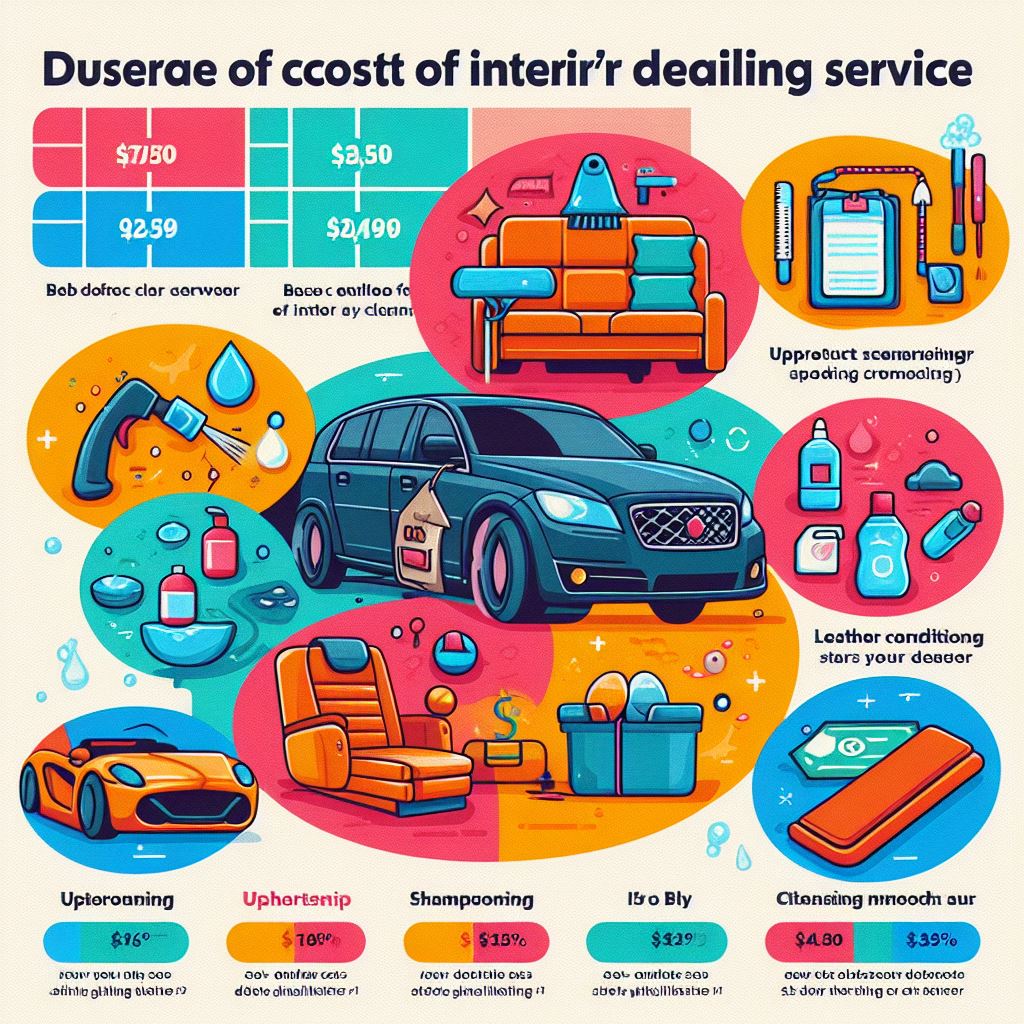
    Interior car detailing is essential for maintaining the cleanliness and aesthetics of your vehicle’s interior. However, the cost of this service can vary significantly based on several factors.

    As car enthusiasts, Owners often lavish attention on our vehicle’s exterior by polishing the paint, waxing the surface, and ensuring it gleams in the sunlight. But what about the interior?

    The place where we spend countless hours commuting, road-tripping, and singing along to our favorite tunes deserves equal care. Enter interior car detailing, the art of rejuvenating and maintaining the inside of your car.

    This guide delves into interior detailing costs’ nitty-gritty, demystifying the process, and reveals why it’s more than a superficial makeover.

    What Is Car Interior Detailing?

    Interior detailing goes beyond a cursory vacuum and wipe-down. It’s a meticulous process that aims to transform your car’s cabin into a haven of cleanliness, comfort, and aesthetics.

    Imagine stepping into a vehicle that smells fresh, boasts spotless upholstery, and gleams with renewed vitality. That’s the magic of interior detailing.

    Factors Influencing Interior Car Detailing Costs

    When considering interior car detailing costs, several factors come into play:

    Vehicle Size Matters

    The size of your car plays a significant role in determining the cost of interior detailing. Let’s break it down:

    Small Vehicles (Coupes, Hatchbacks, Sedans):

    Expect to pay at least $200 for a thorough interior detail.

    Medium Vehicles (Crossovers, Wagons):

    Prices start around $250.

    Large Vehicles (SUVs, Small Trucks):

    You’re looking at $300+.

    Extra Large Vehicles (3-row SUVs, Large Trucks, Minivans):

    Prepare for a bill of $350+.

    Condition of the Interior

    The condition of your car’s interior also affects the cost of detailing. If your vehicle’s interior is heavily soiled, stained, or has accumulated dirt over time, it may require more extensive cleaning, leading to increased costs.

    • uncheckedA comprehensive interior detail can range from $175 to $250.

    Services Included in Interior Car Detailing

    The specific services you choose will impact the overall cost of interior detailing. Basic services, such as vacuuming and surface cleaning, are generally more affordable, while additional services like stain removal, Odour elimination, and leather treatment may incur extra charges.

    Location

    The cost of interior car detailing can vary depending on your location and the prevailing market rates. Urban areas with higher living costs may have higher detailing prices than rural areas.

    Average Cost of Interior Car Detailing

    On average, interior car detailing costs range from $50 to $150 for standard vehicles. However, prices can go up to $200 or more for larger vehicles or premium services.

    Different Types of Interior Car Detailing Services

    Interior car detailing encompasses various services tailored to meet different needs:

    Basic Interior Detailing

    Basic interior detailing includes vacuuming, dusting, and wiping down surfaces to remove dirt and debris.

    Deep Cleaning and Stain Removal

    Deep cleaning services involve thoroughly cleaning carpets, upholstery, and mats to remove stains and grime.

    How Much Does Interior Car Detailing Cost
    xr:d:DAF_wqBOA9Y:82,j:3981605948333278555,t:24040503

    Odour Elimination

    Using specialized techniques and products, odor elimination services target unpleasant smells, such as cigarette smoke, pet Odours, or food spills.

    Leather Treatment

    Leather treatment services focus on cleaning and conditioning leather seats to maintain appearance and durability.

    Fabric Protection

    Fabric protection treatments create a protective barrier on upholstery to repel spills and stains, prolonging the lifespan of interior surfaces.

    DIY & Professional Interior Car Detailing Costs

    DIY interior detailing may seem cost-effective, but professional detailing offers superior results and saves time and effort in the long run. DIY kits may cost less upfront but often lack the expertise and equipment necessary for thorough cleaning.

    Tips to Save Money on Interior Car Detailing

    let’s discuss them

    Bundle Services

    Opt for package deals or bundled services to save money on multiple detailing services.

    Regular Maintenance

    Maintain a regular detailing schedule to prevent the buildup of dirt and grime, reducing the need for extensive cleaning.

    Choose Wisely

    Compare prices and services different detailing providers offer to find the best value for your budget.

    Importance of Regular Interior Car Detailing

    Regular interior car detailing not only enhances the appearance of your vehicle but also improves air quality and preserves the value of your investment.

    By removing dirt, allergens, and contaminants from the interior surfaces, detailing helps create a healthier and more comfortable driving environment.

    Learn more about How Often Should Wax Your Car

    Frequently Asked Questions

    Some frequently asked questions about Car interiors are :

    1. Is interior car detailing necessary for new vehicles?

    Yes, Interior car detailing is essential for new vehicles to maintain their pristine condition and preserve their value over time.

    Regular detailing helps prevent the buildup of dirt, stains, and Odours, ensuring a clean and comfortable driving experience.

    How often should I detail my car’s interior?

    The frequency of interior detailing depends on various factors such as usage, environmental conditions, and personal preference.

    However, it’s generally recommended to detail your car’s interior every three to six months to keep it looking its best.

    Can interior detailing remove tough stains and Odours?

    Professional interior detailing services utilize specialized techniques and products to effectively remove tough stains and Odours from carpets, upholstery, and other interior surfaces.

    However, the success of stain and Odour removal may vary depending on the severity and type of stain.

    Are there eco-friendly interior detailing options available?

    Many detailing providers offer eco-friendly cleaning products and techniques for environmentally conscious customers.

    These products are safe for the environment and your vehicle’s interior, effectively cleaning without harsh chemicals.

    How long does interior car detailing take?

    The duration of interior car detailing varies depending on factors such as the size of the vehicle, the extent of cleaning required, and the detailing services chosen.

    On average, a thorough interior detailing session can take two to six hours.

    Can interior detailing improve air quality inside the car?

    Interior detailing helps remove dust, allergens, and contaminants from the car’s interior surfaces, improving air quality.

    This can contribute to a healthier and more comfortable driving environment for passengers.

    What is the difference between basic and premium interior detailing services?

    Basic interior detailing typically includes vacuuming, dusting, and surface cleaning, while premium services may include deep cleaning, stain removal, Odour elimination, leather treatment, and fabric protection.

    Premium services offer a more comprehensive cleaning experience and may be tailored to specific needs.

    Final Words

    In conclusion, understanding the intricacies of interior car detailing costs provides car owners valuable insight into maintaining their vehicle’s cleanliness and aesthetic appeal.

    While the price tag may vary depending on vehicle size, interior condition, and desired services, the investment in professional interior detailing is well worth it.

    By delving into the nitty-gritty of interior detailing, one can appreciate its transformative power beyond mere surface-level cleaning.

    From vacuuming and steam cleaning to leather treatment and Odour elimination, each service creates a haven of cleanliness, comfort, and aesthetics within the car’s cabin.

    Moreover, recognizing the importance of regular interior car detailing goes beyond cosmetic benefits.

    It also promotes better air quality, prolongs the lifespan of interior surfaces, and preserves the vehicle’s value over time.

    Whether opting for professional services or DIY methods, prioritizing interior car detailing is crucial to maintaining a healthy and enjoyable driving environment.

    In essence, interior car detailing is not just about making the car look good, it’s about enhancing the overall driving experience and preserving the integrity of the vehicle’s interior.

    By investing in regular maintenance and choosing the right detailing services, car owners can ensure that their vehicle’s interior remains clean, comfortable, and inviting for years to come.