Author: Autogos Editor

  • Is the Chevy Tahoe Good for Off-Roading

    Is the Chevy Tahoe Good for Off-Roading

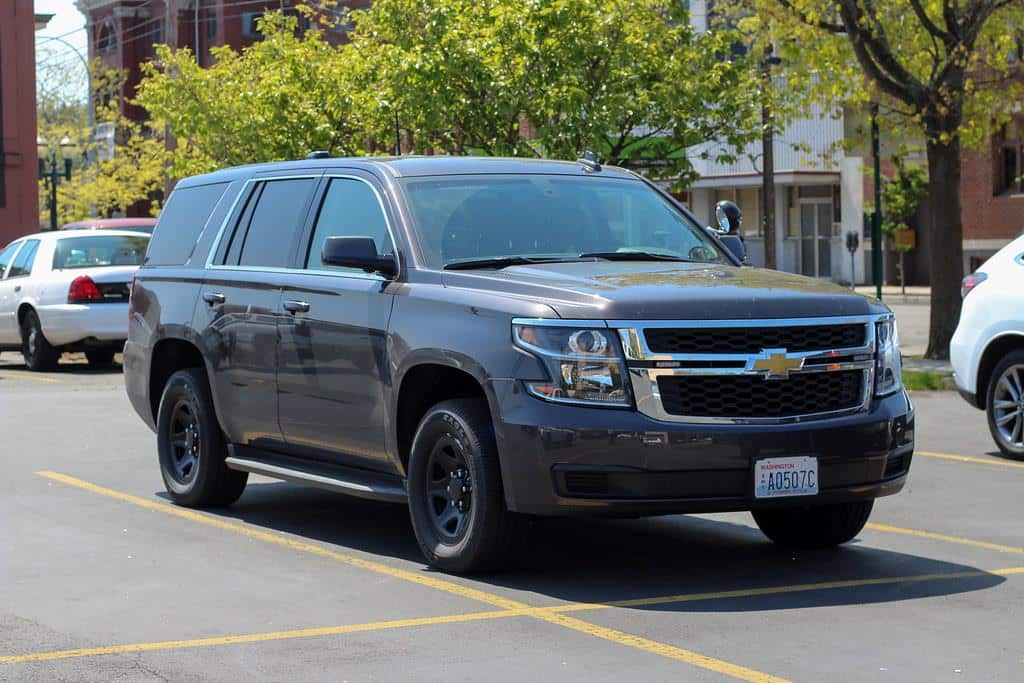
    The Chevy Tahoe is a family-friendly off-road vehicle. You may wonder: ‘Is the Chevy Tahoe good for off-roading, primarily through mud and other surfaces?

    This article will provide you with the advantages and disadvantages of this off-road vehicle. Besides, I have also done some tests to evaluate how well it performs in practice. Scroll down for more details on this exciting topic!

    Is The Chevy Tahoe Good For Off-Roading?

    chevy tahoe

    Image-Source: The Chevy Tahoe is available for off-road driving a long distance (Link)

    The answer is yes. The Chevy Tahoe has a distinctive design similar to many off-road models currently on the market: bulky, heavy, and long overhang. 

    The powerful engine and design features also allow it to handle the terrain well. In particular, if you equip it with specialized off-road tires, overcoming rough surfaces is no longer a difficult challenge.

    Yet, the Chevy Tahoe didn’t perform too well on some terrains. Due to its heavy weight, it will be impossible to climb rocks or perform similar techniques.

    Z71 Chevy Tahoe Feature Highlight for Off-road 

    Chevy Tahoe Z71 is a model with many advantages to support off-road driving. Here are some features that any off-road enthusiast will love in the Z71.

    Accessories

    The changes in the accessory system make the latest Tahoe model possess many attractive advantages.

    I was particularly impressed with the navigation system. Its 10-inch touchscreen is large enough to support my observations. The screen is also compatible with many other smart devices, such as phones and tablets.

    The manufacturer also adds many small details, such as the charging dock and the wireless charging port, to provide a better user experience for the driver.

    Inferiors

    The interior layout in the Tahoe Z71 is geared towards optimizing the user experience. Its front seats are pretty spacious and comfortable.

    The manufacturer has intelligently arranged the power button and lever to simplify your control.

    The middle row of seats is equally comfortable. Passengers have enough room to put on their feet and are always warm because the seat heating system works quite effectively.

    The third row of off-road vehicles often has quite limited space. Yet, with the Tahoe, passengers who are 6 feet tall can still sit comfortably.

    In addition to its spaciousness, its interior also impresses users with diverse connectivity ports, 120-volt sockets, and many other valuable extras.

    Exterior

    chevy tahoe 2

    Image-Source: The solid and outstanding exterior of the Chevy Tahoe (Link)

    Decorative details in the mesh, badges, and roof rails have made the Z71 stand out even compared to competitors in the same segment. Its exterior also ensures aesthetics by focusing on sliding panels and accents on the mirror.

    In addition to the beautiful appearance, the exterior also plays a vital role in making the vehicle’s off-road strength. Especially with 20-inch aluminum wheels shod and Goodyear Wrangler Trailrunner AT tires, the Z71’s ability to handle harsh roads is more impressive than ever.

    Design

    In addition to enhancing off-road handling, Chevy also attempted to optimize the design for increased comfort.

    This model has enough space to accommodate up to 8 passengers. Chevy also changed the design of the doors and driver’s seat.

    Another impressive advantage in the design of the Chevy Tahoe is the push-button gear lever. While not as familiar as a lever, this change offers more room for adjustment.

    Driveability

    Chevy Tahoe uses a 5.3-liter V-8 engine. It can accelerate from 0–60 mph.

    When combined with soft brake pedals, and light steering, the Z71 becomes a reliable car for traveling in the city.

    This model is also always ready to move on the highway. Its 10-speed automatic transmission works efficiently to meet every driver’s needs well.

    Independent suspension

    chevy tahoe independent suspension

    Image-Source: Chevy Tahoe Z71 independent suspension in 2021 (Link)

    Air and four-wheel independent suspension are good support features for off-road driving needs.

    The air suspension system supports flexible height adjustment. Its lowest height is still enough for the driver to exit quickly. Meanwhile, with the maximum ground clearance, you can conquer harsh terrain.

    The car’s four-wheel independent suspension handles well overall. While this system affects ride performance, it’s effective enough to stick to bumps.

    Z71 Chevy Tahoe Disadvantages for Off-Road 

    Despite possessing quite a few advantages to support off-road driving, the Z71 Chevy Tahoe is still not the ideal choice for conquering harsh terrain. The reason lies in some disadvantages from the vehicle’s suspension and IRS.

    Air suspension problem

    When performing some bounce tests, Chevy Tahoe gave not-too-good results. This model also often encounters some problems, such as sagging rear corners.

    In some cases, even though the air suspension warning light is on, the car stops for a long time, affecting your off-road driving experience.

    IRS problem

    You can not deny the overall handling advantage of the IRS. Yet, it inadvertently loses ride matching and performance in some cases.

    It is also a drawback that makes Chevy Tahoe unable to maximize its power on harsh terrain.

    Quick Rundown of Chevy Tahoe for Off-road

    Chevy Tahoe is an off-road vehicle that works well on dirt and gravel roads. However, in addition to the advantages, there still exists some problems.

    Here is a quick rundown of Chevy Tahoe for off-roading you should consider.

    Pros

    • Large space.
    • User-friendly adjustment system.
    • Conquer the terrain of soil and gravel.
    • Lots of positive changes.

    Cons

    • An automatic locking differential is not included
    • Can’t get through some rough terrain
    • Bulky, heavy, and not suitable for rock climbing.

    Other Chevy Tahoe Models to Consider

    other chevy model

    Image-Source: Tahoe 2010 is a good option for off-roading (link)

    In addition to the Chevy Tahoe Z71, you also have commendable off-road models from the brand.

    The Tahoe 2010 with the off-road package is one of them. The power window and its A/C system work efficiently without errors. The 2010 Tahoe is one of the most reliable and high-performing models.

    Final Words

    Is the Chevy Tahoe good for off-roading? The answer is yes if you equip the vehicle with specialized off-road tires to run off-road at a moderate level.

    Hopefully, through the above sharing, you have better understand this model and make a reasonable decision for your needs and driving habits.
  • Understanding How Your Car Engine Works

    Understanding How Your Car Engine Works

    Understanding How Your Car Engine Works
    How Your Car Engine Works

    Autogos provides how does a car engine works related brief from experts. About one billion vehicles that are on the road are powered by gasoline. The fundamental concepts of the internal combustion engine haven’t changed significantly in the last 150 years.

    A remarkable degree of chemistry is present in our cars. Explore the science behind the four-stroke engine, how attempts to resolve the issue of knocking caused a fatal accident, and why modern vehicles have catalytic converters in their exhaust systems to tackle the toxins that pollute our atmosphere.

    How does a Car Engine work?

    In general, an engine could be classified into three primary components: the block, the head and the oil sump.

    1. The head of the cylinder:

     The head of the cylinder is the conduit through which fuel can enter the engine chamber and the exhaust gasses leave. The key components of the cylinder head are valves, camshafts and spark plugs.

    1. The Cylinder block

    The Cylinder block is the place where all combustion happens. The primary components in this block comprise the chamber for combustion, the piston, and the crankshaft.

    1. The sump for oil

    The sump for oil is the bottommost component of an engine. Its primary elements are the oil pan and oil filter.

    The Workflow Fundamental

    Today’s car engine is a four-stroke engine; that is, it produces good power with just four strokes. Each stroke is described as the piston’s motion from its lowest position (Bottom Dead Centre) to the highest location (top dead center) and vice versa.

    The four strokes are Intake Stroke, Compression Stroke and Stroke for Power, and Stroke Exhaust Stroke. This is a diagram of the flow of the steps that take place beginning at the beginning of the cycle until the final stage:

    The Engine’s Processes inside the Head

    Engine's Processes inside the Head
    Car Engine Works

    The combustion process starts at the engine’s head and is triggered by the intake manifold. The intake manifold acts as the conduit through which the mixture of air and fuel is introduced through the combustion chamber.

    The air is sucked directly into the manifold via the body of the throttle. The fuel is, however, introduced into the manifold via an injector nozzle, also known as an injector for fuel.

    We then move to the tap that controls the release of fuel, also known as the valve. The valve is the device which seals the chamber when it is heated and is opened when the fuel needs to be allowed to flow into the chamber or gases need to be released.

    The valves shut and open depending on the stroke occurring. Closing and opening valves are accomplished by an actuator rod, also known as a camshaft.

    It is a cylinder rod with protrusions in the shape of drops called cams. When the sharp part of the cam is moving against the valve, it pulls the valve down and opens the port.

    As the sharp edge transitions back to the round side, the valve springs pull the valve back to its original position and close the port.

    The camshaft’s movement is linked to the rotation of the crankshaft through pulleys and belts. The rotation is controlled by the most precise and delicate timing device that can be set manually.

    Processes inside the Engine Block

    Now let’s start by tackling the business of a lifetime, i.e. the combustion process. The combustion process happens in the combustion chamber inside the head.

    The most crucial component of the process is that it involves the piston. The force of rotation created on the wheels begins by moving the piston.

    The piston produces usable power using 4 strokes, or four movements in the direction of its piston, from end to end. Let’s take a look at these four strokes in more detail:

     The Different Types of Engines

    • Thermo engines
    • Internal combustion engines (IC engines)
    • External combustion engines (EC engines)
    • Reaction engines
    • Electrical engines
    • Physical engines

    Engines for thermal use

    In the broadest sense, the engines need a heat source to convert into motion. Based on the method they use to generate heat, they could be combustion engines (that use burning fuel) or non-combustive.

    They work by direct combustion of fuels or by transforming an oil or gas to create work. In this way, most thermal engines also have connections between chemical drive systems. They could be air breathing machines (that use oxidizers, such as oxygen from the air) or non-air breathing ones (that contain oxidizers tied chemically to their fuel).

    Internal combustion engines

    Internal combustion engines (IC engines) are pretty commonplace today. They power lawnmowers, automobiles, as well as helicopters and more. The largest IC engine could produce 109,000 HP, enough to enable a ship to move around 20,000 containers.

    IC engines get their energy from burning fuel inside an area specialised to the combustion chamber. Combustion creates reactions (exhaust) that have a greater volume than the reactants (fuel and the oxidizer).

    This is what is the essence of IC engines. This is the reason why they have moved. The heat is merely the result of combustion and is a waste of fuel energy storage as it does not perform any physical work.

    External combustion engines

    External combustion engines (EC engines) keep the products of exhaust and fuel products separately. They use fuel in a single chamber and then heat the working fluid within the engine via an exchanger or on the wall of the engine. The granddaddy from the Industrial Revolution, the steam engine, is a part of this class.

    In a few ways, EC engines function similarly to their IC counterparts, as they both require heat, which is produced by burning substances. However, there are some differences too. 

    Reaction engines

    Reaction engines, commonly referred to in the field of jet engines, create thrust through the expulsion of the reactionary mass. The principle that drives an engine that reacts is Newton’s Third Law  basically that if you blow anything by putting enough force into the back of the engine, it pushes forward the front part of the engine. Jet engines are highly proficient at this. 

    Electric engines

    Ah, it’s a clean group. Three kinds of classic electrical engines include piezoelectric, magnetic, and electrostatic.

    The one that is magnetic, just like the battery in the same, is the most widely utilised out of the three. It is based on the electrical and magnetic flow interplay to create work. It uses the same principles the dynamo employs to generate electricity; however, in reverse. You can produce a little electricity if you turn a motor by hand.

     What are the basic principles of an Car Engine work?

    The spark plug provides the spark that causes the fuel and air mixture’s ignition, allowing combustion to occur.

    • Intake and Exhaust valves are opened at the right time to allow fuel and air and release exhaust
    • Piston
    • Piston Rings
    • Connecting rod
    • Crankshaft
    • Sump
  • Top 10 Tips: How to Prepare Your Car for Winter

    Top 10 Tips: How to Prepare Your Car for Winter

    The cold weather is upon us, and there are many things you must be aware of.

    As with the changes you can make to your clothing to keep warm, your car may require a cold-weather revamp to work correctly.

    If you’re looking for savings, then winterizing your car is vital. The money you spend today on the best fluids, new tires and brakes, wipers and other small improvements can help you save money later on.

    And if these correct winter car maintenance tips can help you avoid mishaps or accidents, every dollar and effort you make today will be worth it.

    TOP 10 Tips  HOW to prepare your car  for Winter


    1:  Check your Car brakes

    Check your Car brakes

    Your brakes should be in top condition, especially in winter. If they sound squeaky, create other sounds or strange sensations, have the problem checked. If you’re planning to take your vehicle out after a few days of being left unattended during the winter, you can set it off gently to see if the discs, callipers, or handbrake are frozen.

    2: Make sure the battery is charged

    As temperatures begin to fall, it’s vital to ensure your car is ready for colder weather. One method to ensure this is to test your battery. Colder weather can cause freezing of the battery fluid and make it difficult to start the vehicle.

    To avoid this, you must ensure the battery’s terminals are clear and clean of corrosion. Also, check the battery to determine whether it can hold a charge. If it’s not, it could require replacement.

    It’s also an excellent idea to have an extra battery in your trunk in the event there’s an emergency. With these easy steps, you’ll be able to make sure that your car is ready for any winter storm that comes it’s way.

    3: Check Your Car’s Belts and Hoses

    The belts and hoses under your car’s hood are usually examined when your vehicle is scheduled to be tuned up (usually every 30 miles).

    However, even if you’re not scheduled for an annual tune-up, it’s never hurt to ask a mechanic to check the condition of everything within your motor.

    The cold temperatures can cause damage to the belts and pipes, and when something breaks or snaps while you’re on the road and you need to get it fixed, a tow truck may be the only option to fix it.

    4: Check Your Car Tire Tread

    Check Your Car Tire Tread

    Tires with worn-out treads are among the most common reasons for winter accidents. Tires that have worn out or are old and worn make stopping more difficult and decrease stability, which is particularly the case in winter conditions. So the first step is to examine the depth of the tread.

    Measure tread depth with the help of a penny. Then, insert a penny into the tread with Lincoln’s head in the downward direction. If your tread appears higher than the height of the head, it’s time to replace your tires.

    Furthermore, check tire pressure and keep a gauge of pressure handy in your vehicle. Pressure drops on tires when the temperature gets colder.

    For example, a temperature drop of 10 degrees can lead to a one-psi decrease in weight. Inflated tires wear out more quickly and could result in sliding across slippery roads.

    5: Check Your Car’s Oil

    To ensure that your vehicle can run smoothly in winter, You’ll need to test your oil to ensure the level isn’t low and is of the correct consistency. Always ensure that you’ve checked the owner’s manual of your vehicle to confirm that you’re making use of the recommended type of oil to maximize your vehicle’s performance.

    6: Have the emergency kits in your car

    6: Have the emergency kits in your car

    For any driver who has experience conditions in winter can turn unpredictable and hazardous. Snow, ice, and frigid temperatures can be treacherous, even a brief journey. Therefore, it’s important to be prepared by making sure you have a vehicle emergency kit for winter.

    The most important items are a shovel, an ice scraper cable, jumper cables tow strap, a first aid kit, and blankets. It’s also recommended to carry non-perishable food items and water if you are stuck. With a preparedness plan, you’ll be able to ensure that you’ll get to your destination safely.

    7: Install winter wipers

    They come with rubber to prevent snow from getting in the edges. Make sure you remove the blades when spring arrives. Since winter wipers weigh more than regular ones, leaving them on at all times adds stress to the wiper’s motor.

    7: Guard your paint job

    The winter weather can cause temperatures to fall and drop. You should think about the location you park your car. Complete exposure to cold and freezing elements isn’t a good idea, and constantly brushing snow and scraping ice off of your vehicle can cause scratches. A shelter of some kind will protect your car’s shiny exterior.

    If you own garage space, we recommend getting rid of it to allow enough space for your vehicle. However, investing in a top-quality car cover could be worthwhile if you do not have a garage.

    A sturdy garage cover or shelter can protect your vehicle while in a garage; however, what happens when you’re driving? The slush of snow and rock salt can cause damage to the car’s bodywork.

    To avoid this, routine washing of your vehicle in the winter months and even a protective wax during the winter months can help maintain the appearance of your paint.

    9: Headlights and Foglamps

    In addition to the temperature, another factor that is worthy of winter car care advice is fog. While fog isn’t an everyday phenomenon throughout India, it is prevalent, particularly in Northern regions.

    The most significant impact it can have on your driving in fog is visibility. Therefore, you should ensure that your lighting systems are in full health. Foglamps are more crucial in cutting in the fog than the headlamps in your car.

    Today, almost all vehicles have front fog lamps, and back fog lights are becoming more common. If your vehicle is old and is not equipped with fog lamps, it would make sense to purchase an aftermarket lamp if you live in areas prone to fog.

    10: Replace Your Car Air Filter

    Replace Your Car Air Filter

    If you are in an area that has frigid winter temperatures, the likelihood is that you’re about to spend the next couple of months travelling with the windows closed. With the heat and the defroster, your inside fan is in operation for the majority of winter time, and it’s not only about comfort.

    A well-flowing defroster can clear your windshield quicker, making safe driving conditions. The issue is that some vehicles come with the cabin’s blocked air filters, and eventually, the blockage will adversely affect airflow throughout the ventilation system.

    Dirty filters are less efficient in purifying the air, and the effect of a clean filter is twofold. First, it increases the security of the vehicle’s passengers and all other motorists in the roadway.

    Most of the time, your cabin’s air filter will be straightforward to replace, and it is a replacement that can be found for a reasonable price.

    For some relatively new vehicles, the air filters may be purchased from the dealer, and in that case, they’ll be costlier.

    However, the interior filters of the most popular models can be found on eBay at lower prices. The latest filters are typically more efficient than the OEM model, which means they are more efficient; however, there are many OEM filters to choose from on eBay too.

  • Top 9 Ways to Remove Car Dent

    Top 9 Ways to Remove Car Dent

    Top 9 Ways to Remove Car Dent
    Remove Car Dent

    Autogos another wonderful tips about best ways to remove car dent. Three things in life are guaranteed: death taxes and abrasion in your vehicle or truck. Even if you’re as cautious as you can be, you won’t be able to predict the possibility of runaway shopping carts, hurled footballs, light posts that are out of nowhere, and other annoyances that happen in the real world.

    If you’ve got a dent or scratch, now the most important thought you’re thinking about is most likely how to remove it.

    You can bring it to the body shop or your local mechanic to repair it; however, their quotes are often outrageous, particularly when trying to get rid of all the paint or apply to fill the area with body paint.

    TOP 9 DIY WAYS TO REMOVE CAR DENT

    SUCTION Using A Plunger By following this method, you’ll be able to have a little fun within a matter of minutes. Use a plunger on your car the same as you would for a sink. The suction created will lift the dent away from the side panel or door.

    Be sure to use an oblong plunger instead of a flange plunger, as the latter will not have sufficient suction to pull the ding out. To test whether the dent will let go, wet the plunger and dent, and then pull it a few times.

    Be careful not to be rough, as the dent could need more suction than a plunger could provide.

    BOILING WATER

    This is the 2nd way to follow the best DIY methods to eliminate your car’s dent. Modern automobiles with plastic bumpers allow them to be more flexible regarding the release of dents.

    If you’ve got an issue with the bumper on your vehicle or truck, remove it using boiling water to press the scratch-off plastic. Just bring boiling water to the point of being able to sprinkle it on the damaged area.

    Grab the dent in your fingers and pull it out using your hands. As the plastic has warmed, it will be more flexible, which makes it easier to get rid of the dent.

     Use a Hair Dryer & Compressed Air

    Another technique for getting car dents from plastic is using two well-known household appliances: a hair dryer and compressed air.

    Begin by heating the car’s dent using the hair dryer at the maximum temperature. This will cause the plastic to expand on the car. Once it is hot enough, take the container filled with compressed air and turn it upside down and start spraying the same region. Since cold air causes the plastic to shrink and expand, it will break and pop off.

     Use Dry Ice

    Primarily utilized to cool the air, dry ice is a great option to eliminate tiny dents on your vehicle. If you’re wearing gloves that are protected, put a bit of dry ice to the dent and rub it until you can hear the dent disappear.

    Use the dry ice as frequently as possible; however, it will come out eventually if your dent isn’t too significant. It is also possible to heat the dent before you do this, using something similar to an air dryer (similar to the hairdryer and the compressed air tip mentioned above). Then, apply the dry ice.

     Use a Vacuum Cleaner & Pot

    Suction is a method to eliminate the dent; however, the challenge is finding a puller for the dent with the correct quantity of power. So, why not build your own?

    All you require is an empty bucket or pot (or bucket) and or bucket), a vacuum, and some tape, and you’ll be able to get that scratch from your vehicle in no time.

    Create small holes under the pot, tape the pot to the dent, place your vacuum cleaner’s hose over the hole beneath the pot, and switch on your vacuum. If the hole isn’t too deep, the created suction will make your dent pop out.

    Use Hot Glue, Wooden Dowels, & Screws

    If you try to fill off dents on your own, You run the possibility of causing further damage to your vehicle if you make the damage worse or scratch the paint. A practical method to remove large dents on your vehicle is to use some wooden dowels, screws and hot glue guns.

    Put two nails on each dowel, and then put the hot glue on the bottom. Lay the dowels glue-side up on the area around the dent. Repeat until you’ve used them all to cover the area and allow them to dry, then remove each one until the dent has disappeared.

    Put and pull the same dowels from different locations over the dent till all of it is released. If you’re considering this method, ensure you have enough glue and a bit of patience. Utilize the rubbing alcohol or the heat to remove adhesive from the vehicle.

    If a car is damaged by dents in your car, the material does not just go inwards. The edges surrounding the dent can also move upwards, making the appearance of a small volcano. So, popping the dent from beneath isn’t the best way to go about it.

    Set and pull the dowels at various places in the dent until most of them fall out. If you’re considering this method, ensure you’ve enough glue and patience. Use rubbing alcohol or heat to remove the glue from the vehicle.

     Use a Long Metal Rod & Knockdown

    If a car is damaged by dents in your vehicle, the metal doesn’t just go into the interior, but the edges also rise to make an erupting volcano. Removing the dent from the bottom is not the best option.

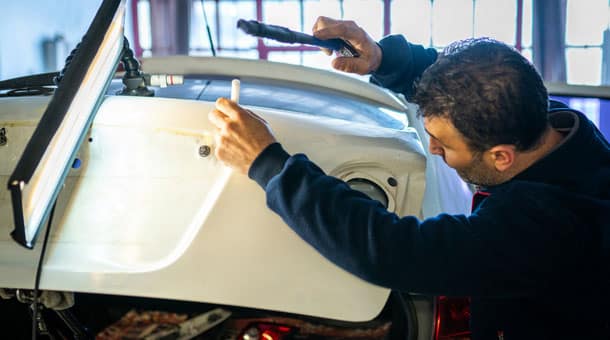
    George Gjokaj, a master Paintless Dent Repair (PDR) technician, can repair dents by working at both ends. Utilizing a combination of a long rod of steel beneath it and a tap down or knockdown instrument (wooden or rubber) on the top and bottom, he can completely take the dent out of your car. It’s a good thing because it does work.

    Make use of a special tool

    If you’re not experiencing success with any of these above strategies, you might also try Pops-a-Dent and a suction cup-based dent removal tool.

    These nine DIY techniques can help you when you encounter any issues related to your car’s dents. Always ensure you have a good car cover to shield your vehicle when not being used since it will help prevent any damage to your car or truck.

    Be aware of driving in the same area as other vehicles or objects because this is the place most likely to cause damage. Occur.

    Before you give up hope on removing a scratch from your vehicle or truck, consider these methods a shot; the results will be awe-inspiring. The best part is that the dent can be erased regardless of how large or awful.

    Using a plunger or a vacuum cleaner to eliminate scratches on your car is just one of the DIY methods. If these methods fail, then seeking help from an expert is the best choice.

  • Top 9 Winter Safety and Driving Tips 2022

    Top 9 Winter Safety and Driving Tips 2022

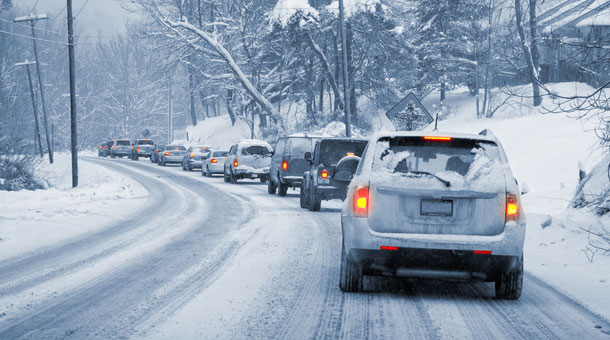
    No matter if you’re driving in winter for the first time or an experienced driver needing an easy refresher, there are some great winter driving tips that apply to everyone. Since the conditions vary in every Canadian city, we’ve created an array of winter driving tips to keep you safe during the coldest period of the entire year.

    The winter driving season in Canada is just beginning, and most areas of Canada’s True North will see lots of ice and snow on the roads for the next six months.

    Every region has their unique set of winter driving rules, including whether winter tires are necessary or not, and driving during the winter season is a different experience from driving during the spring, fall and summer.

    If you’re in the cold Maritimes provinces, the frigid Prairies or the temperate GTA or Vancouver regions, these guidelines will help you stay safe while you traverse the cold Canadian climate.

    Top 9 Winter Safety and Driving Tips

    Early Checks

    You need to conduct a few simple inspections on your vehicle before driving off throughout the year.

    1: Fluids Check:

    Winter Safety and Driving Tips
    Winter Safety and Driving Tips
    • Check the oil in your engine. The oil should be in the top state and be in the correct amount (otherwise, fill it up with the help of your mechanic)
    • Check the coolant (Known as antifreeze). It protects against corrosion and assists the engine in maintaining the temperature in the summer. In winter, it lets the heater throw warm air and prevents freezing the water in the radiator.
    • Transmission fluid (usually Gear oil) should be examined regularly to keep your transmission in good condition.
    • Check that the battery in your vehicle is fully charged (also verify the battery’s age and ensure cables aren’t loose)

    2: Visual Clearance:

     Make sure you check the side mirrors (they must not be in a damaged condition).

    • Install rear cameras (if possible) for rear (Reverse) clearance.
    • Use liquid soap to clean windows and windscreens.
    • Make sure to check the blades of your wipers. Replace the wiper blades if needed.

    3: Tires:

    • Make sure that your tires are in good shape.
    • It is essential to regularly monitor the tire’s pressure and condition, particularly in winter.
    • If the tread thickness of the tire is less than 2 millimeters, then it’s time to replace the tires on time to prevent any driving accident.

    4: Lights:

    • Check that your car’s front, rear, and Indicators are operating correctly.
    • Driving with low beams is dangerous due to high beams cause high reflection.
    • Fog lights should only be used in foggy or rainy weather conditions.
    • Fog light provides the best view when on the road.

    5: Clear your car of SNOW AND ICE

    Clear your car of SNOW AND ICE
    Winter Safety and Driving Tips

    If you’re taking an excursion when it’s stormy, rainy or bitterly cold out, ensure that your car is clean to view the driver’s windows. Make sure you clean all the windows on your vehicle’s front side, and your headlights and your backlights.

    Cleaning the car’s top inadvertently could cause water or snow to spill over your windscreen as you descend. In some areas, it could result in a fine for the offence.

    Ice formation is on the car’s surface because of cold weather conditions. The deicing spray is a good solution if it’s difficult to remove the ice from your windshields. Ensure your wipers are up before you leave the car to keep them from freezing on the windscreen.

    6: MAINTAIN A SAFE DISTANCE

    Others who are not experienced on roads with ice or do not have correct tires installed are a big risk when driving during winter. Reduce your speed as you drive.

    If you are driving during winter, maintaining an appropriate distance between the vehicles is crucial because you require sufficient space to brake properly.

    You could risk losing traction if you take a lot of force with your brakes. So, you must keep your speed low and let other vehicles overtake you if they choose to follow you or accelerate.

    A VERY SIMPLE RULE OF THUMB is that, during normal driving conditions, keep a distance from the VEHICLE in front equal to the distance you’ll cover in 3SEC at a given speed. If you are driving in fog or slick ROAD CONDITIONS, INCREASE THE DISTANCE to the equivalent of 6SEC.

    7: Drive With Extreme Caution in the Freezing Rain

    Drive With Extreme Caution in the Freezing Rain

    Driving in rainy and cold temperatures is a necessity in some cities. Temperature variations are typical across many areas, resulting in various road conditions. If there’s a lot of freezing precipitation, you’ll see many slippery and icy roads.

    If driving during this kind of weather, motorists must be extra cautious as the risk of losing control of the vehicle is greater, and visibility can be reduced.

    9: Make a winter driving safety Plan Ahead

    Notice and Be Notified

    Being visible to pedestrians and vehicles is among the best ways to prevent accidents. Make sure your headlights are on and free of frost, and ensure a safe distance between your vehicle and others according to the guidelines. Being able to see other vehicles that are in your blind spot could be difficult, especially in the winter months. Be cautious with your speed and keep alert for any movement on the road.

    Beware of driving in very bad conditions.

    If the forecast for the weather says it’s going to be a miserable day, you should avoid getting in a vehicle. It’s better to be patient until you’re stable enough to drive and confident the road-maintenance vehicles will return.

    WHEN IT’S SLICK, KEEP YOUR COMPOSURE AND CONTROL

    If it’s snowing or freezing, do not put too much pressure when you brake. The brakes are pumped to make you stop fast and not slip when you have to stop immediately.

    If your vehicle is equipped with modern braking technology called Anti-Lock Braking System (ABS), that will aid you in stopping under difficult conditions by pressing the brakes.

    If your vehicle is equipped with a standard transmission, accelerating by shifting the gears rather than brakes will reduce the speed.

    This is particularly useful in the case of descending a slope. Be sure not to let the clutch flutter when you release it. Otherwise, you’ll be able to start an unintentional skid.

    In snowy winter conditions, do not slow or accelerate too quickly in curvy turns. If you begin sliding when stopping, remove your foot from the brakes and turn the steering wheel in the direction you wish to.

    Safely driving in winter weather can be challenging, particularly in the northern regions prone to snow and ice. Driving in winter can be difficult even for the most experienced driver. However, not all drivers are the same.

    If you’re trapped and helpless If you are in a bind, follow these steps:

    • Be in the car until assistance arrives.
    • Don’t drive away from your vehicle unless you are sure of the exact location of the vehicle.
    • To attract attention, wave a bright cloth, then turn off the parking lights.
    • If you think you can alter your situation, take your time, energy, and thoughts to eliminate that circumstance.


  • The Pros and Cons of Buying a Hybrid Car

    The Pros and Cons of Buying a Hybrid Car

    Hybrid vehicles offer drivers the most efficient of both technologies for their cars. You can take advantage of  buying a hybrid car in the performance based on fuel while getting the benefit of a long distance due to electricity conservation.

    The first vehicle to be legally classified as a hybrid was created in the hands of Dr Ferdinand Porsche in 1898. It had a gasoline-powered engine and was further augmented by an electric generator with four electric motors, one for each wheel hub. The range of the first hybrid vehicle was approximately 40 miles.

    In recent years, hybrid technology has been instrumental in advancing the automotive industry, providing drivers with more choices, a greater range of driving, and many other advantages.

    The Pros and Cons of buying a hybrid car

    buying a hybrid car
    Buying a hybrid car

    1: Warranties

    Hybrid car makers typically provide their customers with an eight-year guarantee that covers the entire hybrid system if something goes wrong.

    2:  Less Oil and Gas required

    Although hybrid cars don’t completely reduce the requirement for gasoline and oil, they do decrease the amount required because engines that run on internal combustion won’t be utilized to the extent. If more people utilize hybrid cars, saving more fossil fuels will be much easier.

    3: Fuel Efficiency

    Since you do not need as much gas for driving, you don’t need to fill your gas tank as frequently. This can lead to gas savings, mainly when driving in towns or cities where traffic is less.

    4:Tax Credits

    Anyone who purchases and uses an electric or plug-in hybrid vehicle will be eligible for a federal $7,500 tax credit for their income tax. This isn’t available for plug-in hybrids made by every manufacturer, so be sure the vehicle you purchase is approved.

    5: Eco-Friendlier

    It’s ideal to claim that hybrid cars are eco-friendly 100; however, they aren’t since they still run on gasoline. But, they’re more sustainable than gasoline-powered traditional vehicles since hybrid vehicles emit less carbon dioxide emissions. This is a small step to combating global warming.

    They will teach the driver how to operate more effectively.

    Manufacturers have provided drivers with all the necessary tools to be more efficient in driving a hybrid vehicle. The information you receive is about the current miles/kilometers per gallon.

    You can check your actual mileage on the fuel tank. You can also check how much energy is saved by the brakes. If you can accelerate slowly and brake early whenever feasible, you’ll conserve more fuel by using your electric motor more frequently.

    Cons of Hybrid Cars

    Cons of Hybrid Cars

    1. They are more expensive for battery replacement costs

    If you have to replace the battery in the standard car, it could cost you around $100 for a battery at your regular retail store. In 10 years, it is possible to replace the batteries three times which would cost $350 plus tax.

    If you were forced to change the batteries of the hybrid vehicle during the same time, it could cost upwards of $3000 for some cars. While manufacturers of vehicles offer warranties for the battery for up to 15 years, in California and California, this could be an expense that should be considered.

    2. They come with a higher capital cost than standard vehicles

    Although hybrid vehicles are more expensive than electric ones, you’ll pay more for the hybrid model than for a similar model with no features in hybrids.

    The Hyundai Ioniq is among the most value-for-money purchases available today and offers the 119 miles per gallon offered by its plug-in options with an MSRP of about $22,000. The Hyundai Accent is a similar model. Hyundai Accent comes with an MSRP of around $15,000.

    3. They have various levels of hybrid technology

    Different manufacturers provide different degrees of hybrid advantages. Specific models, like those from Honda Insight, save fuel by turning the gasoline engine off whenever the vehicle is stopped at an intersection with a red light.

    cons of buying a hybrid car

    It cannot operate with its electric motor by itself. Specific models may not have climate control systems that run if the gasoline engine isn’t operating.

    They are referred to as “mild” hybrids, provide only a few benefits, and have an increased price. On the other hand of the spectrum, the Ioniq gives you an experience nearly as close to an electric car as you could be while using a gasoline-powered engine.

    4. There are few options available for families with larger numbers

    If you’re part of a family with more than six persons, then hybrid cars have a limited number of alternatives to think about. Few car manufacturers offer third-row options that include the hybrid option.

    Even if you look for hybrid third-row cars, most of the choices you’ll discover are fuel-efficient SUVs that aren’t hybrids. Other than those like the Toyota Highlander and the Dodge Durango, Your choices are limited when looking to buy a new car.

    5. They provide an unreliable cranking battery

    If you have a hybrid automobile, you should be mindful about turning off the lights. The battery with 12v that is used to drive the car is much smaller than the ones you’ll find in non-hybrid versions of similar models.

    Turning off the interior lights for a couple hours is enough to deplete the battery. Batteries from the aftermarket for hybrid vehicles tend to be better than the ones that come with the vehicle. Still, the price is nearly twice that of a conventional battery for a fuel-powered vehicle.

    6. There could be performance issues to take into consideration

    Most hybrids are built for drivers to provide more fuel efficiency. These vehicles are not typically designed to be fast.

    However, there is the possibility of “getting going” at the stop or red light signal; the gasoline-only vehicle will outperform the hybrid in time. Hybrid vehicles are also more likely to cut out features like suspensions tuned for sports, making the car light but sacrificing the driving experience.

    The hybrid car’s pros and cons should be considered for those looking for a brand new car. If your home’s structure is strong enough to accommodate the style of the standard hybrid, some models offer the best fuel efficiency when compared with non-hybrid vehicles.

    The larger families are more likely to have difficulty finding something practical. Even better, the fuel efficiency of a hybrid SUV with seven passengers is not that much better than that of a regular vehicle.

  • Fuel Saving Tips: How to Save Petrol and Diesel in 2022

    Fuel Saving Tips: How to Save Petrol and Diesel in 2022

    Fuel Saving Tips How to Save Petrol and Diesel in 2022

    Here Autogos provide fuel saving tips for all our car, We’re experiencing a dramatic change in the price of petrol at present. For each driver, the fluctuating cost of driving can be a source of frustration.

    We’ve put together the most comprehensive guide to driving economically to help motorists reduce their expenses at the pump. It’s also known as ‘hypermiling’ or ‘eco-driving and will assist you in improving your mileage per gallon (miles per gallon) figures.

    Although the speed you drive is certainly the most significant factor that affects fuel consumption, there are a variety of other adjustments you can change the way you drive that can reduce your fuel costs at the gas pump.

    Learn more about Where Can I Legally Sleep in My Car

    How to Save Petrol and Diesel in 2022?

    Untitled design

    1: Reduce idle and stop dangerous driving behaviors

    Idling and unsafe driving habits are major causes of loss of fuel. It happens when fleet managers can park and let their vehicle run, resulting in the inability to use fuel. GPS tracking systems could help cut down on idle by monitoring the frequency at which drivers do this and then decreasing the amount of time they spend idle by setting a goal they must follow.

    Neglecting to drive safely is a big no-no regardless of whether they consume excessive fuel, and fleet businesses must curb driving habits such as quick speeds and speeding.

    Have you ever heard that going 10 miles over the speed limit will reduce your fuel efficiency by as much as 15 percent? The optimal speed for fleets is in the range of 50 and 60 miles/hour.

    2: Car sharing

    Then, why not team up with a coworker (or at least three) and start a carpool? Of course, it’s only a good idea for commutes such as your commute to work, in which you’ll all be going to the same spot all at the same time; however, it could be an exciting option to reduce costs and make friends with your colleagues more like Peter Kay’s Car Share proved!

    3: Get your tyres pumping

    If you let the pressure drop on your tyres could mean that you’ll make more use of fuel, so ensure they are well-inflated to limit consumption. The RAC has experts who say that properly inflating tyres could improve the mileage you can achieve from your fuel by as much as 3 percent.

    However, feel free to fill them up too high and risk leading to an increase in pressure – adhere to the pressure recommended for the vehicle you are driving.

    4: Lighten up

    In the context of weight, carrying extra weight in your vehicle can impact its efficiency. Removing unnecessary items from the trunk and the cabin will make little distinction. However, every little bit can help.

    Fuel is also heavy. Don’t believe that you have to travel in a tank that is full every day. But, at the same time, avoid going into a state of depletion that you risk running out of fuel.

    5: Take an excess weight off your vehicle

    However, losing 100 pounds of weight stored in your car can increase the miles per gallon by around one percent, based on the importance of the car’s weight. But, according to the U.S. Department of Energy, this isn’t as much of an issue for smaller cars.

    6: Take off the roof carrier

    Your car was made to be aerodynamically efficient, but adding a giant bicycle or other carriers to the roof can increase wind resistance. If you spend a lot of time on the road or plan to take an extended trip, you should try to carry extra things within the vehicle or in the rear. Cleaning and waxing your car could reduce wind resistance as well.

    7: Choose the most efficient route

    Going from point A to point B in a short amount of time is a great method to reduce gas. Since shorter distances result in faster travel time and less fuel usage, isn’t it? But, no.

    Choosing a route that avoids construction, traffic, and congestion is more important. Although it might seem strange to drive longer distances to save gas and money, longer ways could be more efficient, according to Kyle Tetz, a former Honda employee, van driver, travel expert, and the creator of the travel website The Next Trip.

    Based on the U.S. Department of Energy, road traffic can cut gas mileage by anywhere from 15 to 30 %, and stops and go traffic may reduce it by 10-40 percent.

    With this in mind, there are ways to reduce the cost of gas Make a thorough plan of your route in advance by using an American road trip guide and map application as well as Google Maps to choose roads that you can keep at a steady pace and avoid city stoplights.

    Then, you can use the miles to determine the gas cost for your journey. In addition, it will also mean less wear and tear on your brakes and road stress.

    8: Stop heating your vehicle

    Mornings are indeed frosty, and slipping into a warm and cozy car seat is lovely in winter. However, your fuel efficiency will suffer, and you’ll find yourself on the road more frequently if you continue warming your vehicle. Modern vehicles don’t require more than a few minutes to “wake up.” So letting your car get warm more than that is optional.

    With gas prices increasing, the heat will eventually cause you to be cold while you shell out more in the fuel pump. So when filling up, this is the procedure for letting gas pumps can tell when the tank is full.

    9: Use the cruise control

    One method to reduce fuel consumption is to maintain a constant speed. Cruise control can assist with this.

    Consider turning on cruise control if you’re driving or on a long, continuous flat surface. It can reduce your consumption of fuel.

    Do not use cruise control on roads that have a slope. Since the system was designed to operate on flat roads at the same speed, it needs more power to climb the hill.

    10: The speed of the slowdown

    Reduced speed can result in significant savings. All kinds of estimates are available, as the outcomes will differ greatly based on the vehicle.

    Still, generally speaking, you can expect an increase of 10 percent in efficiency if you travel on an expressway and dual carriageway at 60mph instead of 70mph. It can be even more if you own an electric vehicle and drive at 60mph rather than 70mph.

    The time it takes to travel may not be as significant as you believe, and you might even get there more relaxed. In addition, the savings on fuel when you drive at speeds greater than 70mph – which surveys show most drivers go at this speed despite being illegal is greater.

  • 12 Steps to Easy Drive a Manual Car

    12 Steps to Easy Drive a Manual Car

    Manual driving can be among the more difficult tasks, particularly when driving with a vehicle full of people watching along with comments to go with it. However, it’s among the most rewarding learning techniques, especially if you plan to use more advanced driving methods such as tracking your car, road racing, etc.

    How to drive a manual car

    12 Steps to driving a car

       Step 1: Ensure You’re Neutral 

    Put your car in neutral gear by shifting the gear selector towards the middle of the boot. To confirm the car is neutral, move the stick shifter and check whether it can move freely. If it’s not moving quickly, check if you’re sure that your gear selection truly is in the middle or not.

    Step 2: Place Your Foot Onto the Clutch Pedal

    Place Your Foot Onto the Clutch Pedal

    After our car is in neutral, We can move on to our next step, which is to begin the manual transmission.

    To begin the manual transmission car, you must use your left foot to push the clutch pedal completely until the car’s floor. This is a security feature found in many modern cars – to reduce the risk of accidents.

    Step 3: Safety Check

    Check that the car remains in neutral by moving the gear shifter towards the midpoint of the gear shifter, shifting the gear selector back and forth, and then verifying that the stick shifter is moving freely, and also confirming whether the pedal for the clutch is pressing until it reaches the ground. We can proceed to the next step.

    Step 4: Search for the ignition

    To turn on the car, you need to find the ignition. They are usually located close to the steering column. Certain vehicles come with push-to-start options. Be sure to read the owner’s manual if you’re unsure about your vehicle’s ignition Location.

    Step 5: Change the ignition Halfway

    To begin the engine, you need to adjust the ignition to halfway so that all of the vehicle’s sensors register their readings.

    Step 6: Turn on the vehicle On

    When you have your feet on the pedal to the clutch fully, with your gear selector in a neutral setting, you can switch your vehicle’s engine over and then start the engine.

    Step 7: Disengage the Handbrake/Parking Brake

    Disengage the Handbrake Parking Brake

    You must remove the handbrake to begin moving ahead in your vehicle with a manual transmission. Check your owner’s manual to determine if your vehicle has an electronic handbrake because these vehicles do not show as having an electronic handbrake.

    The handbrake is not just risky because of the heat it creates and the heat it creates, but it’s also extremely harmful to your vehicle.

    If you are disengaging the handbrake, ensure you sit on a level floor. If not, you can put the brake pedal in place by using your right foot while taking off the handbrake or e-brake.

    Step 8: Prepare Yourself for Rolling Forwards

    After we’ve got our vehicle going, we’ll be able to take the next steps of driving with a manual. At this moment, it’s recommended to breathe deeply, take a deep breath, count to ten, and ease your muscles.

    We will then try our first steps at using a manual transmission.

    It’s a good idea to buckle your seat belt if you aren’t yet and to alter your seat in the most comfortable posture possible.

    Step 9: Place Foot On Clutch Fully

      To begin with, the procedure going forwards, we have to release the clutch completely. This is because this is the instrument we will employ to propel the manually-driven vehicles forward.

    Step 10: Move Gear Selector Into Its First Gear

    Once the clutch is fully engaged, Move the gear selector to its first gear. To do this, look up the stick shift pattern on the upper end of the shifter. If you can’t find any shift patterns in your stick shift car, it’s okay. The first gear on most vehicles is situated in the top left corner of the gear selector.

    However, you can shift your gear selector light up and down. Be aware that certain vehicles can make this procedure a bit difficult. It’s very much about trial and trial and.

    Step 11. Begin Moving Forward

     Once the clutch is fully engaged with the selector of your gear shifted into the initial gear position, it can start moving forward.

    To start moving within your vehicle with a manual transmission, lifting your foot on the pedal is necessary. The faster you release your pedal, the less likely you’ll stall and the greater chances of you moving forward.

    Remember, stopping your car the first 50 to 100 times you attempt driving manually is normal. Don’t be afraid to let the motor stall or apply the brakes whenever you need to because beginners built most modern automobiles with the idea that dropping the clutch and then stalling does not cause damage to your vehicle.

    Step 12: Pat Yourself on the Back!

    Manually driving can be a difficult procedure. More than a few people have failed their initial attempts to learn how to do it. Don’t be discouraged, as many drivers who learned to drive manuals failed in their first go-round. Keep at it, and you’ll be rewarded with the knowledge in a declining art: operating a manual.

    Is it the brake then the clutch to stop?

    Slowly driving, clutch, then brake at the point of stopping. When you’re driving faster, brake and the clutch to lower.

    How do you slow down a manual car in traffic?

    For a slowing down of your car To slow your car down, press the brakes. Let the accelerator off (obviously); when the engine’s RPM is close to 1000, you can press the clutch.

    You can choose from three options concerning the amount you’d like to speed up and what you’re planning to do. 

    • Take the gas off.
    • Make use of the brake.
    • Switch to a lower gear.

    Can you skip gears when slowing down?

    Engineering Explained tackled the common method in the latest episode. The short answer is that skipping gears while changing gears or upshifting is acceptable. However, these practices must be carried out with some background information.

    How to drive a manual car on a hill

    When you drive uphill with an automatic car, you’ll typically require changing to a lower speed or losing energy. It’s all about speed. You can switch one or two gears and continue driving as usual.

    You might require putting your foot in the throttle more than normal to achieve the same speed as you climb. Be careful that you do not fall back to a level surface, and prepare to take the accelerator off and switch to a higher speed.

    For a hill start, you must follow the steps above. However, you might need to activate the handbrake rather than using the footbrake. This is to ensure that you can use one of your feet for the clutch and the other to accelerate as quickly as you can, which helps you avoid sliding backwards.

    It’s also crucial to ensure you have the most powerful bite when using the clutch during hills. Check out our complete hill-start guide for more tips.


  • How to Clean a Car Interior: Detail Method

    How to Clean a Car Interior: Detail Method

    How to Clean a Car Interior Detail Method

    Detailing a car goes far beyond the typical cleaning and vacuuming process. It involves paying attention to the small factors that create a show-stopping car. Start with the interior to ensure you don’t have to worry about ruining your exterior while sprucing up the interior.

    Learn more about Cleaning

    How to Clean a Car Interior:

    Step 1: Remove Your Car Floor Mats

    How to Clean a Car Interior

    Floor mats can be great to protect your carpets; however, over time, a lot of dirt and grime could be trapped beneath. Wear your gloves and walk around the inside of your car, taking care to take off the floor mats completely to see the actual state of the carpet.

    Step 2: Empty The Car Interior & Light Vacuum

    You must empty your car of personal belongings and any other large garbage that your vacuum can not be able to collect.

    Take your first garbage bag and store your personal belongings, like checks, books, insurance papers, changes, or other items vital to you. When you’re finished, place the bag on the side to keep it safe.

    Take the second garbage bag and remove all large garbage items, like empty plastic bottles or even large chunks of food. Whatever your vacuum is having trouble getting rid of, place it in your second trash bag to throw away.

    Step 3: Clean the Dashboard and Door Panels and the Center Console

    “After finishing my interior and exterior, I applied Plastic Restore to all the interior trim and plastic except for the trunk and a small part, the dash. Plastic Restore did a great job and was very uniform in color.”

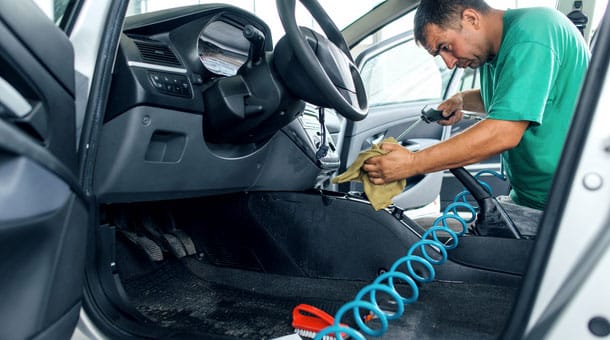
    Beginning with your dashboard, take a clean microfiber towel, and divide it in half. Use a spray of Intra Clean onto your towel and then rub it over your dashboard, making sure to get rid of the dirt and grime as well as you can.

    Empty The Car Interior & Light Vacuum

    If you notice that your towel is drying out, you can spray more cleaner on the towel and continue to clean until you are satisfied. After cleaning the surface with your first cleaning towel:

    1. Take the cleanest microfiber cloth and smooth the area you cleaned to give it a smooth finish.
    2. Get rid of any remaining inside cleaner.
    3. Continue the process on your door panels and the centre console, using your cleaning brushes to go into all the crevices and corners within your car.

    It’s the perfect time to add some extra protection to your dashboard. The interior Detailing Kit includes Intra Shield, which provides protection for your interior.

    It protects you from harmful UV radiation. It is suggested to give your interior a quick vacuuming to ensure that there is no dust remaining visible on the dashboard.

    Spray the Intra Shield and rub it into the dash using a dirty microfiber towel. Utilize a second, clean microfiber to remove the remaining product. Do not touch the surface for the next 24 hours, allowing the product to dry.

    Step 4: Clean Vinyl & Leather

    Leather and vinyl are strong materials. However, if the improper product is used or left to sit on the floor for too long, it could cause permanent damage. Therefore, be sure to utilize specific leather and vinyl cleaning products!

    Take your leather and vinyl cleaner and spray it onto your detailing brush. Then begin to clean the surface of the leather and vinyl gently. Take a dirty microfiber towel and clean off the cleaning solution that remains.

    Step 5: Cleaning Crevices and Vents

    It’s time to tackle all the corners and nooks like air vents; there’s not much room to work in these areas, which is why it’s the ideal moment to get out the best-detailing brush!

    Use your detailing brush to remove as much dirt and dust as possible from your vents. After you spray a tiny amount of interior cleaner onto the brush, agitate it, then wipe it down, making sure you remove all dirt and leftover cleaner.

    Step 6: Vacuuming Carpets & Car Seats

    Now is the time to sweep all the dirt off your carpets and car seats! Start your vacuum on the driver’s side, and begin cleaning the seats in your vehicle. Be sure to recline your seat and make sure to get spaces between your edges as well as the bolsters.

    Then you should push your seat to the back of your seat as far as it is possible and begin to vacuum your carpets. Repeat this throughout the car, making sure you shift your seats around to ensure you don’t miss any dirt.

    Step 7: Shampooing carpets and Upholstery Seats

    After cleaning your vehicle with a strong vacuum, it’s time to wash your upholstery and carpets. Start with your seating area. Start with your upholstery cleaner and gently mist the areas you’re working on, and then, using a firm bristle cleaning brush scrub the area until it’s clean.

    Spray more shampoo or carpet cleaner on areas with a lot of stains and allow it to remain on the surface for a couple of minutes to remove the stains.

    After cleaning the shampoo, take a dirty microfiber towel, and use it to scrub your seats to eliminate the most feasible shampoo residue.

    It is also possible to take your vacuum cleaner and clean out any excess moisture and dirt in the upholstery. Repeat the procedure on the remainder of your car, including carpets, until you are satisfied.

    Step 8: Protecting Your Car’s Interior Surfaces

    After you’ve spent all day cleaning your vehicle, it’s time to protect it from UV-damaged things like vinyl, plastics and even leather.

    Starting with your plastics & vinyl, take your choice of interior conditioner/protectant and spay it on a new microfiber towel.

    Then rub the protectorate onto all of your vinyl and plastic surfaces making sure you evenly spread if you’re happy with how the surface looks, then great! If the gloss is too shiny for you, use a different microfiber towel, and then matte the gloss to a level that you’re happy with.

    Complete the same process on the leather but with a dedicated leather conditioner/protectant. You must ensure you don’t apply a plastic or vinyl conditioner or protector on the leather since they’re two different kinds of surfaces.

    9: Eliminating Odors Car Interior Sanitation

    After the car is neat, we must ensure that the vehicle is completely clean! The interior sanitation and removal of odours will depend on your vehicle’s needs.

    There are many products to remove odours and sanitation and equipment on the market; therefore, the procedure will depend on your chosen product. Most sanitation is done with alcohol and hydrogen peroxide-based disinfectants, steam cleaning equipment, and ozone machines that will cost you hundreds, up to thousands.

    Disinfectant sprays or wipes are a simple method to disinfect important surfaces like door handles and steering wheels. Be sure to clean all interior surfaces before applying your car’s interior protection. If you do not, it could be possible to strip your protection.

    For lingering odours, I would suggest using an Enzyme based odour eliminator. They’re typically in the form of aerosols and can be kept in the vehicle for a few hours, eliminating the majority of unpleasant odours inside your car’s interior.

    Step 10: Don’t Forget the Trunk!

    Many people, including detailers, forget to clear the trunk! Therefore, clean the area of any large items in addition to giving it a deep vacuum.

    Sometimes, a brush for cleaning is beneficial for trunks because of the less durable carpet typically found in trunks. Clean the fabric of your trunk with your brush, and then follow up with a powerful vacuum to clean grime and dirt. Repeat the process, and apply carpet shampoo or interior cleaner if required.

    How long does it take to detail a car?

    Car Detailing is a specialised service based on the chosen package; the duration can vary from four hours up to seven days—the time for detailing increases and becomes more aggressive, the more deteriorating the vehicle’s condition. Along with polishing time, cars are cleaned first using an appropriate-sized wash, tar remover and clay removal.

    What do detailers use?

    Pro detailers employ coloured, task-specific microfiber towels and cloths to improve effectiveness, reduced friction, scratching, and faster cleaning, rinsing, and drying.

    How long does it take for a car interior to dry after cleaning?

    It depends on the way the seats were washed and the temperature outside. However, based on our experiences, the seats are 90% dry within 2.5 minutes if it’s relatively warm outside. If it’s cold out or there’s a cloudy sky, the seats could take 3 to 5 hours to dry.


  • How Much Does It Cost to Convert to Electric cars?

    How Much Does It Cost to Convert to Electric cars?

    In a time when the world is striving to reduce greenhouse gas emissions to protect the environment and the environment, convert to electric cars or all electric vehicle conversions have been on the rise. It’s no news that the U.S.

    The Environmental Protection Agency (EPA) recently announced stricter regulations on vehicle emissions and a ban on using diesel-powered vehicles within specific areas.

    How much does it cost to convert your car to electric

    With the current environmental crises and the rigours of diesel-powered vehicles, an EV conversion is the most practical way to ensure that cars can thrive soon.

    The concept that electronic vehicles (EV) conversion seems to be fairly new in popular consciousness. This is why there’s been plenty of doubt about its validity recently.

    Many people are sceptical about its validity of it. Some also question whether it’s legal to drive in specific geographical locations.


    Also Read:

    Top 5 Electric Cars in 2023


    What is the Electric car Conversion?

    Conversion to electric vehicles is a revolutionary method of replacing a car’s engine motor and drivetrain parts with an electric motor and a large battery bank. Ultimately, it creates an all-electric vehicle that is free of emissions from fuel.

    Why should you convert to electric cars

    As appealing as it is, knowing the procedure and purpose behind the electronic conversion is crucial before beginning the EV project. By understanding this, you will have more clarity about the outcomes you can expect.

    Why should you convert to electric cars?

    • There are many motives to convert your vehicle to electric. Here are a few of the most commonly used ones:
    • The main benefit is the massive reduction in emissions. The more electric vehicles on the roadway, the lower emissions from the tailpipe. This, in turn, will result in cleaner air for your city.
    • Another advantage is the low operating cost. With prices for fuel at record highs, driving your car with electricity will cost you less. This means that you quickly recuperate the cost of the electric car kit you’d have spent.
    • Since there are fewer components in an electric vehicle compared to a traditional car with the Internal Combustion Engine (ICE), there’s much less wear and wear and tear. This results in lower maintenance expenses.
    • Since electric vehicles don’t use fossil fuels, you won’t be required to deal with the hassle of regular pollution checks and purchases of PUCs.
    • The Delhi-NCR government has mandated that electric and diesel cars are scrapped after 10 and 15 years and vice versa; there’s no legally binding limit for an electric vehicle.

    What is The Electric Cars Conversion Process?

    Identifying the Right Vehicle

    The process of conversion begins with selecting the best vehicle to convert. To qualify, the car to be converted must be powered by diesel or petrol.

    Substituting And Extracting The Drivetrain

    The actual conversion process begins. Think of it as an operation during which organs are removed and replaced by new ones. For EV conversion, the fuel tank, the engine and gearbox, the starter, and the other intricately related hardware are just like the organs, which are then removed.

    When the car is unloaded, the removed parts are replaced by new components for the drivetrain, including the electric motor and batteries. The result is that your vehicle will get a new life!

    Deciding on the appropriate power type/source

    The DC system is the most commonly used alternative for replacement. However, an AC system is also an alternative. The choice of motor size will be largely based on the car’s weight and size. However, performance preferences may also play a role.

    Selecting the Right Battery

    A battery will naturally power the motor. Lead-acid batteries are a common choice for installation, but they generally have a limited operating range when charged. Lithium cells can also be an alternative with more extensive performance, not to mention they’re smaller and lighter.

    The number of batteries needed will depend on the dimensions of your car. Larger batteries, in general, require more space to accommodate.

    Configuring the Power And Charging System

    A reliable charging system is required to charge the batteries using an electrical circuit to regulate the energy flow between the battery, motor wires, the battery, and other complex components. To make the most from this EV conversion, you must control your car’s heating, air conditioning or power steering units with other equipment. It is also essential to remember that this might be a cost to install.

    Cost of an E-EV Conversion

    Examining

    Once your car is modified, The automotive technician or specialist will evaluate your car’s performance and safety before giving the go-ahead for the wheels on the road.

    Converting to an electric vehicle costs approximately $6,000 for the parts and between $1,000 and $3000 for installation and batteries. A more costly retrofit may cost you at least $20,000. For all this, you’ll receive an emissions-free car that will cost you just about a couple of cents per mile. Electric cars will also be more reliable and require far less maintenance than a traditional ones.

    What vehicles are ideal for EV conversion and why?

    The most suitable vehicles to convert an electric vehicle provide enough space for batteries and larger components of the drivetrain so that you’ll have a wider performance and more options.

    How long does it take to convert my car?

    Because the work involved in the conversion to EV is a lot of moving components and configurations, the estimated time to convert your vehicle to electric takes three to six months.

    What’s the time to charge electric vehicles converted to electric?

    A- Most manufacturers of kits for conversion to electric state that it takes 5-6 minutes to charge batteries. In addition, many kits come with quick charging facilities that allow the battery to reach 80% charging within less than one hour. The timing of charging will depend on the conversion kit utilized.

    A battery-powered electric-powered vehicle (EV) convert project has many moving parts that need time and money. If you’re considering ordinary car to convert to electric cars , be prepared to invest more in batteries and other components of the drivetrain.