If you’ve been driving for a while, chances are you’ve seen a warning light on your dashboard. These lights can be alarming, but it’s important to know what they mean so that you can respond appropriately.
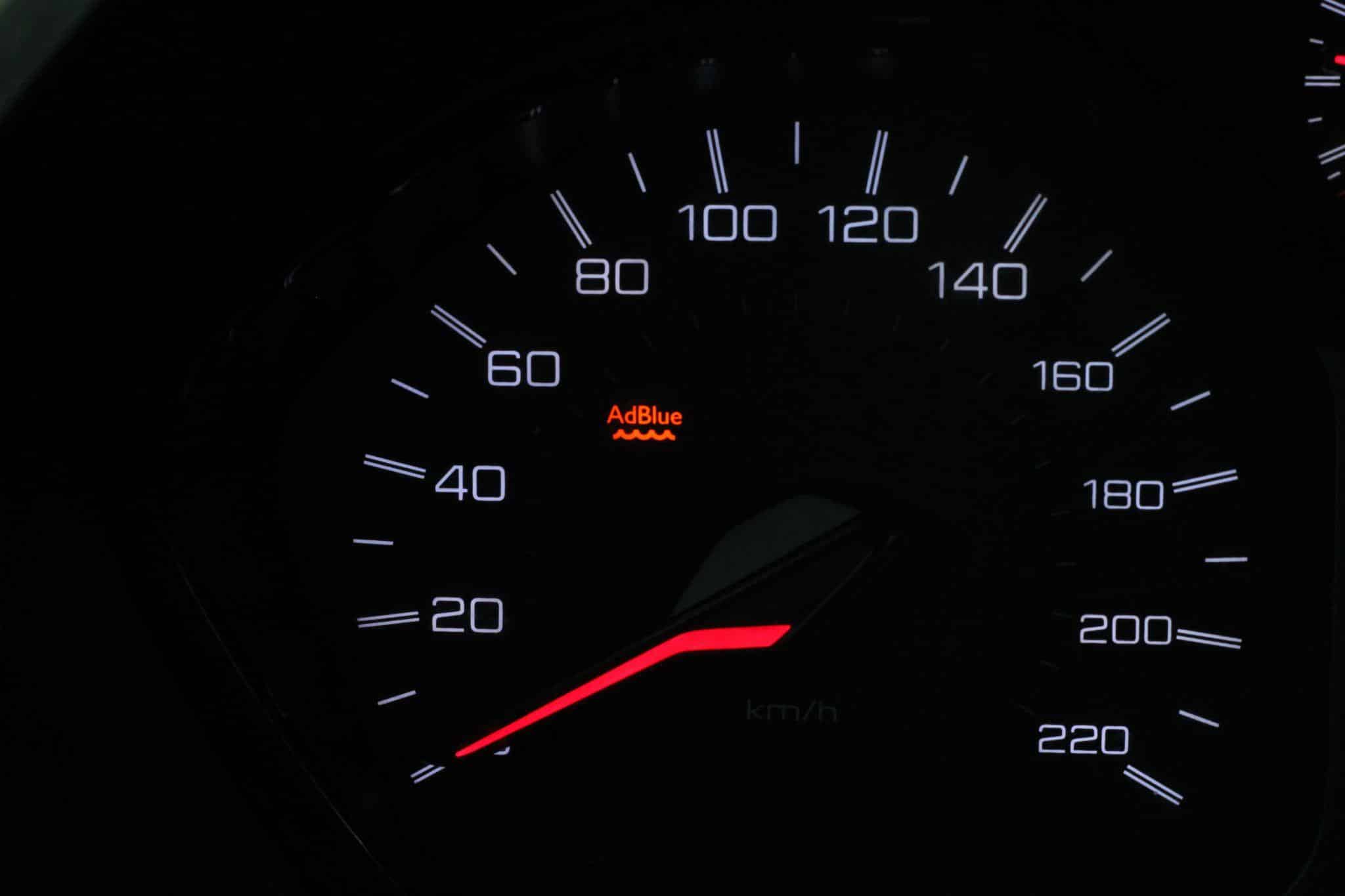
One such light is the Adblue warning light. This light indicates something is wrong with your Adblue system, and you must act. This blog post will discuss the Adblue warning light and how to respond!
What is an Adblue Warning Light, and what does it mean for your car engine?
The Adblue warning light is a signal that your car’s exhaust system is not functioning properly. The Adblue system aims to reduce nitrogen oxide emissions from your car’s engine.
When the system isn’t working correctly, it can cause damage to your car’s engine and catalytic converter.
If you see the Adblue warning light, it’s important to take your car to a mechanic as soon as possible for diagnosis and repair. In the meantime, avoid driving to prevent further damage to your car’s engine.
When To Refill Your Adblue Tank And How To Do It?
Most new diesel cars are fitted with an Adblue tank, which needs to be refilled periodically. There are several ways to tell when the tank is running low. For example, the car’s computer may display a warning message, or the engine may run less smoothly than usual.
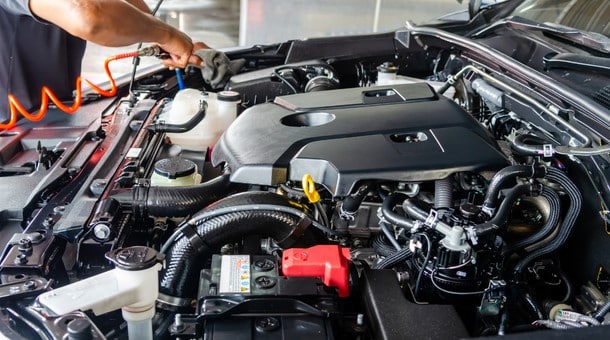
If you do need to refill the tank, it’s a relatively simple process. You can purchase Adblue from most petrol stations and then use a funnel to pour it into the tank.
However, ensuring you don’t overfill the tank is important, as this can damage the car’s emission control system.
If you’re not confident in doing this yourself, many mechanics will be happy to help you top up the Adblue.
Can Driving an Empty Adblue Tank cause damage to your Engine?
Driving with an empty or low Adblue tank can cause damage to your car’s engine or other components. The Adblue fluid is used to help reduce car emissions; if it runs out, your car will produce more emissions.
This can damage your car’s engine and other components, and it can also void your warranty. If you’re unsure how much Adblue you need, it’s best to check with your dealership or manufacturer.
However, driving with an empty or low Adblue tank is not recommended, and you should always refill your tank as soon as possible to avoid damaging your car.
How Much Does It Cost To Have An AdBlue Refill?
The cost of having an Adblue refill at a mechanic’s shop will vary depending on the size of your tank and the current market price for Adblue.
However, it is generally worth refilling your tank regularly, as this will help to keep your engine running smoothly and reduce emissions.
If you are unsure how to refill your tank, it is best to leave this task to the professionals. However, if you can do it yourself, then you may be able to save some money in the long run.
Ultimately, the decision of whether or not to refill your Adblue tank will come down to personal preference and budget.
If you see the Adblue warning light in your car, don’t panic – it doesn’t mean your vehicle is about to break down. However, it is important to take action and address the issue as soon as possible to avoid any damage or further problems.
The good news is that this problem is easy to fix, and we have all the information you need right here. Follow these simple steps to get your car back up and running like new in no time!
PineSol is a unique product; however, it could leave a streak at the home windows if you use immoderate quantities of it. In addition, it can damage your automobile’s finish and cause streaking or discoloration.
PineSol is only sometimes recommended for use in a vehicle because of its drying results on vinyl surfaces, including dashboards, doors, seats, and door panels.
How To Use Pine Sol On Cars?
Let’s Discuss in detail How To Use Pine Sol On Cars.
Materials and Prep
The first step in cleaning your components with pine-sol is to prepare the pieces to be wiped clean. Pine-sol can eliminate grease and paint, reduce carbon deposits on heads and pistons, and melt the carbon within the EGR gadget.
O-earrings and rubber seals will expand for a few minutes.
However, when they have dried out, they may be now not possible to be damaged. However, if I had been considering reusing rubber additives, I’d take them off.
Anything the pine sol may damage you want to maintain must be eliminated. Taking the whole lot aside is usually recommended to make it easy.
However, I’ve heard of humans cleaning items like hydraulic lifters and then setting them back within the engine head full of pinesol to combine with the oils. Naturally, it truly could be a better concept. Pinesol is a superb source of water in the long run.
When your additives are prepared for cleaning, you will need the proper field to match them without buying excessive amounts of pine sol.
I placed it in a big plastic bucket I bought from Walmart for the Geo Metro, which I worked on after I wrote this publication.
When it involves large engines, like the ones of the VW I am trying to repair and the Subaru out of doors, I have the smallest rubber-made bins where I can put the engine block and then use it to ease the bigger components.
However, most additives are wiped clean using the antique 1-gallon plastic bathtub for ice cream. I purchase some pints of pine sol and dilute it to the quantity I want to make it fill the container I’m using.
For smaller pieces, I apply Pinesol at total electricity using an enamel brush and let them in the sink for some hours to smooth them.
Safety
Pine Sol seems innocent but requires a few precautions for safety. I wouldn’t dip my palms in it on the bulk of occasions. It contains cancer-causing agents. Be aware that it could be a motive of “temporary but substantial” eye harm to the attention.
I don’t want to realize what the meaning is. You have to, in general, wear gloves when handling pine sol. Those who are very skilled in pine sol have repeatedly advised me that it’s one component.
Be careful not to get the product into your eyes, and be aware that it could dry your pores and skin. Then, study the label, and you’ll be right. It is a hundred percent safe compared to any other solvent you could select for this venture.
An easy solution manufactured from warm water and pine sol for laundry your surfaces
Ingredients
Pine-Sol
Boiling Water
Is It Viable To Make Use Of Pine Sol On The Dashboard?
If you plan to apply pine sol to your car, realizing that the product can depart an oily residue across your sprint is vital.
It’s annoying, but if you’re glad about it and do not think of an occasional oily residue on your dashboard, and you’re glad about it, then do it!
It is critical to observe that Pine Sol isn’t suggested to put off staining from vinyl or cloth surfaces. Pine sol won’t take away stains from your automobile’s dashboard.
If you need to smooth your dashboard, pick a cleaner suitable for the task. The handiest manner to live clean of pine sol and different cleaners that create a film on surfaces, including vinyl and fabric, is to pick out a purifier mainly designed for this motive.
Can We Use Pine Sol On The Carpet?
Pine sol is a fantastic product for carpets. However, it must be utilized in a specific way than you would make use of carpet cleaners. If you have discovered the pinesol for your carpet and want to cast off it, you may use a multi-reason cleaner as a substitute.
Pine sol is dangerous to the eyes and skin if uncovered too long or frequently. It’s additionally dangerous for pets because it’s recognized as causing vomiting after exposure (that can occur while pets take a chew themselves).
Only observe pine sol directly on any floor already treated formerly with the substance. Be certain to dilute it before spraying directly to surfaces consisting of garments or fixtures!
Is Pine Sol Useful For Seats?
Pine-Sol is a purifier product that should no longer be used on automobile seats. It could leave residue behind, drawing dirt and other dust stains as time passes.
If you are trying to find a method of cleansing your car indoors without harming it or making it seem grimy, consider using an ice-cold water solution.
If you are looking for more effects than using pine oil alone, you may apply an alcohol-based total cleaner before applying the pine oil. Or a non-toxic cleaner and the ArmorAll Ultra Clean Glaze (bought separately).
Pine sol is only sometimes a great cleaner for your vehicle.
Pine sol is a better cleaning agent for your car. It is an amazing cleansing agent for the indoors of your private home, but it could damage the paint in your car and, boom, the probability of being rusty.
If you want to wash off pine-scented marks inside your side windows and your automobile’s engine cover, you may strive for soapy water. It’s much less harsh than pine oil and might not leave any residue that can appeal to dirt or dirt later.
Can I use Pine-Sol in my vehicle?
We do not endorse using The Pine-Sol (r) Original Multi-Surface Cleaner for aluminum, marble, or copper surfaces.
We also don’t suggest the usage of the (r) Pine-Sol (r) Cleaners on motors, dishes, or pet shampoo.
What ought you now not use PineSol on?
According to Pine-Sol, it’s far advised to refrain from applying undiluted Pine-Sol on metallic surfaces like aluminum or copper. But it’s going to no longer damage stainless steel.
How long will the pine-sol scent close?
My circle of relatives is composed consisting of two adults and five cats. The scent in our tiny house typically lasts as much as multiple hours.
It depends on whether you dilute the fragrance using water. If you cut, the scent persists for a while. If you follow Pine-Sol all by using itself, the smell may want to ultimate for a week or extra.
Are Pine-Sol fumes dangerous?
A study launched today indicates that many family cleaner manufacturers, consisting of Glade, Clorox, Pine-Sol, and the purportedly green Simple Green, contain chemical compounds that have been established to trigger hormonal disruption, congenital disabilities, pregnant headaches, and cancer.
They can also get worse hypersensitive reactions.
What’s the first time to wash your car?
To get the best consequences, wash your car at some point in the summer during moderate temperatures in the mid-morning or evening hours or on a cloudy day with little direct sunlight and no wind.
Conclusion
PineSol is a high-quality cleansing agent for your vehicle; however, it has negative aspects. It is tough to take away from your automobile and can be dangerous if left on for long enough. When cleaning your vehicle with pine sol, take more precautions, and clean each surface using paper towels or gentle cloths to rinse off the substance earlier than drying using a dry fabric or a rag.
First, check how tall the car is on a flat surface, then decide how high the suspension needs to be raised.
Set the torsion bars at the desired rate by using a Hex-head wrench.
Increase the size or speed of coil springs.
Install shackles on leaves springs if they’re needed.
If you want to make your vehicle more suited for rough, uneven routes, there are plenty of ways to go about it.
Alongside fitting body armor or a winch, improving your vehicle’s ground clearance could make a big difference in your off-roading enjoyment. This would prevent the car’s underbelly from rubbing against obstructions and give the vehicle more space to take road shocks.
The excellent ground clearance of an off-road vehicle is supposed to be between 8.8 inches and 10.8 inches or more, depending on the challenges you are trying to conquer.
If your vehicle’s clearance is smaller than you’d prefer, think about these strategies to boost the clearance of your vehicle.
How much does it cost to raise a car suspension?
They could cost as little as $100-$500. If you’re looking to purchase suspension lift kits, which are preferred by enthusiasts who love performance, the costs for that choice are considerably higher. These upgrades could cost up to $1,000 or $5,000.
How to Increase Car Suspension Height?
Change the size of the Tyre and the Rim
Most manufacturers allow variations in a tire or the rim size to adapt an automobile to various driving conditions. Check the owner’s manual regarding the tires and rim size permitted for your vehicle.
You could switch to tires with a greater profile for a height increase. You can increase your height by switching to rims with smaller sizes that can take larger profile tires.
This method effectively increases the height of your vehicle while remaining within the manufacturer’s specifications. The disadvantage of using high-profile tires is that they can decrease vehicle effectiveness and performance.
The upside is that following the manufacturer’s guidelines will not invalidate the insurance coverage.
Changed Coilovers
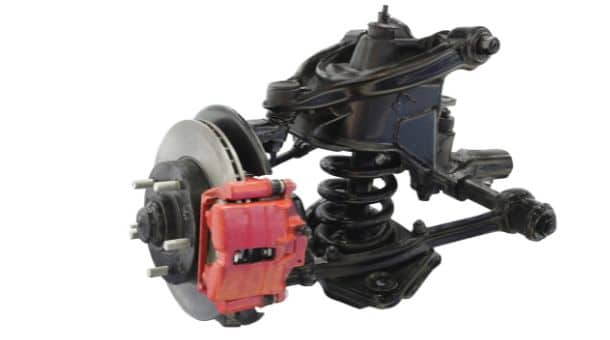
When you upgrade to higher and more rigid shocks and coil springs, you can significantly increase the height of vehicles. This must be carried out by a qualified garage expert in vehicle suspension.
The coil-overs must be the same specifications and must be purchased brand new. The advantage of this method is a significant rise in the height. Its disadvantages include a reduction in stability and could cause the insurance to be canceled.
Height Spacers
Height spacers are extensions placed in a vehicle’s suspension to increase its height. They are among the most sought-after because they’re cheap and simple. However, we strongly discourage using height spacers for one of the reasons listed below.
For starters, it is true that most height spacers sold in Kenya are not of good quality and don’t meet the requirements. In addition, they impact a vehicle’s stability when driving at high speeds, introducing oversteer and understeer.
If you’re considering using spacers for height, make sure they’re high-quality, machine-made, and from a reliable manufacturer. The hand-crafted aluminum spacers sold in Kenya represent a significant security danger and must be avoided at all times.
Coil springs with upgraded coils
Coil springs assist with your car and help keep it steady. When you come across potholes or dips, they expand when you bump into bumps or climb over things.
It is possible to get an air spacer (a piece made of coiled polyurethane or rubber) placed on the coils in the spring suspension to limit the growth and contraction. This can increase the clearance of your ground by about 10-15 millimeters.
Air suspension installation
It is the most costly method of maintaining and installing the car to improve ground clearance. The system operates in auto mode and can independently alter the ground clearance based on the condition of the road and its speed.
Spacer to improve the clearance of the ground
Installing spacers in your vehicle is an easy and reliable solution. Spacers that increase ground clearance are positioned beneath the springs or between the attachment point and the car body.
In the first instance, the material used for manufacturing is extra-strong rubber with the highest density level. It can also be plastic or a blank that is based on polyurethane.
Materials made from steel or aluminum spacers can be placed under the shock absorbers.
Spacers are not always the best choice.
The center of gravity is moved upwards Of gravity, consequently deteriorating the road’s handling.
The entire calculated technology for the reliability of functioning of the device has been violated. The information will alter by changing the maximum angle, as well as the angles of inclination for the wheel’s steering axis.
Then you will experience less steering due to it being incompatible with the car’s suspension system. In turn, the life span of the whole device will be reduced.
The shock absorber’s location (average) is a consequence; it might be damaged. This is because the piston rod hits the cover of the shock absorber in the course of movement. In this situation, it is possible to use the attachment with the kit and the shock absorber itself to eliminate the difference.
Rules On How To Use Spacers To Improve Ground Clearance
Attachments made of metal are not recommended if they’ve not been treated for corrosion;
Restrictions for owners of front-wheel-drive vehicles: at the front of the car, the vehicle is permitted not to lift over 20mm.
In the majority of cases (up to 80percent), if the shock absorber isn’t located near the spring to ensure safety, it is necessary to install spacers. Both beneath the springs and under the shock absorbers are necessary to ensure a synchronized operation.
If you increase the clearance at the vehicle’s rear, ensure that your lean angle remains within acceptable limits, particularly when turning at high speed. The rule is that a maximum height of 30 millimeters is permitted.
A rise in ground clearance greater than 30 millimeters can prevent the equipment from performing camber accurately.
Ensuring the set is complete with bolts and studs of the proper dimension is crucial.
Every car owner would like their car in a position to get over obstacles effortlessly, but typically, the car’s clearance on the ground does not permit this.
Spacers are the best aids to increasing ground clearance, so we will put them in the car ourselves.
FAQ Section
Frequently asked questions about Increasing Car Suspension Height are :
Can you raise the height of a car?
The maximum ground clearance for the majority of vehicles is 15.24cm. Another option is upgrading to a suspension with a higher ride height.
This can be accomplished with the help of an adjustable Coilover suspension or an air suspension that is aftermarket.
How do I determine the best ground clearance for the car?
All- or four-wheel drive is essential, as is finding an automobile with sufficient ground clearance to traverse obstacles such as mountains, rocks, mud, rivers, etc, without inflicting injuries.
As a guideline, a car with 8.5 inches of clearance or greater should be safe.
Do strut spacers increase ground clearance?
Registered. So, yes, the lift spacers improve the clearance underneath the truck, but specifically, they will elevate the frame and the front end.
How can I increase the height of my car?
A second option to improve ground clearance is to put higher-quality rims and tires on your car.
There are two ways to do this. One method is to increase the tire’s size but keep the rims. The other option is to use higher tires and taller rims.
Do bigger tires increase ground clearance?
Better road clearance The most evident effect of bigger tires is that they raise the height of your vehicle.
You can raise the ground clearance several inches above the ground. This is the amount of space between the road’s surface and the car’s lowest part.
What can change the height of a vehicle?
What could alter a car’s height? The extra weight of a large load can cause a vehicle to stand lower than it normally would.
A car is usually higher when carrying a lighter load than an enormous one.
Is a higher clearance on the ground more effective?
A higher clearance reduces the vehicle’s aerodynamic characteristics, which means that more speed means lower stability and speeds.
This is why sports cars with low clearances can handle faster speeds than SUVs with higher clearances.
Is a ground clearance of 180 millimeters enough for Indian roads?
Because the height of obstacles is not fixed and each car is subject to its limitations and specifications, experts say a ground clearance of 170-180mm will be ideal for Indian roads.
That is, the ground clearance must be at least 160mm to travel Indian roads safely and minimize the risk of damage.
Will new struts raise my car?
Also, it’s false. Shocks/struts aren’t able to adjust the ride height unless they are equipped with adjustable perches. They limit the rebound and jounce springs caused when riding over bumps.
Which is the best way to increase ground clearance?
Add another leaf spring to the leaf spring to increase the clearance to the ground.
This can also cause the ride to become more rigid and unsettling. The major alteration is to improve ground clearance on vehicles such as Maruti Gypsy or Mahindra MM540 (predecessor to the Thar DI).
Alter the Tyre Size and Rim Size Most manufacturers allow for a variation in the tire or rim size to accommodate your vehicle’s different driving conditions.
Consult the owner’s guide regarding the tires and rim sizes permitted for your vehicle. To increase the height, switching to tires with a higher profile is possible.
Can a vehicle be modified to increase clearance?
Vehicles with stabilization control, lane-keeping, or collision avoidance systems must not be altered.
Sensors that regulate these systems adjust based on the vehicle’s height. Any changes could disrupt these systems and trigger a chain reaction.
Can a height spacer be used on a car?
Extensions are installed into the suspension system to increase the height.
They are the least expensive, simplest to set up, and, thus, most commonly used. We strongly discourage using height spacers for one of the reasons listed below.
How do you fix car floor mats, To avoid the floor from being damaged by your car, you have to repair the holes in your car’s floor mats.
It would help if you made the correct choice to ensure the issue is completely solved to let your mind be at peace.
A few actions you can follow have proven to be highly efficient. If you follow the guidelines below carefully, you’ll be able to achieve the highest quality result that is highly satisfying.
You’re about to learn the steps to fix car floor mats. Some indications indicate you need a new mat, and the best way to deal with holes caused by a cigarette burn is to replace them.
How do you fix car floor mats in Steps
Let’s discuss step by step on how to fix car floor mats
Step 1:
Attaching Car Mats to the Floor
Attach the mats using hooks built into the mat or fasteners if your vehicle has hooks or fasteners.
Check on your car’s floor in the rear of your seat and find whether hooks or snap fasteners are integrated into the floor. If your floor has hooks, put them in the floor mat holes until they stay in place.
If you have snap fasteners, place both edges of the fasteners on the floor mat and press down with a strong force until they snap into place.
If the floor mats don’t have holes, you’ll need the hole punch or cutter to create holes. Be sure to align the hole to be in line with the mat. Older vehicles might not have hooks for floor mats or fasteners.
Step 2
Carpet tape double-sided on the underside of your floor mat
Flip the meat to the side so that the top is facing upwards. Create strips of carpet tape the same length as those of the mat. Then, remove one side of the adhesive backing and carefully wrap the tape around all edges of the mat.
Once you’ve applied all the tapes, you can remove the second adhesive backing and turn the mat upside down. Place the mat inside your vehicle and press the edges to seal the tape.
Double-sided carpet tape can be purchased at home improvement stores and hardware shops. It can also be used on vehicles with hard floors.
Step 3
Try placing Velcro on the flooring and floor to prevent the floor from shifting.
Look for heavy-duty Velcro strips with an adhesive backing, making them easy to set up.
Choose four sheets of Velcro with stiff bristles and put them in areas around the edges of your floor mat. Place the floor mat in your vehicle, and mark the spot where the Velcro pieces align.
Then, place the Velcro strips using the bristles of the soft bristles on your vehicle’s floor.
Place the mat so the Velcro pieces are aligned, then press them firmly. You can purchase heavy-duty Velcro pieces at the hardware store in your area.
It is also possible to put Velcro strips entirely on the outside of mats to increase security, but they can be difficult to remove. If your vehicle has carpeted floors, you must attach the stiff-bristled parts to the mat, as they’ll stick to the carpet.
Step 4
Floor mats have holes in floors carpeted with hanging hooks for draperies.
Lay the mat in the footwell and draw lines on the floor where the mat holes meet. Take it off and then hold a hook for drapery to ensure that you can see that the upper part of the U-shape is pointed towards the seats.
To hold it in place, push the straight point of the rod horizontally toward your floor mark.
Repeat the procedure with another hook. Place the mat back in your vehicle and loop the hooks over the holes.
The drapery hooks can stop your mat in place from moving, but they could slip out if you forcefully push the mat forward.
Drapery hooks are made of an angled straight section and large U-shaped hooks, which are typically utilized to hang curtain rods over rods or rings.
They can be purchased from a home goods or fabric retailer. Hooks for draperies can damage the carpet if pulled too tightly, and you should be cautious not to move the floor mat too far.
FAQ:
Frequently asked questions about Fixing car floor mats are :
How do you make rubber shine?
Create a cleaning solution using the dishwashing soap as well as water.
Fill a bucket with about one gallon (3.8 L) of warm water.
Use a damp cloth to clean the surface. Then, use a clean cloth or rag in the solution.
Remove any remaining solution from the rubber.
Let the rubber air dry.
Rub alcohol on the problem for sticking.
Can you use a steam mop on rubber flooring?
Steam cleaning is the most effective method to wash flooring made of rubber. Steam cleaning naturally cleanses and refreshes the flooring with no corrosive substances.
It also drys quickly and eliminates many water spots. A home steam mop can be used to scrub smaller areas.
How do you get salt off rubber car mats?
Mix a 50/50 cleaning solution of white vinegar distilled from the kitchen and hot water in a bucket or spray bottle.
Spray or pour the water/white vinegar solution on or onto the salt-crusted flooring or carpet; be sure to stay clear of contact with electrical wires.
Hybrid cars have become popular in recent years as a more eco-friendly alternative to traditional gasoline-powered cars.
With a combination of gasoline and electric power, these vehicles offer improved fuel efficiency and lower emissions.
However, the decision to invest in a hybrid car is not always simple, as there are several factors to consider.
In this article, I will discuss the pros and cons of hybrid cars to help you determine whether hybrid hybrid cars are worth It.
Are Hybrid Cars Worth It?
When deciding if a hybrid car is worth it for you, we consider some factors such as the availability of charging stations in your area, the cost of gasoline, and the long-term cost savings of owning a hybrid vehicle.
1: Fuel Efficiency:
One of the main reasons for choosing a hybrid car is its fuel efficiency. Compare the fuel economy ratings of different hybrid models to determine which offers the best mileage for your driving habits.
2: Electric Range:
Consider how far you typically drive daily and choose a hybrid car with an electric range that meets your needs.
Some hybrid cars have a limited electric range, so it’s important to choose one that can cover your daily commute on electric power alone.
3: Battery Life and Warranty:
Hybrid car batteries can be expensive to replace, so it’s important to choose a model with a reliable battery and a good warranty. Look for hybrid cars with a long battery warranty to protect your investment.
4: Performance:
While hybrid cars are known for fuel efficiency, some models also offer impressive performance. If acceleration and power are essential, look for a hybrid vehicle with a powerful engine and responsive handling.
5: Price and Value:
Consider the upfront cost of the hybrid car and its long-term value. Some hybrid cars may have a higher initial cost but offer savings on fuel and maintenance over time. Calculate the total cost of ownership to determine if a hybrid car is a good investment for you.
6: Features and Technology:
Look for hybrid cars with advanced features and technology, such as regenerative braking, adaptive cruise control, and smartphone integration.
These features can enhance your driving experience and make your hybrid car more convenient.
7: Safety Ratings:
Check the safety ratings of the hybrid car you are considering to ensure it meets your safety standards.
Look for hybrid cars with advanced safety features, such as lane-keeping assist and automatic emergency braking, to protect you and your passengers on the road.
Pros of Hybrid Cars
One of the main advantages of hybrid cars is their fuel efficiency. Because they can run on gasoline and electricity, they use less fuel than traditional gasoline-powered vehicles, saving you money on fuel costs in the long run.
Hybrid cars produce lower emissions than traditional vehicles, which is better for the environment. This can help reduce air pollution and greenhouse gas emissions, creating a cleaner and healthier planet.
In many countries, hybrid car owners are eligible for tax incentives and rebates. These incentives can help offset the higher upfront cost of a hybrid car, making it a more affordable option.
Hybrid cars are known for their quiet operation, especially at low speeds. This can make for a more pleasant driving experience, with less noise and vibration than traditional vehicles.
Hybrid cars tend to have a higher resale value than traditional vehicles. This is because they are in high demand, especially as people become more concerned about the environment and fuel efficiency.
Cons of Hybrid Cars
One of the main drawbacks of hybrid cars is their higher initial cost compared to traditional vehicles. While the long-term savings on fuel costs can offset this, some people may be deterred by the higher upfront cost.
Most hybrid cars have a limited electric range, meaning they can only travel a certain distance on electric power alone. This can be a drawback if you frequently drive long distances and don’t have access to charging stations.
The battery in a hybrid car will eventually need to be replaced, which can be expensive. However, most hybrid car manufacturers offer battery warranties, which can help offset this cost.
While hybrid cars have come a long way in terms of performance, some people still find them lacking compared to traditional gasoline-powered vehicles. Hybrid cars may not have the same acceleration or top speed as gasoline counterparts.
Some frequent questions asked about Hybrid cars are :
How Do Hybrid Cars Work?
Hybrid cars combine an internal combustion engine, electric motor, and battery pack. The electric motor assists the engine during acceleration, reducing the amount of fuel needed.
Are Hybrid Cars More Expensive To Insure?
Insurance rates for hybrid cars are often similar to those of traditional vehicles. Factors such as the car’s value, driver’s age, and driving history influence insurance costs more than the car’s fuel type.
Can I Drive A Hybrid Car In Extreme Weather Conditions?
Yes, hybrid cars are designed to operate in various weather conditions. However, extreme temperatures can affect battery performance and overall efficiency.
Do Hybrid Cars Have Good Resale Value?
Hybrid cars typically have good resale value, as they are in high demand due to their fuel efficiency and environmentally friendly features.
Are Hybrid Cars Safe?
Yes, hybrid cars are as safe as traditional vehicles. They undergo the same safety tests and are equipped with advanced safety features.
Conclusion:
Hybrid cars offer a compelling combination of fuel efficiency, lower emissions, and advanced technology.
They are an excellent choice for environmentally conscious drivers looking to reduce their carbon footprint and save money on fuel costs. However, the decision to invest in a hybrid car should be based on your individual needs and priorities.
When choosing a hybrid car, Consider fuel efficiency, electric range, battery life, performance, price, features, and safety ratings.
By weighing these factors carefully, you can find the right hybrid car that meets your needs and provides a comfortable and sustainable driving experience.
Cleaning your car cover is an essential part of maintaining your car’s appearance and protecting it from environmental damage.
Over time, dirt, dust, and other debris can accumulate on the cover, affecting its performance and lifespan.
Regular cleaning keeps your car cover looking its best and ensures that it continues to provide optimal protection for your vehicle.
In this guide, I will discuss the major aspects to consider when cleaning your car cover, including the materials needed, the cleaning process, and storage tips.
The Thing You Need To Clean The Car Cover
Mild detergent
Soft brush
Water hose
A soft cloth or sponge
Fabric Cleaner
How To Clean A Car Cover?
Let’s discuss how to clean a car cover
Remove The Cover From The Car
Remove the car cover from your vehicle and lay it flat. This will make cleaning easier and ensure you don’t miss any spots.
Step 2: Shake off Loose Debris
Before cleaning, shake the cover vigorously to remove loose debris such as dirt, leaves, or twigs. This will prevent these particles from scratching the surface of your car.
Step 3: Spot Clean Any Stains
If there are any noticeable stains on the cover, spot-clean them using a gentle cleaning solution and a soft brush. Avoid using harsh chemicals or abrasive materials, as these can damage the cover.
Step 4: Hand Wash or Machine Wash the Cover
Depending on the material of your car cover, you can either hand wash it or machine wash it. Use a mild detergent and cold water for best results. If machine washing, use a gentle cycle.
Step 5: Dry the Cover Thoroughly
After washing, allow the cover to air dry completely before storing it or putting it back in your car. Avoid using a dryer, as this can damage the cover’s fabric.
Step 6: Reapply Any Waterproofing Treatments
If your car cover is waterproof, consider reapplying a waterproofing treatment after cleaning to maintain its water-repellent properties.
Step 7: Store the Cover Properly
Store the car cover in a cool, dry place away from direct sunlight when not in use. This will help prevent mold and mildew growth and extend the cover’s life.
What Of The Cause Of Car-covered Dirt
Dust, pollen, bird droppings, tree sap, and other environmental debris can accumulate on the car cover over time.
Rain, snow, and wind can carry dirt and debris onto the car cover, leading to buildup.
Regular use of the car cover can cause it to accumulate dirt and grime from the vehicle’s surface.
Improper storage can expose the car cover to dirt, dust, and other contaminants, leading to a dirty cover.
The surroundings where the car is parked, such as a construction site or a dusty area, can contribute to the dirt on the car cover.
Keep In Mind When Cleaning A Car Cover:
When cleaning a car cover, there are several important factors to remember to ensure you clean it effectively without causing damage. Here are four key things to consider:
Use The Right Cleaning Products:
Always check the manufacturer’s instructions for cleaning recommendations.
Use a mild detergent suitable for your car cover’s material. Avoid harsh chemicals or bleach, as these can damage the fabric.
You may need a specialized fabric cleaner if your car cover has stubborn stains. Again, check the manufacturer’s instructions for compatibility.
Choose The Right Cleaning Method:
Hand washing is usually the best method for cleaning a car cover. Avoid using a washing machine, as the agitator can damage the fabric.
Use a soft brush or sponge to gently scrub the cover, working in a circular motion to lift dirt and grime.
Rinse the cover thoroughly with clean water to remove all soap residue.
Avoid Excessive Heat And Sunlight:
When drying your car cover, avoid using a dryer or exposing it to direct sunlight for extended periods.
Hang the cover to air dry in a shaded area to prevent damage from UV rays and reduce the risk of shrinking.
Store Properly When Not in Use:
Store your car cover in a clean, dry area when not in use to prevent mold and mildew growth.
Avoid folding the cover for long periods, as this can lead to creases and damage to the fabric.
Consider using a storage bag to keep the cover clean and protected when not in use.
Frequently Asked Questions about How To Clean A Car Cover:
How Often Should I Clean My Car Cover?
You should clean your car cover every few months or as needed, depending on the dirt level and exposure to environmental factors.
Can I Use Bleach Or Harsh Chemicals To Clean My Car Cover?
No, harsh chemicals such as bleach can damage the material of the car cover. Use a mild detergent and follow the manufacturer’s instructions for cleaning.
How Should I Store My Car Cover When Not In Use?
Store your car cover in a clean, dry area away from direct sunlight. Avoid folding or compressing the cover for long periods to prevent creases and damage.
Can I Use A Pressure Washer To Clean My Car Cover?
It is not recommended to use a pressure washer, as the high pressure can damage the material of the car cover. Stick to gentle hand washing methods instead.
Conclusion:
Cleaning your car cover is essential to maintain its appearance and prolong its lifespan. Following the manufacturer’s instructions and gentle cleaning methods, you can effectively remove dirt and stains without damaging the cover.
Regular cleaning and proper storage will ensure that your car cover remains in good condition and continues to protect your vehicle.
Rust can be a major headache for car owners, but with the best approach, you can remove it and keep your car shiny and new. In this article, I will explore professional ways to remove rust from your car, so let’s start.
What do you need to remove the rust from your car?
Before you start removing rust from your car, it’s important to
Gather the necessary materials. You’ll need:
Protective gear (gloves, goggles, mask)
Rust remover or converter
Sandpaper (medium grit)
Primer
Paint
Wax
How To Get Rust Off Car?
Rust can make your car look old and worn out. Removing rust to keep your car looking good and prevent further damage is important. Here’s a simple guide to help you get rid of rust from your car:
Step 1: Inspect the Rust Damage:
Begin by examining your car’s affected area(s) for rust. Look for any bubbling, flaking, or discoloration, indicating rust beneath the surface.
Step 2: Gather Your Materials:
Collect all the necessary materials and tools for rust removal, such as rust remover (chemical or natural), sandpaper (medium to coarse grit), a wire brush, primer, paint matching your car’s color, and a rust inhibitor.
Step 3: Prepare the Area:
Park your car in a well-ventilated area or outdoors, preferably on a flat surface. Ensure the area is clean and free from debris that could interfere with the rust removal.
Step 4: Remove Loose Rust:
Use a wire brush to remove any loose rust particles from the affected area. Be thorough but gentle to avoid damaging the surrounding paint.
Step 5: Apply Rust Remover:
Apply the chosen rust remover according to the manufacturer’s instructions. This may involve brushing, spraying, or soaking the affected area. Allow the remover to sit for the recommended time to dissolve the rust.
Step 6: Sand the Area:
Once the rust remover has had time to work, use medium to coarse grit sandpaper to sand the area. Sand until the rust is completely removed and the surface is smooth and even.
Step 7: Apply Primer and Paint:
Apply a rust-inhibiting primer to the sanded area to prevent future rusting. Once the primer is dry, apply several thin coats of paint to the area, matching your car’s color. Allow each coat to dry completely before applying the next.
Step 8: Apply a Rust Inhibitor:
Finally, a rust inhibitor should be applied to the treated area to provide long-term protection against rust. Follow the manufacturer’s instructions for the application of the inhibitor.
Common Causes of Rust:
Exposure to Moisture: Rain, snow, and humidity can all contribute to rust formation.
Road Salt: Salt used to de-ice roads in winter can speed up the rusting process.
Scratches and Chips: Damage to the car’s paint can expose the metal underneath to rust.
Poor Maintenance: Neglecting to wash and wax your car regularly can make it more susceptible to rust.
Preventing rust on your car involves a combination of regular maintenance and protective measures. Here are some steps you can take:
1: Wash Your Car Regularly:
Use a car wash soap and water to clean the exterior of your car, including the undercarriage and wheel wells, to remove dirt, salt, and other debris that can cause rust.
2: Dry Your Car Thoroughly:
After washing, use a clean, soft towel to dry your car completely, paying attention to areas where water can collect, such as door jambs, the trunk, and under the hood.
3: Apply a Coat of Wax:
Apply a coat of car wax to your car’s clean, dry surface to protect the paint from moisture and corrosion. Use a wax applicator pad or cloth to apply the wax in a circular motion, then buff it off with a clean, dry cloth.
4: Repair Scratches and Chips:
Inspect your car regularly for scratches and chips in the paint. If you find any, use touch-up paint or a paint pen to fill them in and prevent exposed metal from rusting.
5: Apply a Rust Inhibitor:
Consider applying a rust inhibitor or undercoating to vulnerable areas of your car, such as the undercarriage, wheel wells, and door edges, to provide additional protection against rust.
Conclusion:
Removing rust from your car is manageable with the right tools and techniques. By following the steps outlined above, you can effectively remove rust and restore the appearance of your car.
Regular maintenance and inspection are key to preventing rust from returning. With proper care, you can keep your car looking great for years.
FAQ:
Some Frequently Asked Questions about How To Get Rust off a car are:
How long does it take for rust to form on a car?
Rust can begin to form on a car in as little as a few months, especially in areas prone to high humidity or salt exposure.
Can I use sandpaper to remove rust from my car?
Yes, sandpaper can be effective for removing surface rust. Start with a coarse grit and gradually move to finer grits for a smooth finish.
Is rust on a car a sign of serious damage?
Rust on a car can indicate underlying structural issues, especially if it has penetrated deeply. It’s essential to address rust promptly to prevent further damage.
Can I prevent rust from returning once it’s been removed?
Regular maintenance, such as washing, waxing, and addressing paint damage, can help prevent rust from returning.
Are there any eco-friendly ways to remove rust from a car?
Yes, natural remedies such as vinegar, lemon juice, and baking soda paste are environmentally friendly and can be effective for light rust removal.
Autogos provides how does a car engine works related brief from experts. About one billion vehicles that are on the road are powered by gasoline. The fundamental concepts of the internal combustion engine haven’t changed significantly in the last 150 years.
A remarkable degree of chemistry is present in our cars. Explore the science behind the four-stroke engine, how attempts to resolve the issue of knocking caused a fatal accident, and why modern vehicles have catalytic converters in their exhaust systems to tackle the toxins that pollute our atmosphere.
How does a Car Engine work?
In general, an engine could be classified into three primary components: the block, the head and the oil sump.
The head of the cylinder:
The head of the cylinder is the conduit through which fuel can enter the engine chamber and the exhaust gasses leave. The key components of the cylinder head are valves, camshafts and spark plugs.
The Cylinder block
The Cylinder block is the place where all combustion happens. The primary components in this block comprise the chamber for combustion, the piston, and the crankshaft.
The sump for oil
The sump for oil is the bottommost component of an engine. Its primary elements are the oil pan and oil filter.
The Workflow Fundamental
Today’s car engine is a four-stroke engine; that is, it produces good power with just four strokes. Each stroke is described as the piston’s motion from its lowest position (Bottom Dead Centre) to the highest location (top dead center) and vice versa.
The four strokes are Intake Stroke, Compression Stroke and Stroke for Power, and Stroke Exhaust Stroke. This is a diagram of the flow of the steps that take place beginning at the beginning of the cycle until the final stage:
The Engine’s Processes inside the Head
Car Engine Works
The combustion process starts at the engine’s head and is triggered by the intake manifold. The intake manifold acts as the conduit through which the mixture of air and fuel is introduced through the combustion chamber.
The air is sucked directly into the manifold via the body of the throttle. The fuel is, however, introduced into the manifold via an injector nozzle, also known as an injector for fuel.
We then move to the tap that controls the release of fuel, also known as the valve. The valve is the device which seals the chamber when it is heated and is opened when the fuel needs to be allowed to flow into the chamber or gases need to be released.
The valves shut and open depending on the stroke occurring. Closing and opening valves are accomplished by an actuator rod, also known as a camshaft.
It is a cylinder rod with protrusions in the shape of drops called cams. When the sharp part of the cam is moving against the valve, it pulls the valve down and opens the port.
As the sharp edge transitions back to the round side, the valve springs pull the valve back to its original position and close the port.
The camshaft’s movement is linked to the rotation of the crankshaft through pulleys and belts. The rotation is controlled by the most precise and delicate timing device that can be set manually.
Processes inside the Engine Block
Now let’s start by tackling the business of a lifetime, i.e. the combustion process. The combustion process happens in the combustion chamber inside the head.
The most crucial component of the process is that it involves the piston. The force of rotation created on the wheels begins by moving the piston.
The piston produces usable power using 4 strokes, or four movements in the direction of its piston, from end to end. Let’s take a look at these four strokes in more detail:
The Different Types of Engines
Thermo engines
Internal combustion engines (IC engines)
External combustion engines (EC engines)
Reaction engines
Electrical engines
Physical engines
Engines for thermal use
In the broadest sense, the engines need a heat source to convert into motion. Based on the method they use to generate heat, they could be combustion engines (that use burning fuel) or non-combustive.
They work by direct combustion of fuels or by transforming an oil or gas to create work. In this way, most thermal engines also have connections between chemical drive systems. They could be air breathing machines (that use oxidizers, such as oxygen from the air) or non-air breathing ones (that contain oxidizers tied chemically to their fuel).
Internal combustion engines
Internal combustion engines (IC engines) are pretty commonplace today. They power lawnmowers, automobiles, as well as helicopters and more. The largest IC engine could produce 109,000 HP, enough to enable a ship to move around 20,000 containers.
IC engines get their energy from burning fuel inside an area specialised to the combustion chamber. Combustion creates reactions (exhaust) that have a greater volume than the reactants (fuel and the oxidizer).
This is what is the essence of IC engines. This is the reason why they have moved. The heat is merely the result of combustion and is a waste of fuel energy storage as it does not perform any physical work.
External combustion engines
External combustion engines (EC engines) keep the products of exhaust and fuel products separately. They use fuel in a single chamber and then heat the working fluid within the engine via an exchanger or on the wall of the engine. The granddaddy from the Industrial Revolution, the steam engine, is a part of this class.
In a few ways, EC engines function similarly to their IC counterparts, as they both require heat, which is produced by burning substances. However, there are some differences too.
Reaction engines
Reaction engines, commonly referred to in the field of jet engines, create thrust through the expulsion of the reactionary mass. The principle that drives an engine that reacts is Newton’s Third Law basically that if you blow anything by putting enough force into the back of the engine, it pushes forward the front part of the engine. Jet engines are highly proficient at this.
Electric engines
Ah, it’s a clean group. Three kinds of classic electrical engines include piezoelectric, magnetic, and electrostatic.
The one that is magnetic, just like the battery in the same, is the most widely utilised out of the three. It is based on the electrical and magnetic flow interplay to create work. It uses the same principles the dynamo employs to generate electricity; however, in reverse. You can produce a little electricity if you turn a motor by hand.
What are the basic principles of an Car Engine work?
The spark plug provides the spark that causes the fuel and air mixture’s ignition, allowing combustion to occur.
Intake and Exhaust valves are opened at the right time to allow fuel and air and release exhaust
Here Autogos provide fuel saving tips for all our car, We’re experiencing a dramatic change in the price of petrol at present. For each driver, the fluctuating cost of driving can be a source of frustration.
We’ve put together the most comprehensive guide to driving economically to help motorists reduce their expenses at the pump. It’s also known as ‘hypermiling’ or ‘eco-driving and will assist you in improving your mileage per gallon (miles per gallon) figures.
Although the speed you drive is certainly the most significant factor that affects fuel consumption, there are a variety of other adjustments you can change the way you drive that can reduce your fuel costs at the gas pump.
1: Reduce idle and stop dangerous driving behaviors
Idling and unsafe driving habits are major causes of loss of fuel. It happens when fleet managers can park and let their vehicle run, resulting in the inability to use fuel. GPS tracking systems could help cut down on idle by monitoring the frequency at which drivers do this and then decreasing the amount of time they spend idle by setting a goal they must follow.
Neglecting to drive safely is a big no-no regardless of whether they consume excessive fuel, and fleet businesses must curb driving habits such as quick speeds and speeding.
Have you ever heard that going 10 miles over the speed limit will reduce your fuel efficiency by as much as 15 percent? The optimal speed for fleets is in the range of 50 and 60 miles/hour.
2: Car sharing
Then, why not team up with a coworker (or at least three) and start a carpool? Of course, it’s only a good idea for commutes such as your commute to work, in which you’ll all be going to the same spot all at the same time; however, it could be an exciting option to reduce costs and make friends with your colleagues more like Peter Kay’s Car Share proved!
3: Get your tyres pumping
If you let the pressure drop on your tyres could mean that you’ll make more use of fuel, so ensure they are well-inflated to limit consumption. The RAC has experts who say that properly inflating tyres could improve the mileage you can achieve from your fuel by as much as 3 percent.
However, feel free to fill them up too high and risk leading to an increase in pressure – adhere to the pressure recommended for the vehicle you are driving.
4: Lighten up
In the context of weight, carrying extra weight in your vehicle can impact its efficiency. Removing unnecessary items from the trunk and the cabin will make little distinction. However, every little bit can help.
Fuel is also heavy. Don’t believe that you have to travel in a tank that is full every day. But, at the same time, avoid going into a state of depletion that you risk running out of fuel.
5: Take an excess weight off your vehicle
However, losing 100 pounds of weight stored in your car can increase the miles per gallon by around one percent, based on the importance of the car’s weight. But, according to the U.S. Department of Energy, this isn’t as much of an issue for smaller cars.
6: Take off the roof carrier
Your car was made to be aerodynamically efficient, but adding a giant bicycle or other carriers to the roof can increase wind resistance. If you spend a lot of time on the road or plan to take an extended trip, you should try to carry extra things within the vehicle or in the rear. Cleaning and waxing your car could reduce wind resistance as well.
7: Choose the most efficient route
Going from point A to point B in a short amount of time is a great method to reduce gas. Since shorter distances result in faster travel time and less fuel usage, isn’t it? But, no.
Choosing a route that avoids construction, traffic, and congestion is more important. Although it might seem strange to drive longer distances to save gas and money, longer ways could be more efficient, according to Kyle Tetz, a former Honda employee, van driver, travel expert, and the creator of the travel website The Next Trip.
Based on the U.S. Department of Energy, road traffic can cut gas mileage by anywhere from 15 to 30 %, and stops and go traffic may reduce it by 10-40 percent.
With this in mind, there are ways to reduce the cost of gas Make a thorough plan of your route in advance by using an American road trip guide and map application as well as Google Maps to choose roads that you can keep at a steady pace and avoid city stoplights.
Then, you can use the miles to determine the gas cost for your journey. In addition, it will also mean less wear and tear on your brakes and road stress.
8: Stop heating your vehicle
Mornings are indeed frosty, and slipping into a warm and cozy car seat is lovely in winter. However, your fuel efficiency will suffer, and you’ll find yourself on the road more frequently if you continue warming your vehicle. Modern vehicles don’t require more than a few minutes to “wake up.” So letting your car get warm more than that is optional.
With gas prices increasing, the heat will eventually cause you to be cold while you shell out more in the fuel pump. So when filling up, this is the procedure for letting gas pumps can tell when the tank is full.
9: Use the cruise control
One method to reduce fuel consumption is to maintain a constant speed. Cruise control can assist with this.
Consider turning on cruise control if you’re driving or on a long, continuous flat surface. It can reduce your consumption of fuel.
Do not use cruise control on roads that have a slope. Since the system was designed to operate on flat roads at the same speed, it needs more power to climb the hill.
10: The speed of the slowdown
Reduced speed can result in significant savings. All kinds of estimates are available, as the outcomes will differ greatly based on the vehicle.
Still, generally speaking, you can expect an increase of 10 percent in efficiency if you travel on an expressway and dual carriageway at 60mph instead of 70mph. It can be even more if you own an electric vehicle and drive at 60mph rather than 70mph.
The time it takes to travel may not be as significant as you believe, and you might even get there more relaxed. In addition, the savings on fuel when you drive at speeds greater than 70mph – which surveys show most drivers go at this speed despite being illegal is greater.
Detailing a car goes far beyond the typical cleaning and vacuuming process. It involves paying attention to the small factors that create a show-stopping car. Start with the interior to ensure you don’t have to worry about ruining your exterior while sprucing up the interior.
Floor mats can be great to protect your carpets; however, over time, a lot of dirt and grime could be trapped beneath. Wear your gloves and walk around the inside of your car, taking care to take off the floor mats completely to see the actual state of the carpet.
Step 2: Empty The Car Interior & Light Vacuum
You must empty your car of personal belongings and any other large garbage that your vacuum can not be able to collect.
Take your first garbage bag and store your personal belongings, like checks, books, insurance papers, changes, or other items vital to you. When you’re finished, place the bag on the side to keep it safe.
Take the second garbage bag and remove all large garbage items, like empty plastic bottles or even large chunks of food. Whatever your vacuum is having trouble getting rid of, place it in your second trash bag to throw away.
Step 3: Clean the Dashboard and Door Panels and the Center Console
“After finishing my interior and exterior, I applied Plastic Restore to all the interior trim and plastic except for the trunk and a small part, the dash. Plastic Restore did a great job and was very uniform in color.”
Beginning with your dashboard, take a clean microfiber towel, and divide it in half. Use a spray of Intra Clean onto your towel and then rub it over your dashboard, making sure to get rid of the dirt and grime as well as you can.
If you notice that your towel is drying out, you can spray more cleaner on the towel and continue to clean until you are satisfied. After cleaning the surface with your first cleaning towel:
Take the cleanest microfiber cloth and smooth the area you cleaned to give it a smooth finish.
Get rid of any remaining inside cleaner.
Continue the process on your door panels and the centre console, using your cleaning brushes to go into all the crevices and corners within your car.
It’s the perfect time to add some extra protection to your dashboard. The interior Detailing Kit includes Intra Shield, which provides protection for your interior.
It protects you from harmful UV radiation. It is suggested to give your interior a quick vacuuming to ensure that there is no dust remaining visible on the dashboard.
Spray the Intra Shield and rub it into the dash using a dirty microfiber towel. Utilize a second, clean microfiber to remove the remaining product. Do not touch the surface for the next 24 hours, allowing the product to dry.
Step 4: Clean Vinyl & Leather
Leather and vinyl are strong materials. However, if the improper product is used or left to sit on the floor for too long, it could cause permanent damage. Therefore, be sure to utilize specific leather and vinyl cleaning products!
Take your leather and vinyl cleaner and spray it onto your detailing brush. Then begin to clean the surface of the leather and vinyl gently. Take a dirty microfiber towel and clean off the cleaning solution that remains.
Step 5: Cleaning Crevices and Vents
It’s time to tackle all the corners and nooks like air vents; there’s not much room to work in these areas, which is why it’s the ideal moment to get out the best-detailing brush!
Use your detailing brush to remove as much dirt and dust as possible from your vents. After you spray a tiny amount of interior cleaner onto the brush, agitate it, then wipe it down, making sure you remove all dirt and leftover cleaner.
Step 6: Vacuuming Carpets & Car Seats
Now is the time to sweep all the dirt off your carpets and car seats! Start your vacuum on the driver’s side, and begin cleaning the seats in your vehicle. Be sure to recline your seat and make sure to get spaces between your edges as well as the bolsters.
Then you should push your seat to the back of your seat as far as it is possible and begin to vacuum your carpets. Repeat this throughout the car, making sure you shift your seats around to ensure you don’t miss any dirt.
Step 7: Shampooing carpets and Upholstery Seats
After cleaning your vehicle with a strong vacuum, it’s time to wash your upholstery and carpets. Start with your seating area. Start with your upholstery cleaner and gently mist the areas you’re working on, and then, using a firm bristle cleaning brush scrub the area until it’s clean.
Spray more shampoo or carpet cleaner on areas with a lot of stains and allow it to remain on the surface for a couple of minutes to remove the stains.
After cleaning the shampoo, take a dirty microfiber towel, and use it to scrub your seats to eliminate the most feasible shampoo residue.
It is also possible to take your vacuum cleaner and clean out any excess moisture and dirt in the upholstery. Repeat the procedure on the remainder of your car, including carpets, until you are satisfied.
Step 8: Protecting Your Car’s Interior Surfaces
After you’ve spent all day cleaning your vehicle, it’s time to protect it from UV-damaged things like vinyl, plastics and even leather.
Starting with your plastics & vinyl, take your choice of interior conditioner/protectant and spay it on a new microfiber towel.
Then rub the protectorate onto all of your vinyl and plastic surfaces making sure you evenly spread if you’re happy with how the surface looks, then great! If the gloss is too shiny for you, use a different microfiber towel, and then matte the gloss to a level that you’re happy with.
Complete the same process on the leather but with a dedicated leather conditioner/protectant. You must ensure you don’t apply a plastic or vinyl conditioner or protector on the leather since they’re two different kinds of surfaces.
9: Eliminating Odors Car Interior Sanitation
After the car is neat, we must ensure that the vehicle is completely clean! The interior sanitation and removal of odours will depend on your vehicle’s needs.
There are many products to remove odours and sanitation and equipment on the market; therefore, the procedure will depend on your chosen product. Most sanitation is done with alcohol and hydrogen peroxide-based disinfectants, steam cleaning equipment, and ozone machines that will cost you hundreds, up to thousands.
Disinfectant sprays or wipes are a simple method to disinfect important surfaces like door handles and steering wheels. Be sure to clean all interior surfaces before applying your car’s interior protection. If you do not, it could be possible to strip your protection.
For lingering odours, I would suggest using an Enzyme based odour eliminator. They’re typically in the form of aerosols and can be kept in the vehicle for a few hours, eliminating the majority of unpleasant odours inside your car’s interior.
Step 10: Don’t Forget the Trunk!
Many people, including detailers, forget to clear the trunk! Therefore, clean the area of any large items in addition to giving it a deep vacuum.
Sometimes, a brush for cleaning is beneficial for trunks because of the less durable carpet typically found in trunks. Clean the fabric of your trunk with your brush, and then follow up with a powerful vacuum to clean grime and dirt. Repeat the process, and apply carpet shampoo or interior cleaner if required.
How long does it take to detail a car?
Car Detailing is a specialised service based on the chosen package; the duration can vary from four hours up to seven days—the time for detailing increases and becomes more aggressive, the more deteriorating the vehicle’s condition. Along with polishing time, cars are cleaned first using an appropriate-sized wash, tar remover and clay removal.
What do detailers use?
Pro detailers employ coloured, task-specific microfiber towels and cloths to improve effectiveness, reduced friction, scratching, and faster cleaning, rinsing, and drying.
How long does it take for a car interior to dry after cleaning?
It depends on the way the seats were washed and the temperature outside. However, based on our experiences, the seats are 90% dry within 2.5 minutes if it’s relatively warm outside. If it’s cold out or there’s a cloudy sky, the seats could take 3 to 5 hours to dry.